
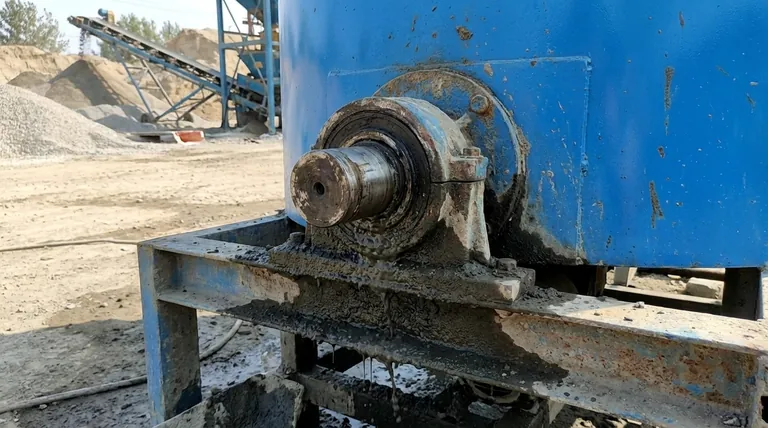
Left unchecked, shaft end seal leakage is not a minor issue; it is the starting point for a cascade of mechanical failures in a concrete mixing plant. This leakage allows abrasive concrete slurry to bypass the seal, leading to rapid wear of the shaft end bearings, increased friction, and eventual damage to critical components like mixing arms and liners.
The core issue is not the leaking lubricant, but the invading contaminant. Shaft end seal failure allows abrasive slurry to infiltrate sensitive mechanical systems, transforming a simple maintenance problem into a catalyst for widespread, costly equipment damage and operational downtime.
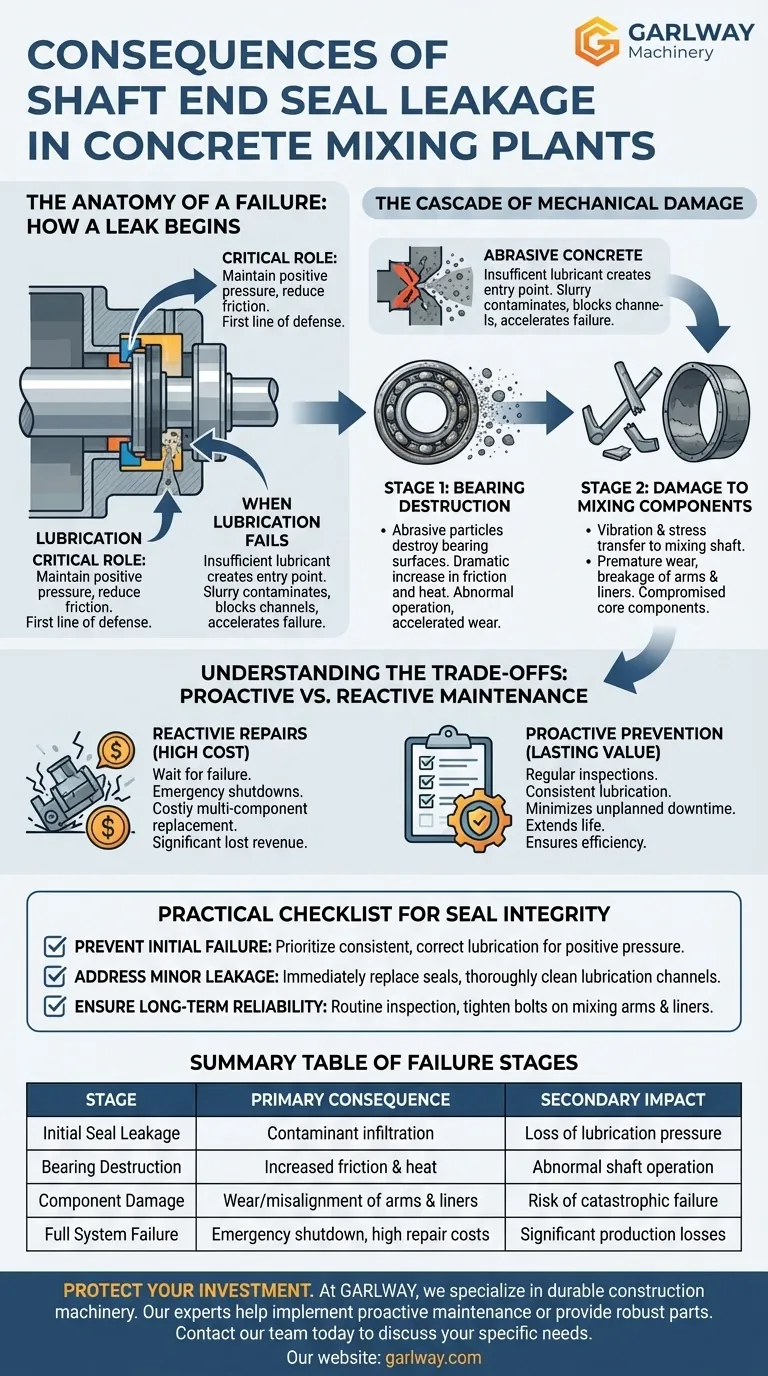
The Anatomy of a Failure: How a Leak Begins
A shaft end seal is the primary barrier protecting the mixer's internal mechanics from the harsh, abrasive environment of the mixing drum. Its failure is almost always linked to a breakdown in its support system.
The Critical Role of Lubrication
Proper lubrication is the first and most important line of defense. Its purpose is twofold: to reduce friction and, critically, to maintain positive pressure within the seal assembly.
This pressure actively pushes outward, preventing concrete slurry and other contaminants from entering the sensitive bearing area.
When Lubrication Fails
Leakage begins when lubrication is insufficient or non-existent. Without adequate oil pressure, an entry point is created for the highly abrasive concrete slurry to work its way past the seal.
Once inside, this slurry quickly contaminates the remaining lubricant, blocking lubrication channels and nozzles and accelerating the failure process.
The Cascade of Mechanical Damage
Once the seal is breached, the damage spreads predictably and rapidly through the mixing system. This is not a single failure, but a domino effect.
Stage 1: Bearing Destruction
The shaft end bearings are the first victims. The abrasive particles in the concrete slurry act like sandpaper, destroying the precisely machined surfaces of the bearing.
This leads to a dramatic increase in friction and heat, causing abnormal operation and accelerating wear far beyond normal design limits.
Stage 2: Damage to Mixing Components
The vibration and stress from a failing bearing are transferred directly to the mixing shaft. This additional load causes premature wear and can lead to the breakage of mixing arms and the liners inside the drum.
What began as a simple seal leak has now compromised the core mixing components of the plant.
Understanding the Trade-offs: Proactive vs. Reactive Maintenance
Ignoring the initial signs of a seal leak is a decision to trade a small, predictable cost for a much larger, unpredictable one.
The High Cost of Reactive Repairs
Waiting for a component to fail completely is the most expensive maintenance strategy. A failed bearing can seize the entire mixing shaft, leading to catastrophic damage.
This path results in emergency shutdowns, costly replacements of multiple components (seals, bearings, arms, liners), and significant lost production revenue.
The Lasting Value of Prevention
Proactive maintenance focuses on preserving the integrity of the seal. Regular inspections and consistent lubrication are low-cost activities that prevent the entire cascade of failure.
This approach minimizes unplanned downtime, extends the life of all related components, and ensures the plant operates at peak efficiency and reliability.
A Practical Checklist for Seal Integrity
Preventing shaft end seal leakage is a matter of systematic and routine maintenance. Focus your efforts based on your primary operational goal.
- If your primary focus is preventing initial failure: Prioritize consistent and correct lubrication to maintain the positive pressure that serves as the first line of defense against slurry infiltration.
- If you are already experiencing minor leakage: Immediately replace all damaged seals and oil seals, and then thoroughly clean the lubrication channels to remove any existing contaminants.
- If your goal is long-term reliability: Implement a routine inspection schedule to check and tighten all bolts on mixing arms and liners, as these can loosen from the subtle vibrations of early-stage bearing wear.
Ultimately, treating the shaft end seal as a critical system component is the key to maximizing the reliability and lifespan of your concrete mixing plant.
Summary Table:
| Stage of Failure | Primary Consequence | Secondary Impact |
|---|---|---|
| Initial Seal Leakage | Contaminant (slurry) infiltration | Loss of lubrication pressure |
| Bearing Destruction | Increased friction & heat | Abnormal shaft operation |
| Component Damage | Wear/misalignment of mixing arms & liners | Risk of catastrophic failure |
| Full System Failure | Emergency shutdown & high repair costs | Significant production losses |
Protect your concrete mixing plant from costly downtime and damage. At GARLWAY, we specialize in durable construction machinery, including reliable concrete batching plants and mixers designed for heavy-duty use. Our experts can help you implement proactive maintenance strategies or provide robust replacement parts to ensure your operations run smoothly. Contact our team today to discuss your specific needs and keep your project on schedule.
Visual Guide
Related Products
- Construction Products Concrete Plant Machine Mixing Concrete Mixer
- Commercial Electric Concrete Mixer Machine HZS 50 Small Batch Plant for Sale
- HZS35 Small Cement Concrete Mixing Batch Plant
- HZS120 Ready Mix Concrete Batching Plant Commercial Mud Cement Mixer
- HZS75 Concrete Batching Plant Cement Mixer Price Concrete Mixer Bunnings Mixing Plant
People Also Ask
- What factors should be considered when choosing between volumetric and traditional mixers? Optimize Your Concrete Project Strategy
- What is the difference between pan and planetary mixers? Choose the Right Mixer for Your Concrete Project
- When was the first concrete mixer developed and by whom? Discover the 1900 Breakthrough
- What is the average lifespan of a concrete mixer? Maximize Your Equipment's Lifespan & ROI
- What are the two broad types of concrete mixers? Choose the Right Mixer for Your Project



