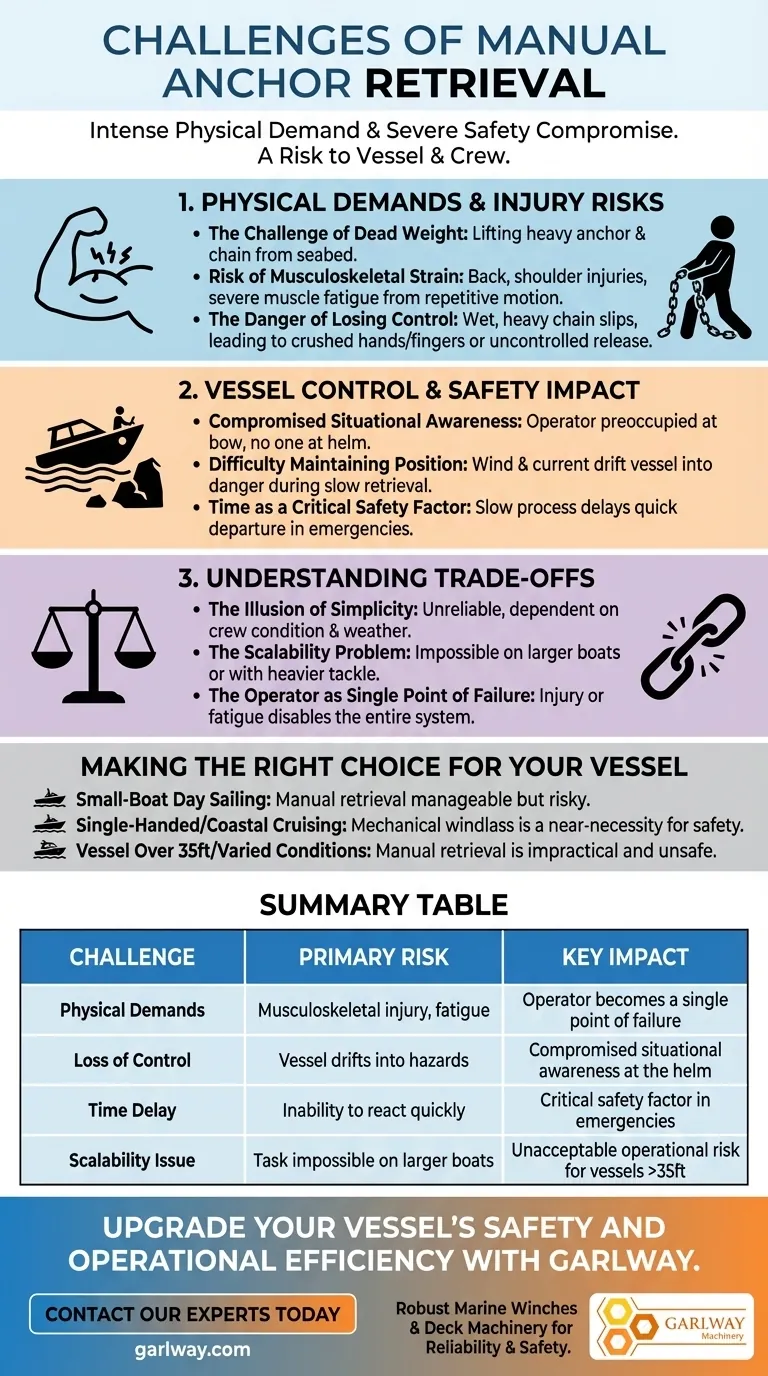
The fundamental challenges of manual anchor retrieval center on intense physical demand and the severe compromise it creates for vessel safety and control. Manually hauling an anchor is not merely an inconvenience; it introduces significant risks of personal injury and can render a vessel dangerously unmanageable, especially in adverse conditions or when operating solo.
The core issue extends beyond physical strain. Relying on manual anchor retrieval forces a trade-off between vessel control and a critical operational task, creating a significant safety vulnerability for the boat and its crew.
The Physical Demands and Injury Risks
Manually retrieving an anchor, particularly with a heavy chain, places an enormous burden on the operator. This isn't just about strength; it's about sustained effort under potentially unstable conditions.
The Challenge of Dead Weight
Lifting dozens of pounds of anchor and many more pounds of chain vertically from the seabed is exceptionally strenuous. This task is physically demanding even on small vessels and quickly becomes impossible on larger boats with heavier ground tackle.
Risk of Musculoskeletal Strain
The repetitive motion and heavy load create a high risk of musculoskeletal injuries. Back strain, shoulder injuries, and severe muscle fatigue are common consequences of manually hauling an anchor.
The Danger of Losing Control
A wet, heavy chain can easily slip from one's grasp. This can lead to crushed fingers or hands if caught, and the uncontrolled release of the chain back into the water poses a danger to anyone at the bow.
The Impact on Vessel Control and Safety
The most critical challenges of manual retrieval are not related to effort, but to safety. When an operator is focused on the anchor, they cannot be focused on the vessel's position or surroundings.
Compromised Situational Awareness
For a sole operator, manual retrieval is particularly hazardous. Being preoccupied at the bow means no one is at the helm maintaining a proper watch for other vessels, navigational hazards, or changes in conditions.
Difficulty Maintaining Position
While the operator is engaged in the slow process of hauling the anchor, wind and current continue to act on the vessel. This can easily push the boat into a dangerous or undesirable position, with no one at the helm to correct its course.
Time as a Critical Safety Factor
Manual retrieval is a slow process. In a situation that requires a quick departure—such as a dragging anchor or a rapidly approaching hazard—this delay can be the difference between a safe exit and a serious incident.
Understanding the Trade-offs
Opting against a mechanical windlass involves accepting a series of significant operational compromises that become more severe as vessel size and cruising ambitions increase.
The Illusion of Simplicity
While seemingly simple, manual retrieval has hidden complexities. Its effectiveness is entirely dependent on the physical condition of the crew and the calmness of the weather, making it an unreliable system when you need it most.
The Scalability Problem
The challenges do not scale linearly. A slightly larger boat or a deeper anchorage can exponentially increase the weight of the ground tackle, turning a manageable task into an impossible and unsafe one.
The Operator as the Single Point of Failure
Without a mechanical aid, a single person's physical ability becomes the weak link in a critical system. An injury, fatigue, or simply a lack of sufficient strength can prevent a vessel from being able to leave its anchorage safely.
Making the Right Choice for Your Vessel
Evaluating your need for a mechanical windlass comes down to an honest assessment of your vessel, your cruising style, and your tolerance for risk.
- If your primary focus is small-boat day sailing in protected waters: Manual retrieval may be manageable, but you must remain acutely aware of the physical risks and limitations.
- If your primary focus is single-handed operation or coastal cruising: A mechanical windlass is a near-necessity for maintaining safe control of your vessel during anchoring maneuvers.
- If your primary focus is operating a vessel over 35 feet or in varied conditions: The weight of the ground tackle makes manual retrieval impractical and introduces an unacceptable level of operational risk.
Ultimately, investing in a mechanical solution is an investment in safety, control, and operational confidence.
Summary Table:
| Challenge | Primary Risk | Key Impact |
|---|---|---|
| Physical Demands | Musculoskeletal injury, fatigue | Operator becomes a single point of failure |
| Loss of Control | Vessel drifts into hazards | Compromised situational awareness at the helm |
| Time Delay | Inability to react quickly to danger | Critical safety factor in emergencies |
| Scalability Issue | Task becomes impossible on larger boats | Unacceptable operational risk for vessels >35ft |
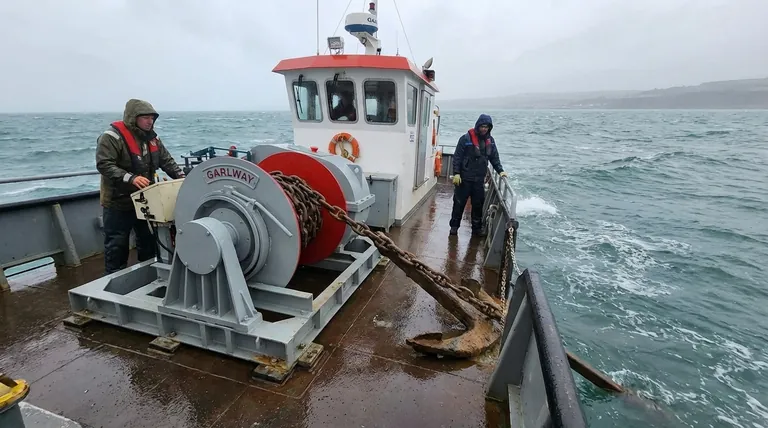
Upgrade your vessel's safety and operational efficiency with GARLWAY. Manually retrieving your anchor introduces unacceptable risks. GARLWAY specializes in robust marine winches and deck machinery designed for construction companies, contractors, and vessel operators who demand reliability and safety. Our equipment ensures you maintain full control of your vessel, protect your crew from injury, and operate with confidence in any condition. Don't compromise on safety—contact our experts today to find the perfect mechanical solution for your needs.
Visual Guide