
The primary advantages of gas-powered mortar mixers are their complete portability and consistent power, making them the superior choice for job sites that lack a reliable electrical source. Their internal combustion engines allow them to operate anywhere, handling a wide range of mortar and concrete mixes for mid-sized projects without being tethered to a power grid.
The core value of a gas-powered mixer lies in its operational freedom. It liberates you from the constraints of power cords, providing the robust performance needed for a high-quality, homogenous mix on virtually any job site.
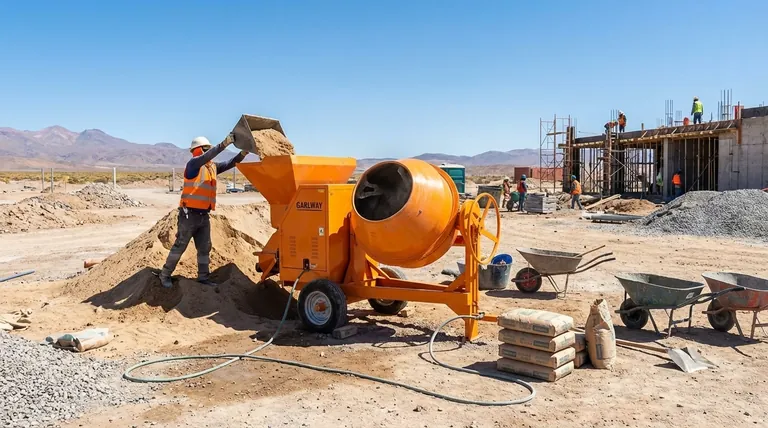
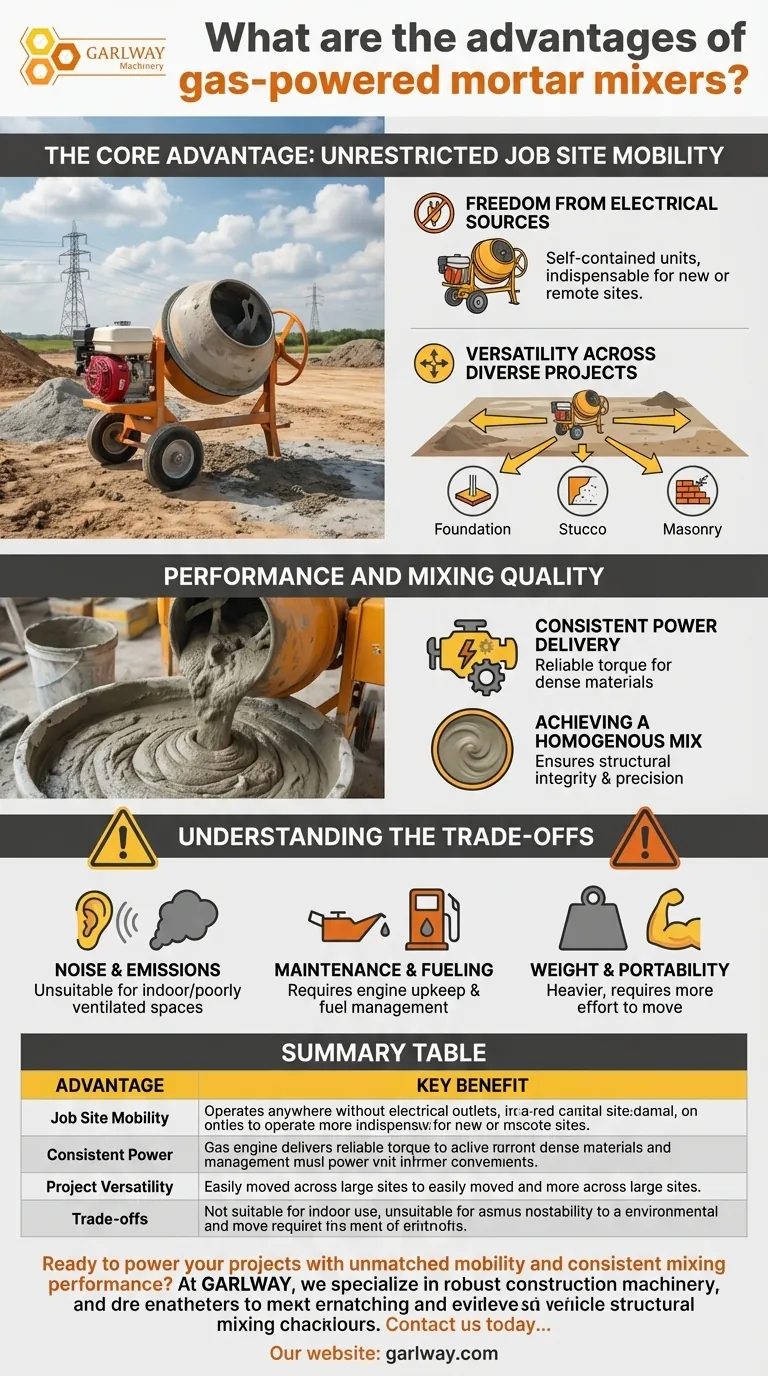
The Core Advantage: Unrestricted Job Site Mobility
The defining feature of a gas-powered mixer is its ability to function independently, a critical factor for many construction environments.
Freedom from Electrical Sources
Gas-powered mixers are self-contained units. This makes them indispensable on new construction sites, remote locations, or large projects where electrical outlets are not yet installed or are too far away.
Versatility Across Diverse Projects
This mobility allows for incredible flexibility. You can easily move the mixer to different areas of a large site, from laying a foundation in the back to mixing stucco near the front, without logistical headaches.
Performance and Mixing Quality
Beyond portability, the engine itself provides performance characteristics that directly impact the quality of your final product.
Consistent Power Delivery
Gasoline or diesel engines deliver reliable and consistent torque. This power is essential for thoroughly blending dense, heavy materials, preventing the motor from bogging down and ensuring the mix doesn't become inconsistent.
Achieving a Homogenous Mix
This steady power results in a homogenous, evenly blended mortar. Achieving this high level of precision is critical for ensuring the structural integrity, bond strength, and final appearance of masonry work.
Understanding the Trade-offs
While powerful and versatile, gas-powered mixers come with specific considerations that make them unsuitable for certain environments.
Noise and Emissions
The most significant drawback is the engine's noise and exhaust fumes. This makes them impractical and unsafe for use indoors or in poorly ventilated spaces where air quality and noise levels are a concern.
Maintenance and Fueling
Internal combustion engines require more maintenance than electric motors. You must manage fuel, check oil levels, and perform regular engine upkeep to ensure reliable operation.
Weight and Portability
While mobile in their function, gas mixers are typically heavier and bulkier than their electric counterparts. Moving them around the site often requires more physical effort.
Making the Right Choice for Your Project
Selecting the correct mixer depends entirely on the conditions of your job site and the demands of your project.
- If your primary focus is mobility for outdoor work: A gas-powered mixer is the definitive choice for its complete independence from the power grid.
- If your primary focus is indoor use or noise reduction: An electric mixer is the more appropriate and safer alternative.
- If your primary focus is consistent, high-quality mixing for structural materials: The reliable power of a gas engine ensures a superior, homogenous blend every time.
Ultimately, choosing a gas-powered mixer is a strategic decision for professionals who require uncompromising power and freedom on the job site.
Summary Table:
| Advantage | Key Benefit |
|---|---|
| Job Site Mobility | Operates anywhere without electrical outlets, ideal for remote or new construction sites. |
| Consistent Power | Gas engine delivers reliable torque for dense materials, ensuring a homogenous mix. |
| Project Versatility | Easily moved across large sites for foundations, stucco, and various masonry tasks. |
| Trade-offs | Not suitable for indoor use due to noise/emissions; requires more engine maintenance. |
Ready to power your projects with unmatched mobility and consistent mixing performance?
At GARLWAY, we specialize in robust construction machinery, including mortar mixers designed for the demanding needs of contractors and construction companies. Our equipment delivers the reliable power and portability you need to achieve superior results on any outdoor job site.
Contact us today to find the perfect gas-powered mortar mixer for your next project!
Visual Guide
Related Products
- JDY350 Electric Hydraulic Mortar Mud Concrete Mixer
- JDC350 Small Cement Concrete Mortar Mixer
- Belle Mixer Drum Self Loading Mortar Mixers JS3000
- HZS25 Best Cement Mixer for Quick Mix Concrete at Bunnings
- JZC400 Mobile Small Concrete Mixer Cement Mixer Machine
People Also Ask
- When are electric mortar mixers typically used? Find the Perfect Tool for Small to Medium-Sized Jobs
- What are hydraulic concrete mixers used for? Powering Large-Scale Construction Projects
- How are mortar mixers utilized in concrete and grout projects? Maximize Your Mixing Efficiency
- What are the benefits of electric concrete mixers? Quiet, Clean, and Low-Maintenance Mixing
- What is a mortar mixer and what is its primary use? Master Masonry with the Right Equipment


