
The primary advantages of a concrete batching plant are exceptional quality control and high-speed production, while the main disadvantages are significant initial investment and logistical inflexibility. These facilities are designed to combine raw ingredients like cement, sand, and water into homogenous, high-quality concrete, serving as the backbone for major construction projects.
A concrete batching plant is not merely equipment; it is a strategic commitment. The core decision hinges on trading high upfront capital and logistical planning for unparalleled consistency and production volume on large-scale or long-term projects.
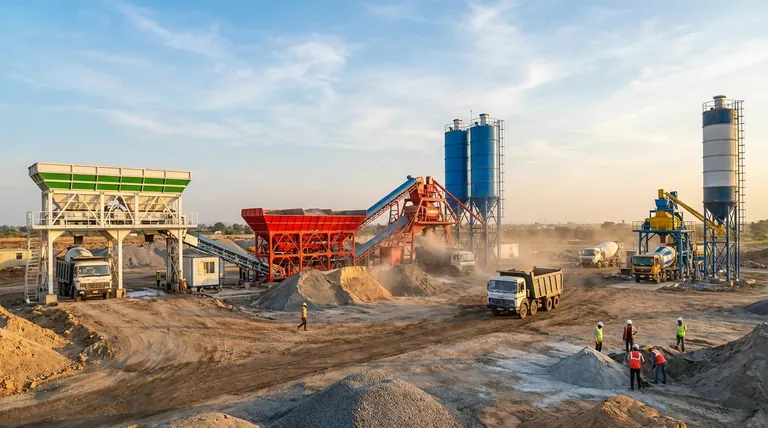
The Core Advantages: Precision and Productivity
The decision to use a batching plant is driven by the need for control over the concrete production process. The benefits are most apparent in projects where quality and speed are non-negotiable.
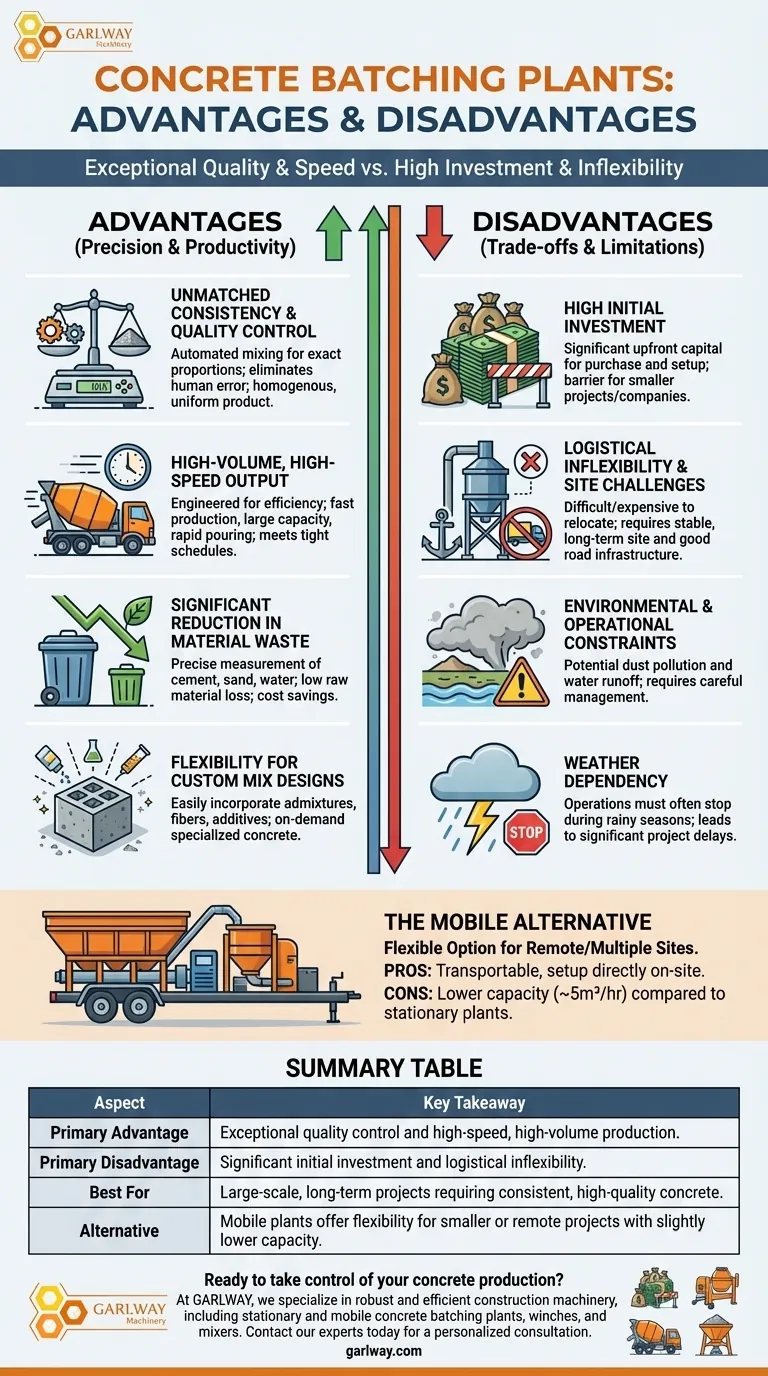
Unmatched Consistency and Quality Control
A batching plant automates the mixing process, ensuring that every batch of concrete has the exact same proportions of ingredients. This computerized precision eliminates the human error common in manual mixing.
This consistency is critical for meeting the strict structural specifications required for bridges, highways, and large buildings. It produces a homogenous and uniform product every time.
High-Volume, High-Speed Output
These plants are engineered for efficiency. They enable fast production, large transportation capacity, and rapid pouring, which are essential for keeping large-scale construction projects on schedule.
Significant Reduction in Material Waste
The precise measurement of materials like cement, sand, and water means there is very low raw material loss. This efficiency translates directly into cost savings over the life of a project.
Flexibility for Custom Mix Designs
Modern plants can easily incorporate various admixtures, fibers, or additives into the mix. This allows for the on-demand production of specialized concrete designed for specific performance characteristics, such as rapid hardening or increased durability.
Understanding the Trade-offs and Limitations
While powerful, batching plants introduce significant financial and operational considerations that must be carefully weighed.
The Barrier of High Initial Investment
The most significant disadvantage is the high upfront capital investment required to purchase and set up the plant. This cost makes it a non-starter for smaller companies or single, short-term projects.
The Challenge of Site Logistics
Stationary batching plants are difficult and expensive to relocate. They are semi-permanent installations that require a stable, long-term project site to be financially viable.
Furthermore, they depend on good road infrastructure to allow for the constant flow of raw material delivery trucks and concrete transport trucks.
Environmental and Operational Constraints
Batching plants can be a source of dust pollution, particularly from cement silos and loading points. They also produce water runoff that must be carefully managed to avoid environmental contamination.
Operations are also weather-dependent. Most plants must stop work during rainy seasons, which can cause significant project delays.
The Mobile Plant: A Flexible Alternative
To counter the immobility of traditional plants, mobile batching plants offer a different set of trade-offs.
Bringing Production to the Project Site
Mobile plants are designed for transport and setup directly at a construction site. This provides enormous flexibility for projects in remote locations or for companies that handle multiple job sites simultaneously.
Balancing Capacity and Convenience
While highly versatile, mobile plants typically have a lower production capacity, sometimes around 5 cubic meters per hour. This makes them ideal for most standard construction projects but potentially insufficient for massive infrastructure works.
Making the Right Choice for Your Operation
The decision to invest in or utilize a batching plant depends entirely on the scale and nature of your construction goals.
- If your primary focus is large-scale, long-term construction: A stationary batching plant is an essential investment for ensuring quality and meeting demanding schedules.
- If your primary focus is a series of smaller or remote projects: A mobile batching plant offers the best balance of control, flexibility, and on-site efficiency.
- If your primary focus is cost minimization on a single, small project: Relying on a third-party ready-mix supplier is the most practical and economical approach.
Ultimately, choosing a batching plant is a decision about gaining direct control over your project's most critical material.
Summary Table:
| Aspect | Key Takeaway |
|---|---|
| Primary Advantage | Exceptional quality control and high-speed, high-volume production. |
| Primary Disadvantage | Significant initial investment and logistical inflexibility. |
| Best For | Large-scale, long-term projects requiring consistent, high-quality concrete. |
| Alternative | Mobile plants offer flexibility for smaller or remote projects with slightly lower capacity. |
Ready to take control of your concrete production?
At GARLWAY, we specialize in providing robust and efficient construction machinery, including stationary and mobile concrete batching plants, winches, and concrete mixers. Our solutions are designed to deliver the unmatched consistency and high-volume output your large-scale projects demand, while our expertise helps you navigate the logistical and financial considerations.
Let us help you make the right strategic commitment for your operation. Contact our experts today for a personalized consultation and discover how GARLWAY can build a stronger foundation for your success.
Visual Guide
Related Products
- HZS35 Small Cement Concrete Mixing Batch Plant
- HZS120 Ready Mix Concrete Batching Plant Commercial Mud Cement Mixer
- HZS75 Concrete Batching Plant Cement Mixer Price Concrete Mixer Bunnings Mixing Plant
- HZS180 Ready Mix Concrete Plant for Foundations with Sand and Cement
- Commercial Electric Concrete Mixer Machine HZS 50 Small Batch Plant for Sale
People Also Ask
- Why buy concrete batch plant parts only from the manufacturer? Protect Your Investment and Maximize Uptime
- Why is proper maintenance important for a concrete batch mix plant? Maximize Uptime & Profitability
- What is the advantage of a mobile concrete batching plant? Achieve On-Site Production & Total Control
- What are the two methods of material charging in a concrete mixing station? Single vs. Multiple Charging Explained
- What are the main components of a concrete mixing station? A Guide to Efficient Concrete Production





