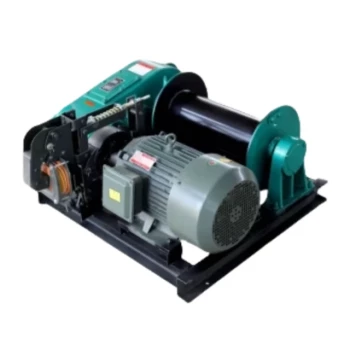
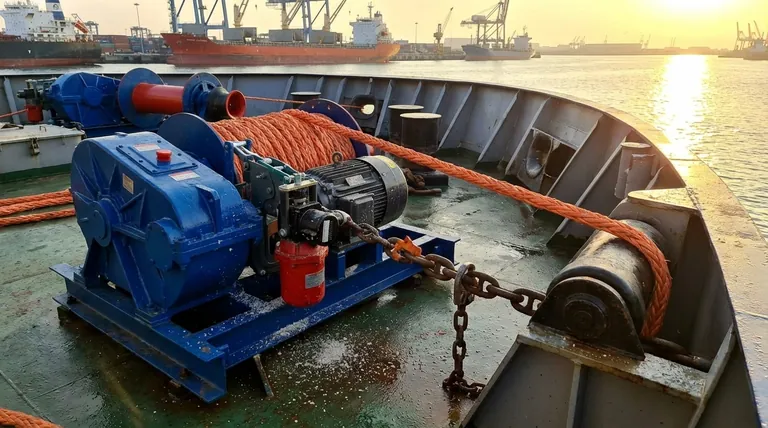
At its core, a mooring winch is just one component of a larger system. To conduct a complete mooring operation, you will also need a combination of ropes or wires, fairleads to guide them, stoppers to hold the tension, and an anchoring point.
The winch provides the pulling force, but it's the integrated system of ropes, guides, and stoppers that allows a vessel to be safely and securely moored. Viewing these items as a single operational unit, rather than as separate pieces of equipment, is the key to a successful mooring plan.
The Anatomy of a Mooring System
A mooring winch is the engine of the operation, but it cannot function in isolation. Each complementary piece of equipment plays a critical role in managing the immense forces involved in securing a vessel.
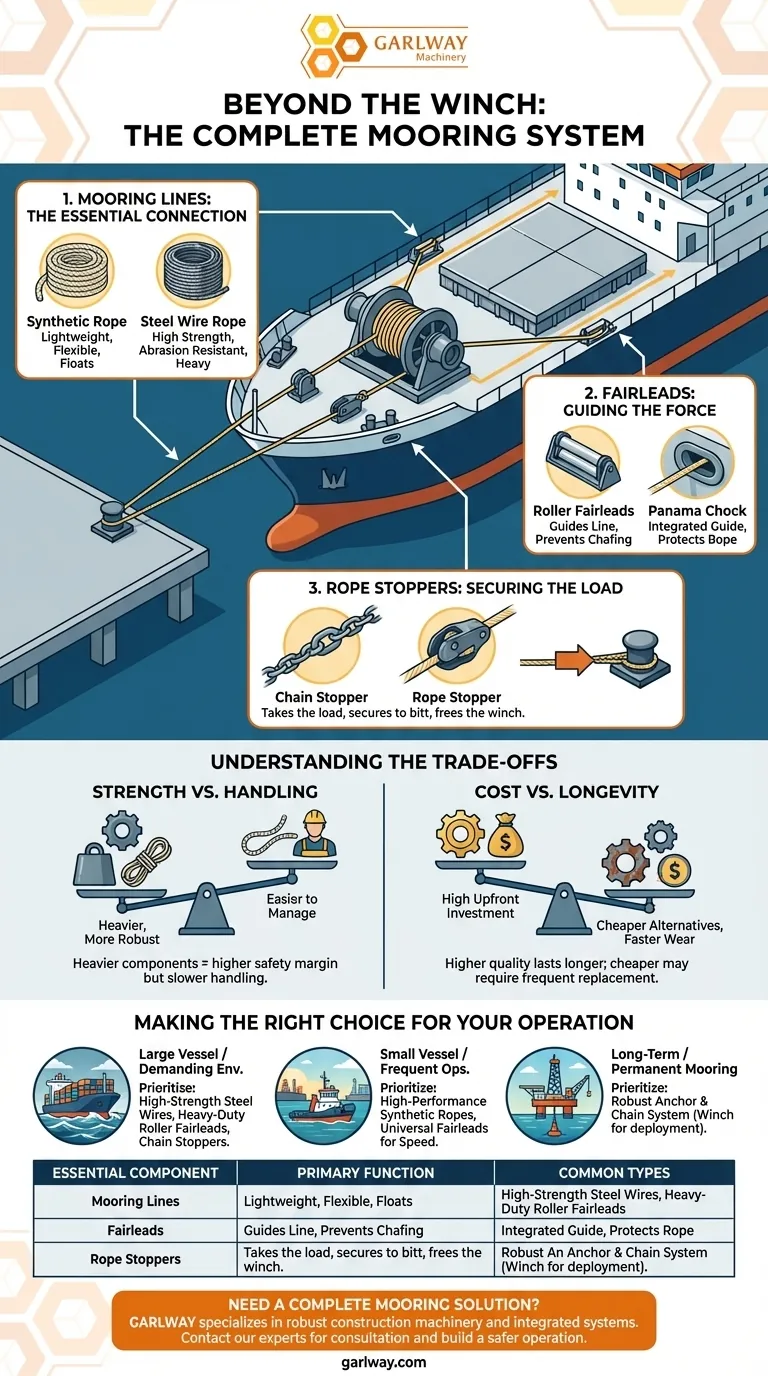
Mooring Lines: The Essential Connection
The most fundamental additions are the mooring lines themselves. These are the ropes or wires that physically connect the vessel to the dock, buoy, or anchor.
The choice between rope and wire is significant. Synthetic ropes, like those made from polypropylene or nylon, are lightweight, flexible, and float, which simplifies handling. However, steel wire ropes offer superior strength and abrasion resistance but are heavier and more difficult to manage.
Fairleads: Guiding the Force
Fairleads are devices that guide the mooring line from the winch to its external anchor point. They are essential for preventing the rope from chafing against the ship's structure.
By ensuring the line runs at a safe and effective angle, fairleads protect the integrity of the rope and prevent dangerous abrasion that could lead to line failure under load. Common types include roller fairleads and panama chocks.
Rope Stoppers: Securing the Load
Once a mooring line is tensioned by the winch, a chain or rope stopper is used to take the load. This allows the line to be secured to a bitt or cleat, transferring the static holding force away from the winch drum.
This is a critical safety and operational step. It frees the winch to handle other lines and protects the winch's brakes and gearing from the constant strain of holding the vessel in place.
Understanding the Trade-offs
Selecting the right equipment involves balancing competing factors. There is no single "best" setup for every scenario; the choice depends entirely on the vessel and the operational environment.
Strength vs. Handling
Heavier, stronger components like steel wire ropes and robust chain stoppers provide a higher safety margin. However, their weight and rigidity make them more difficult and slower for the crew to handle.
Lighter synthetic ropes are easier to manage but may require more frequent inspection for wear and UV degradation.
Cost vs. Longevity
High-quality, corrosion-resistant fairleads and stoppers represent a significant upfront investment. Cheaper alternatives may reduce initial costs but are likely to wear faster, requiring more frequent maintenance and replacement.
This trade-off is particularly important in harsh saltwater environments where corrosion is a constant threat to equipment integrity.
Making the Right Choice for Your Operation
Your equipment selection should be dictated by the specific demands of your vessel and its intended use.
- If your primary focus is on large commercial vessels in demanding environments: Prioritize high-strength steel wires, heavy-duty roller fairleads, and chain stoppers for maximum durability.
- If your primary focus is on smaller vessels or frequent, rapid mooring operations: Consider high-performance synthetic ropes and strategically placed universal fairleads to optimize for speed and ease of handling.
- If your primary focus is on long-term or permanent mooring: A robust anchor and chain system becomes the most critical component, with the winch serving a deployment and adjustment role.
Ultimately, a safe mooring system is an integrated whole where each component is correctly specified for the forces it will encounter.
Summary Table:
| Essential Component | Primary Function | Common Types |
|---|---|---|
| Mooring Lines | Connect vessel to dock/anchor | Synthetic Rope, Steel Wire Rope |
| Fairleads | Guide the line and prevent chafing | Roller Fairleads, Panama Chocks |
| Rope Stoppers | Secure the load and free the winch | Chain Stoppers, Rope Stoppers |
Need a Complete Mooring Solution?
Selecting the right combination of winches, ropes, and hardware is critical for safety and efficiency. GARLWAY specializes in providing robust construction machinery, including winches, concrete mixers, and batching plants, for construction companies and contractors globally.
Our experts can help you specify the perfect integrated system for your vessel's specific needs, ensuring durability and optimal performance.
Contact GARLWAY today for a consultation and let us help you build a safer, more reliable mooring operation.
Visual Guide
Related Products
- Warn Winch Windlass Boat Trailer Winch
- Hydraulic Winding Engine Harbor Freight Winch
- Portable Small Trailer Winch
- 12000 lb Electric Boat Trailer Winch with Windlass Anchor Warn
- Electric and Hydraulic Winch for Heavy Duty Applications
People Also Ask
- What are the main components of a boat trailer winch? A Guide to Safe & Efficient Boat Loading
- What factors should be considered when choosing a boat trailer winch? Ensure Safe and Effortless Boat Loading
- What is the purpose of boat trailer winches? Safely and Efficiently Load Your Boat
- What are the two main types of boat trailer winches? Manual vs. Electric Explained
- How often should a boat trailer winch be replaced? Your Guide to Safety and Longevity