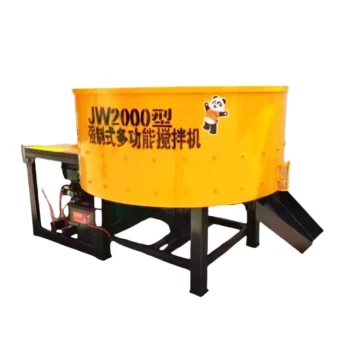
The weight capacity of a cement mixer varies dramatically by type, but a common manual or barrow-style mixer designed for small DIY projects often has a mixing capacity of around 45kg (approximately 100 lbs). This capacity is suitable for tasks where you need to mix one or two bags of concrete at a time.
A mixer's stated capacity is its operational limit for achieving a consistent, high-quality mix. Exceeding this limit or using improper loading techniques will compromise the structural integrity of your concrete and can damage the equipment.

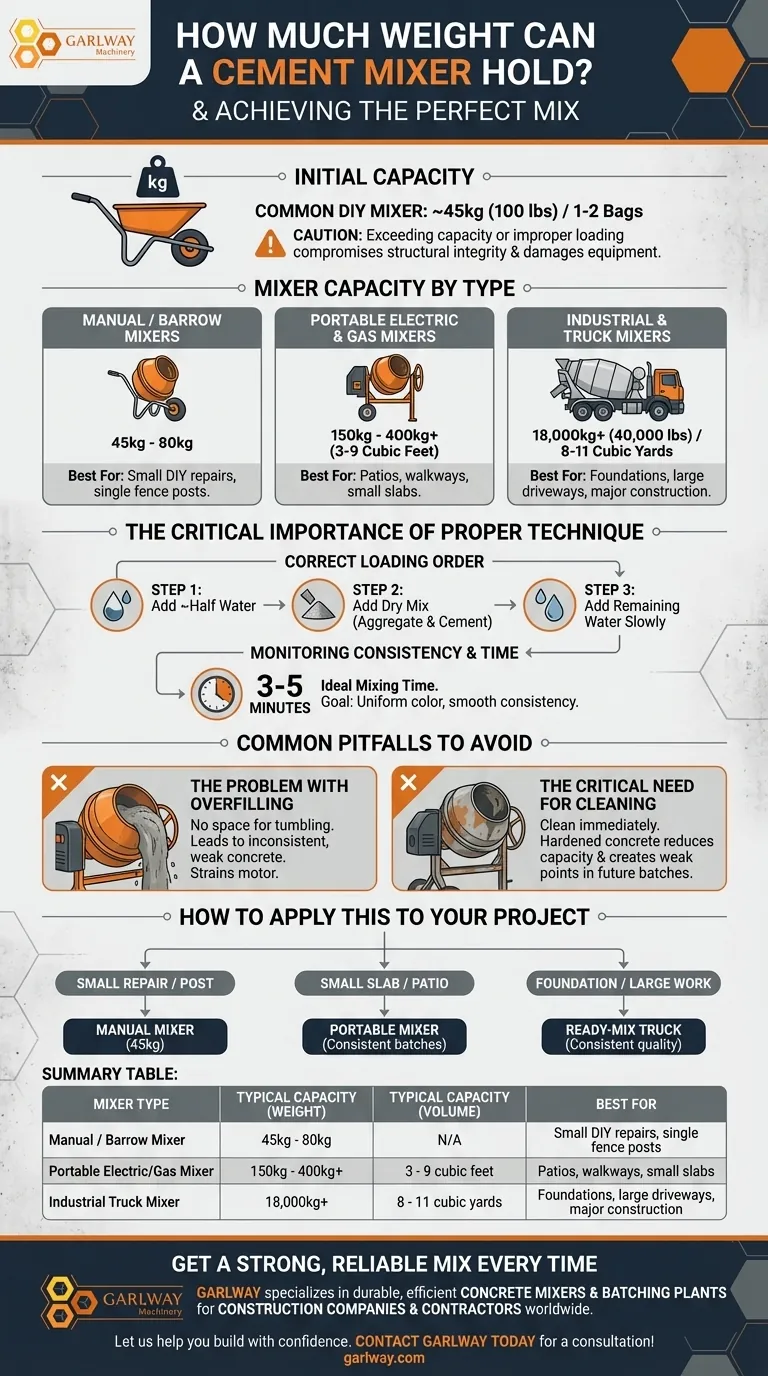
Understanding Mixer Capacity by Type
The 45kg figure is a starting point. The capacity you can expect depends entirely on the size and power source of the mixer, ranging from small, hand-powered units to massive industrial machines.
Small, Manual Mixers
These are often called "barrow" or "rocking" mixers. They rely on the user to physically agitate the drum, typically by rocking it back and forth with handles.
Their capacity is intentionally small, usually around 45kg to 80kg, to ensure a single person can manage the weight and achieve a proper mix through manual effort.
Portable Electric & Gas Mixers
This is the most common category for homeowners and small contractors. These mixers use a motor to rotate the drum, significantly reducing manual labor.
Capacities for these mixers are typically measured in cubic feet and range from 3 to 9 cubic feet, which can handle anywhere from 150kg to over 400kg of dry mix per batch.
Industrial and Truck Mixers
These are the largest mixers used for commercial construction and large-scale projects. Their capacity is measured in cubic yards.
A standard ready-mix concrete truck can hold 8 to 11 cubic yards of concrete, weighing over 18,000kg (40,000 lbs).
The Critical Importance of Proper Technique
Achieving a strong, uniform concrete mix is less about maxing out the weight and more about following a precise process. The correct technique ensures every particle of sand and aggregate is coated in cement paste.
The Correct Loading Order
The sequence in which you add materials is crucial. For most standard mixers, the best practice is to add about half the water first.
Next, add your dry concrete mix (or sand/aggregate and cement). Finally, add the remaining water slowly until you reach the desired consistency. This method prevents dry pockets from forming at the bottom of the drum.
Monitoring Consistency and Time
Don't just set a timer and walk away. The ideal mixing time is typically 3 to 5 minutes after all materials are added.
Over-mixing can begin to break down the aggregate, while under-mixing results in a weak, inconsistent final product. The goal is a uniform color and a smooth, workable consistency—not too wet and not too dry.
Common Pitfalls to Avoid
Mistakes in the mixing process are a primary cause of concrete failure. Understanding these common errors is key to getting a professional result.
The Problem with Overfilling
It is tempting to load as much as possible to finish a job faster, but this is a critical mistake. An overfilled mixer drum doesn't have enough space for the materials to tumble and combine effectively.
This leads to a poor-quality, inconsistent mix with weak spots that will compromise the strength and durability of your finished project. It also puts significant strain on the mixer's motor.
The Critical Need for Cleaning
Always clean your mixer immediately after use. Once concrete begins to harden inside the drum, it is extremely difficult to remove.
Leftover hardened concrete will reduce the mixer's effective capacity on the next use and can break off into future batches, creating weak points in your new concrete.
How to Apply This to Your Project
Choosing the right approach depends entirely on the scale of your work.
- If your primary focus is a small repair or setting a single fence post: A manual mixer with a 45kg capacity is a perfectly suitable and economical choice.
- If your primary focus is a small slab, patio, or walkway: A portable electric mixer is the most efficient tool, allowing you to produce consistent batches quickly.
- If your primary focus is a foundation, large driveway, or major structural work: You should order ready-mix concrete delivered by a truck to ensure consistent quality and strength.
Ultimately, respecting the mixer's capacity and using proper technique are the keys to producing strong, reliable concrete.
Summary Table:
| Mixer Type | Typical Capacity (Weight) | Typical Capacity (Volume) | Best For |
|---|---|---|---|
| Manual / Barrow Mixer | 45kg - 80kg | N/A | Small DIY repairs, single fence posts |
| Portable Electric/Gas Mixer | 150kg - 400kg+ | 3 - 9 cubic feet | Patios, walkways, small slabs |
| Industrial Truck Mixer | 18,000kg+ | 8 - 11 cubic yards | Foundations, large driveways, major construction |
Get a Strong, Reliable Mix Every Time
Choosing the right cement mixer is crucial for the strength and durability of your concrete project. GARLWAY specializes in construction machinery, offering a range of durable and efficient concrete mixers and concrete batching plants designed for construction companies and contractors worldwide.
Let us help you build with confidence. Our experts can guide you to the perfect equipment for your project's scale and requirements.
Contact GARLWAY today for a consultation and ensure your next mix is a success!
Visual Guide
Related Products
- HZS25 Best Cement Mixer for Quick Mix Concrete at Bunnings
- JDC350 Small Cement Concrete Mortar Mixer
- Concrete Cement Mixer Machine Drum Mixer for Construction
- JW1000 Mobile Cement Mixer Concrete Mixer Truck and Batching Plant
- JZC500 Large Cement Mixer Machine Price for Concrete Mix
People Also Ask
- How do cement mixers enhance safety on construction sites? Reduce Strain, Hazards, and Accidents
- What are the main components of a cement mixer? A Guide to Core Parts & Functions
- What are some tips for using a cement mixer effectively? Maximize Your Mixer's Performance & Concrete Quality
- How does cleaning a cement mixer after use benefit its performance? Maximize Lifespan and Mix Quality
- Why is it important to clean the cement mixer after use? Prevent Costly Damage and Ensure Quality Concrete