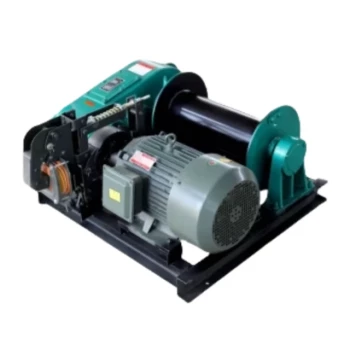
At its maximum capacity, a 9500 lb winch can pull 9,500 pounds (4,309 kgs). This figure, known as the rated line pull, represents the winch's capability under ideal conditions: a single, straight-line pull with only the first layer of cable wrapped around the drum. In real-world recovery situations, this number is significantly reduced by various factors.
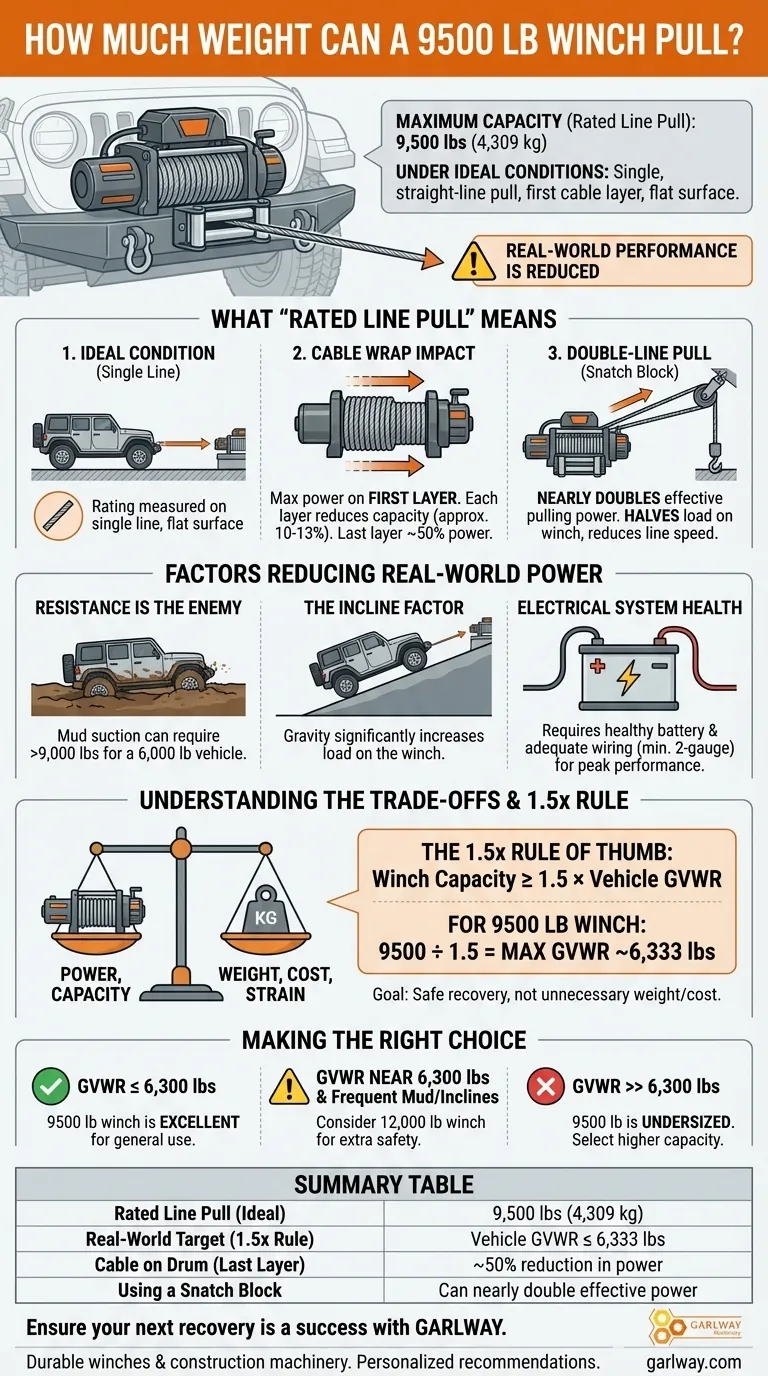
The "9500 lb" rating is a best-case scenario, not a guarantee of everyday performance. The most critical principle for selecting a winch is that its rated capacity should be at least 1.5 times the gross weight of your vehicle to account for real-world resistance like mud and inclines.
What "Rated Line Pull" Actually Means
The number on the winch is a vital starting point, but understanding the context behind that rating is essential for safe and effective use.
The Ideal Condition
A 9,500 lb rating is measured on a single line pull. This means one line running directly from the winch to the anchor point. This rating also assumes the pull is perfectly horizontal on a flat, hard surface.
The Critical Impact of Cable Wrap
A winch's maximum pulling power is only available on the very first layer of cable wrapped around the drum. As more cable is wound onto the drum, the effective gear ratio changes, and the winch's pulling power decreases.
Each additional layer of cable can reduce the winch's pulling capacity by approximately 10-13%. By the time you get to the last layer of cable on the drum, the winch may only have about half of its rated power.
Single-Line vs. Double-Line Pulls
While the rating is for a single line, you can nearly double the winch's effective pulling power by using a snatch block. This technique creates a double-line pull, which halves the load on the winch at the cost of reducing the line speed.
Factors That Reduce Real-World Pulling Power
The 9,500 lb rating quickly diminishes when faced with the realities of vehicle recovery.
Resistance is the Real Enemy
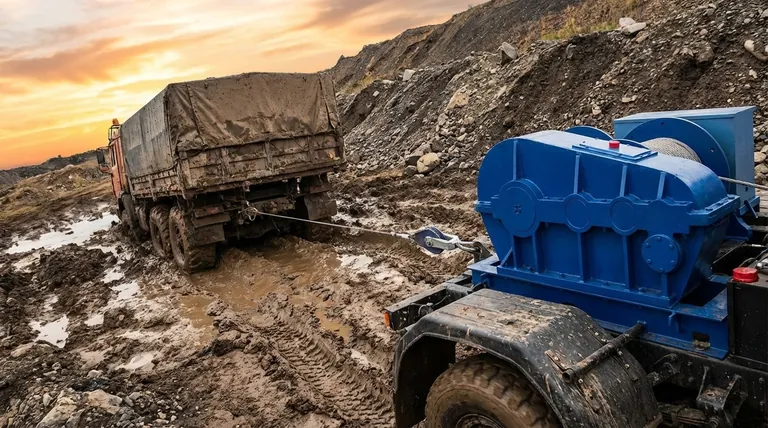
The true force a winch must overcome is not just the vehicle's weight, but the total resistance. A 6,000 lb vehicle buried to its axles in thick mud creates a suction effect that can require well over 9,000 lbs of force to break free.
The Incline Factor
Pulling a vehicle up a steep grade dramatically increases the load. The force required is no longer just the rolling resistance but a significant portion of the vehicle's weight working against the winch due to gravity.
Your Electrical System
A winch is a high-demand electrical component. To achieve its maximum rated pull, it requires a healthy, fully charged battery and appropriately sized wiring (a minimum of 2-gauge is often specified). A weak battery or inadequate cables will starve the winch motor of power, preventing it from performing at its peak.
Understanding the Trade-offs
Choosing the right winch is a balance between capacity, weight, and cost.
The 1.5x Rule of Thumb
The most widely accepted safety guideline is to choose a winch with a rated line pull of at least 1.5 times your vehicle's Gross Vehicle Weight Rating (GVWR). You can find the GVWR on the sticker inside your driver's side door jamb.
For a 9500 lb winch, this means it is properly matched for a vehicle with a GVWR of approximately 6,333 lbs or less (9500 ÷ 1.5 = 6333).
Why Not Just Buy the Biggest Winch?
While more power seems better, oversizing a winch has downsides. A larger winch is heavier, putting more strain on your front suspension. It also draws more current from your electrical system and comes at a higher cost. The goal is to have enough power for safe recovery, not to add unnecessary weight and expense.
Making the Right Choice for Your Vehicle
Use your vehicle's weight and your typical use case as your guide.
- If your vehicle's GVWR is around 6,300 lbs or less: A 9500 lb winch is an excellent and appropriate choice for general off-road and recovery situations.
- If your vehicle is near the 6,300 lb limit and you frequently encounter deep mud or steep, rocky terrain: You may want to consider stepping up to a 12,000 lb winch for an extra margin of safety.
- If your vehicle's GVWR is significantly over 6,300 lbs: A 9500 lb winch is undersized for your application, and you must select a winch with a higher capacity to ensure safe operation.
Matching your winch capacity to your vehicle's weight and intended use is the most critical step for safe and successful recoveries.
Summary Table:
| Factor | Impact on Pulling Power |
|---|---|
| Rated Line Pull (Ideal) | 9,500 lbs (4,309 kg) |
| Real-World Target (1.5x Rule) | Vehicle GVWR ≤ 6,333 lbs |
| Cable on Drum (Last Layer) | ~50% reduction in power |
| Using a Snatch Block | Can nearly double effective power |
Ensure your next recovery is a success with the right equipment. GARLWAY specializes in durable, high-performance winches and construction machinery for professionals. Our experts can help you select the perfect winch for your vehicle's weight and your specific job site or off-road challenges.
Contact GARLWAY today for a personalized recommendation and discover how our reliable winches, concrete mixers, and batching plants can power your projects.
Visual Guide
Related Products
- 12000 lb Heavy Duty Electric Boat Winch
- Best 18000 Pound Drum Anchor Trailer Winch
- 12000 lb Electric Boat Trailer Winch with Windlass Anchor Warn
- Portable Small Trailer Winch
- Electric and Hydraulic Winch for Heavy Duty Applications
People Also Ask
- How do electric boat winches work? Unlock Effortless Launching & Retrieval
- How much current does an electric boat winch draw? Plan Your Electrical System for Peak Performance
- How much can a 2000 lb winch pull? A Real-World Guide to Safe Vehicle Recovery
- What are the benefits of using heavy-duty winches for large projects? Boost Efficiency & Safety
- What are the key features required for winches in heavy-duty applications? | Ensure Safety & Efficiency