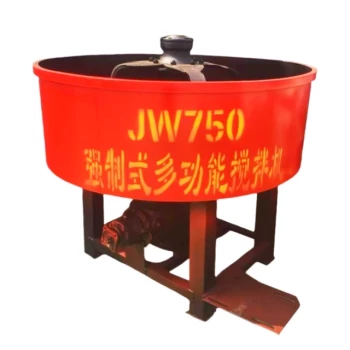
For a typical job-site unit, a portable concrete mixer holds between 3 and 5 cubic feet of material. For instance, a common model like the RYOBI portable cement mixer has a drum capacity of 5 cubic feet, which is ideal for most small to medium-sized residential projects.
The term "portable" can be misleading. You must first distinguish between a small, electric job-site mixer measured in cubic feet and a large, vehicle-mounted "mobile" mixer measured in cubic meters. The difference in scale is massive and dictates the type of project each is suited for.
Defining "Portable": Two Tiers of Mixers
The right mixer depends entirely on the scale of your work. The industry uses terms like "portable" and "mobile" to describe two fundamentally different classes of equipment.
The Job-Site Portable Mixer
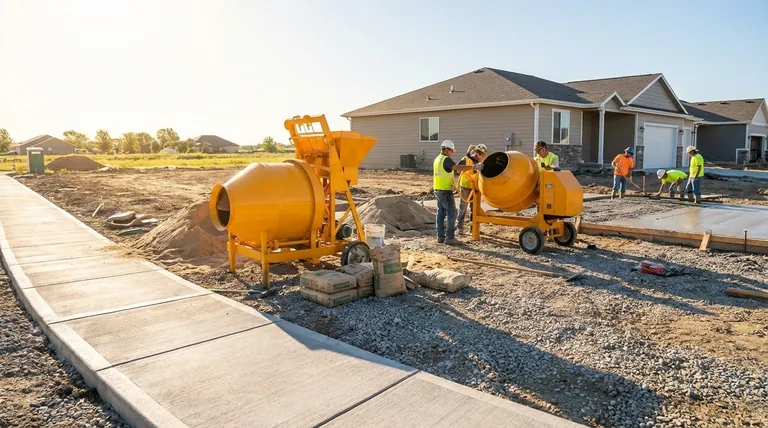
This is what most people picture: a small, often electric-powered mixer with a tilting drum on a wheeled frame.
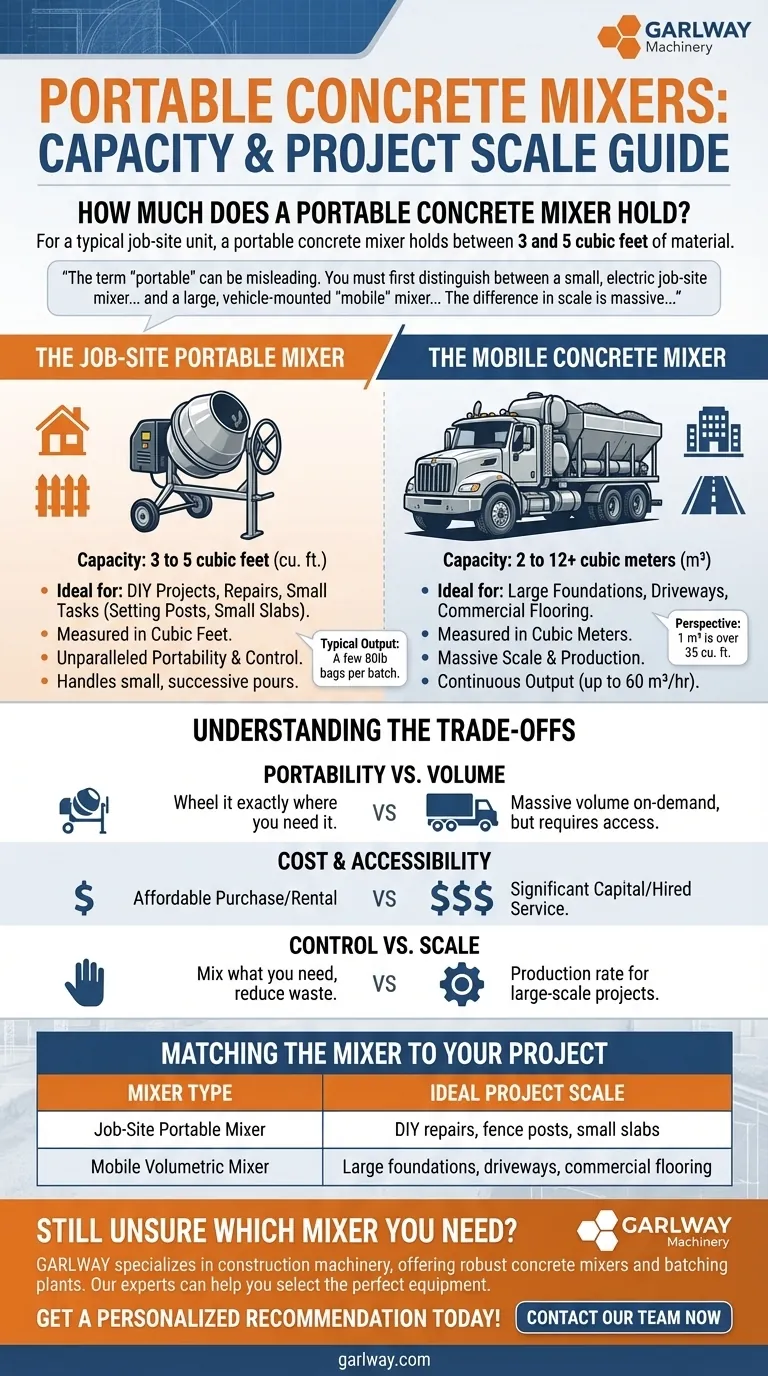
Its capacity is measured in cubic feet (cu. ft.). A typical range is 3 to 5 cubic feet, which is perfect for DIY projects, repairs, or small construction tasks like setting posts or pouring a small sidewalk slab.
The Mobile Concrete Mixer
This is a commercial-grade, self-contained concrete plant mounted on a truck chassis. These are not "portable" in the sense that one person can move them.
Their capacity is measured in cubic meters (m³). A self-loading mixer might hold 2 to 5 cubic meters, while a large volumetric mixer can have a capacity of up to 12 cubic meters. To put that in perspective, one cubic meter is over 35 cubic feet.
How Capacity Translates to Real-World Work
Understanding the volume is less important than understanding what that volume allows you to accomplish.
What a 5 Cubic Foot Mixer Can Do
A 5 cu. ft. drum does not mix 5 cubic feet of finished concrete at once. Due to the angle and need for mixing action, its practical mixing capacity is lower, typically handling a few 80lb bags of concrete mix per batch.
This output is ideal for tasks that can be completed in small, successive pours. It gives you excellent control over your schedule for projects inaccessible to large trucks.
The Power of a Mobile Mixer
A mobile volumetric mixer isn't just about its large holding capacity; it's about production rate.
Some models can produce around 60 cubic meters of concrete per hour. This continuous output is necessary for large-scale projects like building foundations, large driveways, or commercial flooring where a constant supply of fresh concrete is critical.
Understanding the Trade-offs
Choosing between these types involves more than just capacity. It's a balance of convenience, cost, and project scale.
Portability vs. Volume
A small job-site mixer offers unparalleled portability and convenience for small tasks. You can wheel it exactly where you need it.
However, attempting a large project with one means mixing dozens of small, labor-intensive batches, risking inconsistent results and "cold joints" between pours.
Cost and Accessibility
Job-site mixers are an affordable purchase or rental for contractors and homeowners.
Mobile mixers represent a significant capital investment and are typically hired as a service for a specific project. They bring the plant to you but at a much higher cost.
Control vs. Scale
The primary benefit of a small portable mixer is control. You mix what you need, when you need it, reducing waste on small jobs.
The benefit of a mobile mixer is scale. It provides a massive volume of perfectly proportioned concrete on-demand, a feat impossible with a small batch mixer.
Matching the Mixer to Your Project
Ultimately, the capacity you require is defined by your goal.
- If your primary focus is DIY repairs or setting fence posts: A standard 3 to 5 cubic foot job-site portable mixer is the perfect tool for the job.
- If your primary focus is pouring a large slab, foundation, or driveway: You must look beyond portable mixers and hire a mobile volumetric mixer service or a ready-mix truck.
- If your primary focus is project flexibility on a small construction site: A portable mixer provides control over your schedule and mix quality without depending on truck deliveries.
Choosing the right mixer begins with an honest assessment of the scale of your work.
Summary Table:
| Mixer Type | Typical Capacity Range | Ideal Project Scale |
|---|---|---|
| Job-Site Portable Mixer | 3 - 5 cubic feet (cu. ft.) | DIY repairs, fence posts, small slabs |
| Mobile Volumetric Mixer | 2 - 12 cubic meters (m³) | Large foundations, driveways, commercial flooring |
Still Unsure Which Mixer You Need?
GARLWAY specializes in construction machinery, offering robust and reliable concrete mixers and batching plants for construction companies and contractors globally. Our experts can help you select the perfect equipment to match your project's scale and budget, ensuring efficiency and consistent results.
Get a personalized recommendation today! Contact our team now to discuss your specific requirements.
Visual Guide
Related Products
- Portable Concrete Mixer Machine Equipment for Mixing Concrete
- Portable Ready Mix Concrete Mixer Equipment
- Portable Electric Concrete Mixer Machine for Cement Mixing
- Portable Cement Mixer with Lift Concrete Machine
- Portable Electric Small Cement Mixer Concrete Machine
People Also Ask
- Why is it necessary to use a portable concrete mixer? Gain Total Control & Efficiency
- How much concrete can you pour with a portable mixer? Find the Perfect Fit for Your Project
- What types of projects are portable concrete mixers suitable for? Ideal for DIY & Small-Scale Construction
- What types of portable concrete mixers exist? Find the Perfect Mixer for Your Project
- What is the capacity of a typical portable concrete mixer? The 140L Standard for Small-Scale Projects