
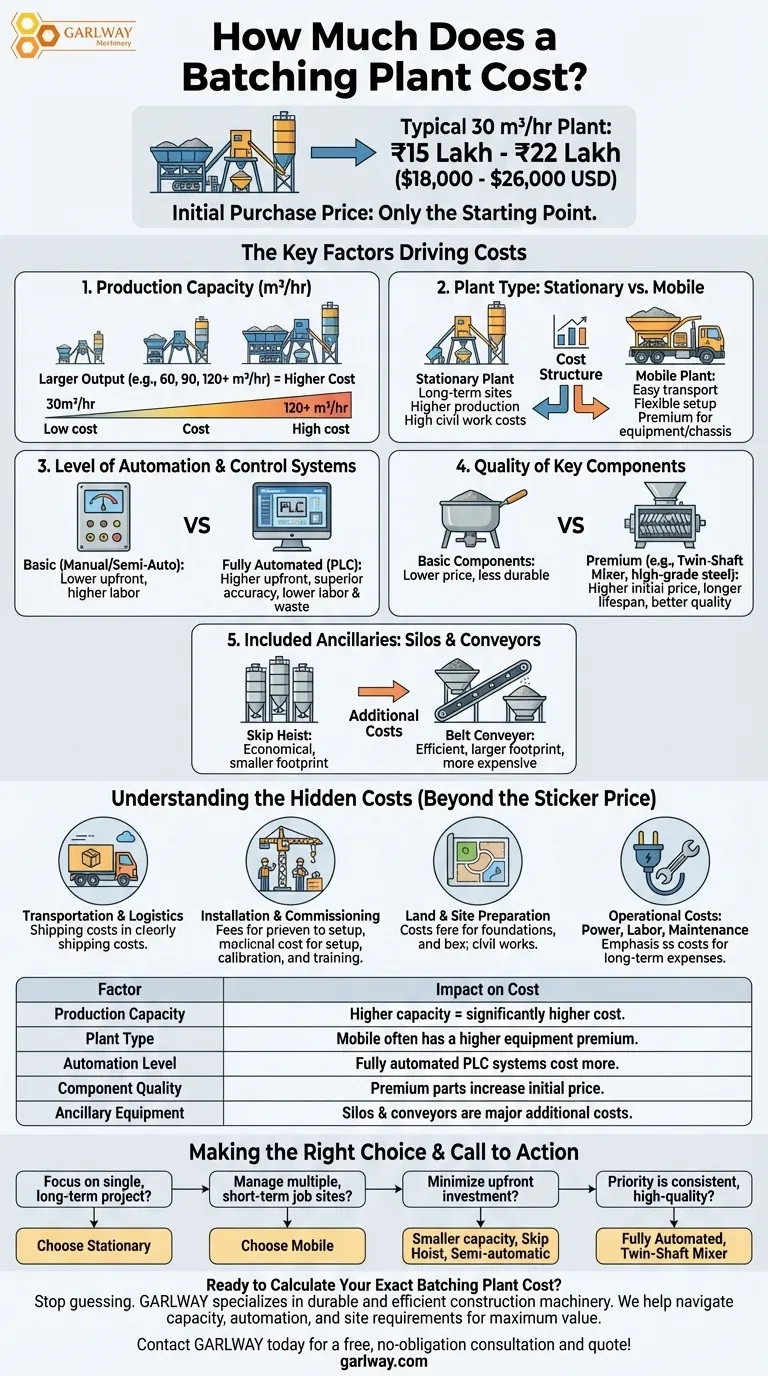
For a typical concrete batching plant, the cost is highly variable, but a baseline figure helps frame the investment. In a market like India, a common 30 m³/hr capacity plant costs between ₹15 Lakh and ₹22 Lakh, which translates to approximately $18,000 to $26,000 USD.
The initial purchase price is only the starting point. The true cost of a batching plant is a function of its capacity, type, and level of automation, with significant additional expenses for installation, site preparation, and long-term operation.
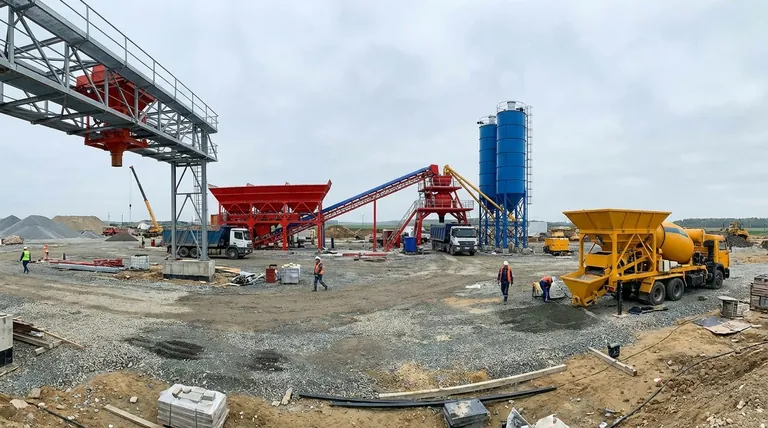
The Key Factors Driving Batching Plant Costs
Understanding the price range requires looking beyond a single number and analyzing the core components that determine the final quote. These factors are the primary levers that influence the upfront investment.
Production Capacity (m³/hr): The Primary Cost Driver
The most significant factor is the plant's rated output, measured in cubic meters per hour. The 30 m³/hr figure is a small-to-medium capacity plant suitable for many standard construction projects.
Larger plants (60, 90, 120 m³/hr or more) require bigger mixers, larger storage bins, more powerful motors, and more robust conveying systems, all of which substantially increase the cost.
Plant Type: Stationary vs. Mobile
Batching plants are generally categorized into two main types, each with a different cost structure.
Stationary plants are designed for long-term installation at a single site. They offer higher production capacity and durability but require significant civil works for foundations, making the total project cost higher.
Mobile plants are engineered for easy transportation and setup across multiple job sites. This flexibility often comes at a premium for the equipment itself due to the compact design and integrated chassis, but it reduces site-specific setup costs.
Level of Automation and Control Systems
The "brain" of the plant dramatically affects the price. A basic plant might use simple push-button controls, requiring a skilled operator to manage every batch manually.
In contrast, a fully automated plant with a Programmable Logic Controller (PLC) system, moisture sensors, and sophisticated software for mix design management will cost significantly more. However, it delivers superior accuracy, reduces material waste, and lowers long-term labor costs.
Quality of Key Components
The manufacturer's choice of components creates a wide price variance. A plant equipped with a high-performance twin-shaft mixer from a reputable brand will be more expensive than one with a basic pan or drum mixer.
Similarly, the quality and accuracy of load cells, the durability of gearboxes and motors, and the thickness of the steel used in bins and silos all contribute to the final price and the plant's operational lifespan.
Included Ancillaries: Silos and Conveyors
The base price of a batching plant often excludes essential ancillary equipment. The number and capacity of cement silos, for instance, are a major additional cost.
The method for feeding aggregates into the mixer—either a more economical skip hoist or a more efficient but expensive belt conveyor system—also has a significant impact on both the price and the plant's physical footprint.
Understanding the Hidden Costs (Beyond the Sticker Price)
Focusing solely on the equipment quote is a common and costly mistake. The total cost of ownership includes several other critical expenses that must be budgeted for.
Transportation and Logistics
The cost of shipping the disassembled plant from the manufacturer to your job site can be substantial, especially for large stationary plants or remote locations.
Installation and Commissioning
Erecting the plant is a complex process. This requires hiring cranes, skilled technicians, and electricians. The manufacturer often charges a separate fee for commissioning, which involves calibrating the plant and training your staff.
Land and Site Preparation
You must account for the cost of the land itself. The site also requires significant civil engineering work, including strong concrete foundations for the main mixing unit, silos, and aggregate bins.
Operational Costs: Power, Labor, and Maintenance
A cheaper plant may not be the most economical in the long run. Less efficient motors can lead to higher electricity bills, and lower-quality components can result in more frequent breakdowns, downtime, and expensive maintenance.
Making the Right Choice for Your Project
Selecting the right plant involves balancing upfront cost with your specific operational requirements.
- If your primary focus is a single, long-term project: A stationary plant offers the highest output and efficiency, justifying the larger initial investment in equipment and civil works.
- If you manage multiple, short-term job sites: A mobile batching plant provides essential flexibility and faster deployment, making it a more strategic long-term asset.
- If your goal is minimizing upfront investment: A smaller capacity plant with a skip hoist and semi-automatic controls is your most direct path, but be prepared for higher labor involvement.
- If your priority is consistent, high-quality concrete: Invest in a fully automated plant with high-quality sensors and a twin-shaft mixer to guarantee precision and reduce material waste.
Ultimately, defining your project's operational needs and long-term business goals is the first step to understanding the true cost of your investment.
Summary Table:
| Factor | Impact on Cost |
|---|---|
| Production Capacity | Higher capacity (e.g., 60+ m³/hr) = significantly higher cost. |
| Plant Type | Mobile plants often have a higher equipment premium than stationary. |
| Automation Level | Fully automated PLC systems cost more than semi-automatic controls. |
| Component Quality | Premium parts (e.g., twin-shaft mixers) increase the initial price. |
| Ancillary Equipment | Silos and belt conveyors are major additional costs. |
Ready to Calculate Your Exact Batching Plant Cost?
Stop guessing and get a precise quote tailored to your project's needs. GARLWAY specializes in providing durable and efficient construction machinery, including stationary and mobile concrete batching plants, winches, and concrete mixers, for construction companies and contractors globally.
We help you navigate the complexities of capacity, automation, and site requirements to ensure your investment delivers maximum value and productivity.
Contact GARLWAY today for a free, no-obligation consultation and quote!
Visual Guide
Related Products
- HZS120 Ready Mix Concrete Batching Plant Commercial Mud Cement Mixer
- HZS35 Small Cement Concrete Mixing Batch Plant
- HZS75 Concrete Batching Plant Cement Mixer Price Concrete Mixer Bunnings Mixing Plant
- Commercial Electric Concrete Mixer Machine HZS 50 Small Batch Plant for Sale
- HZS180 Ready Mix Concrete Plant for Foundations with Sand and Cement
People Also Ask
- What is a ready mix concrete batching plant? The Engine of Modern Construction
- What is the name of the machine used in ready mix? Unpacking the Complete Concrete System
- What is the core component of a concrete batching plant? The Mixer Unit Defines Your Concrete Quality
- What are the types of concrete mixers used in batching plants? Choose the Right Mixer for Your Project
- What are the advantages and disadvantages of concrete batching plants? Maximize Quality & Efficiency





