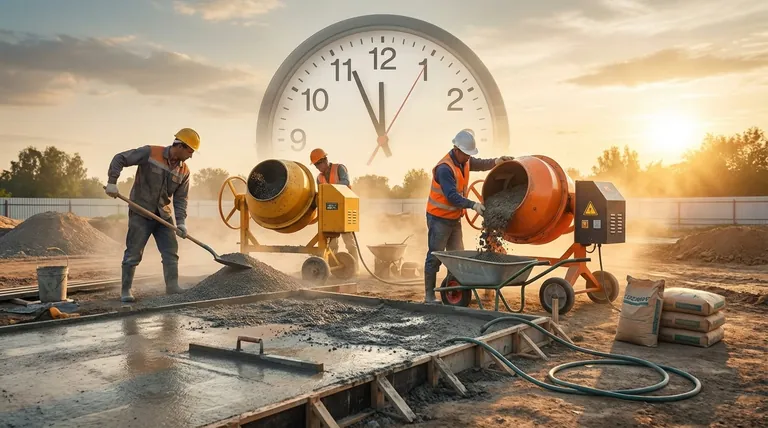
In a portable concrete mixer, a single batch of concrete typically takes approximately 5 minutes to mix thoroughly. However, this simple number is only part of a more critical timing constraint that governs your entire project: the one-hour window you have to mix, transport, and place the concrete before it begins to set.
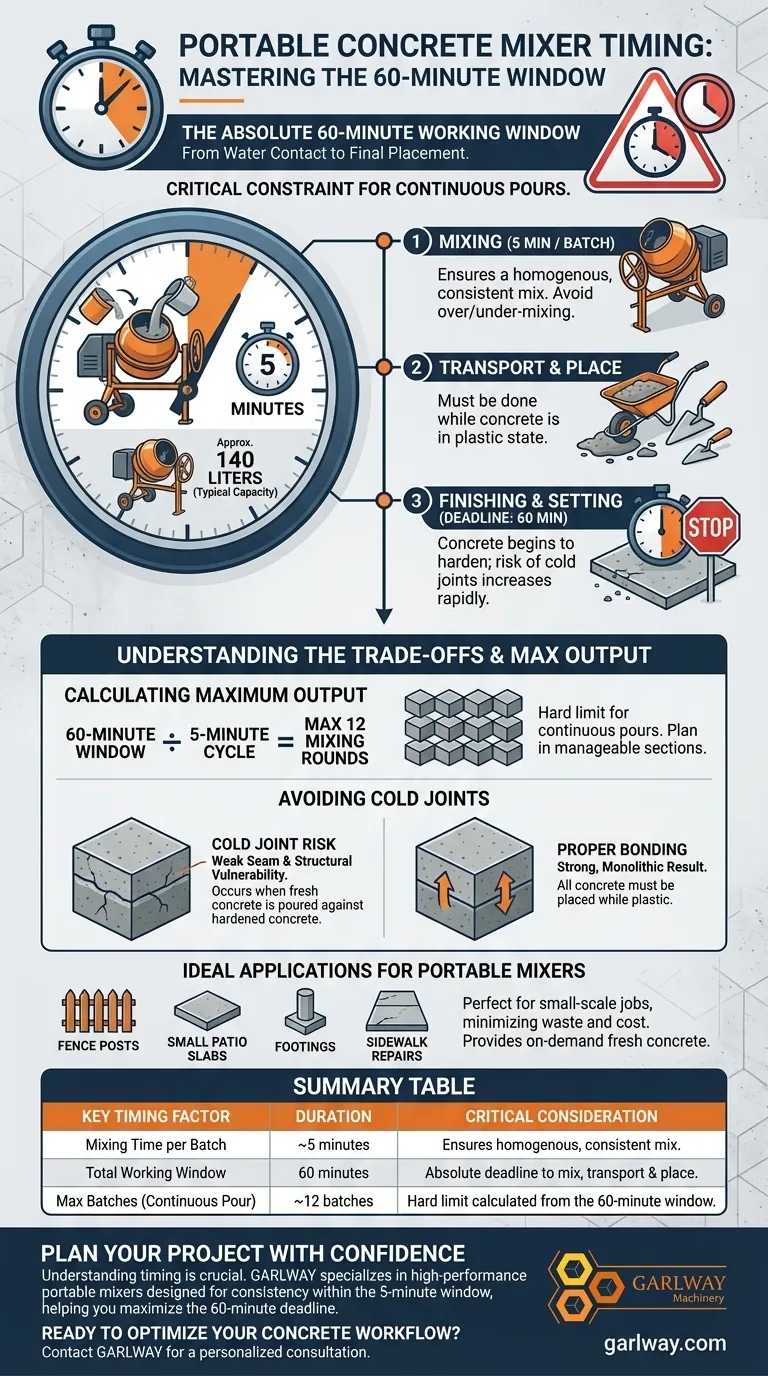
The most important factor isn't the 5-minute mix time per batch, but the strict 60-minute total working time you have from the moment water hits the cement. This deadline dictates the maximum amount of concrete you can realistically produce and place for a single, continuous pour.
The Core Timing Principle: The 60-Minute Window
Understanding the timing of a concrete project goes far beyond the mixer itself. The chemical reaction that hardens concrete is unforgiving, and your entire workflow must be planned around it.
What is a "Cold Joint"?
A cold joint is a weak seam created when you pour fresh concrete against a layer that has already started to harden. This prevents the two layers from bonding properly, creating a significant structural vulnerability that can lead to cracking and failure.
To avoid cold joints, all the concrete for a continuous slab or section must be placed while it is all in a similar plastic state.
The 5-Minute Mixing Cycle
The 5-minute mixing time is the average duration required for a portable mixer to fully combine the cement, sand, aggregate, and water. This ensures a homogenous, consistent mix with uniform strength.
Rushing this step can result in weak spots, while over-mixing can begin to break down the aggregate and accelerate the hardening process.
Calculating Your Maximum Output
With a strict 60-minute working window and a 5-minute cycle per batch, you can complete a maximum of 12 mixing rounds. This is a hard limit for any continuous pour, forcing you to plan your project in manageable sections.
Planning Your Project Around the Mixer
A portable mixer offers great flexibility, but it requires careful planning to be used effectively. Its primary advantage lies in producing fresh, high-quality concrete exactly when and where you need it.
Capacity of a Typical Portable Mixer
A standard portable mixer often has a drum capacity of around 140 liters. This size is ideal for small-scale projects, allowing you to produce precise amounts without significant material waste.
The Benefit of On-Demand Mixing
The key value of a portable mixer is its ability to provide fresh concrete on-site. This eliminates the risk of concrete hardening in transit, as you would have with a delivery from a ready-mix plant, giving you maximum control over quality.
Ideal Projects for Portable Mixers
This method is perfectly suited for small-scale jobs like setting fence posts, creating small patio slabs, pouring footings, or repairing sidewalks. It minimizes waste and cost for projects where a large truck delivery would be impractical.
Understanding the Trade-offs
While effective, using a portable mixer involves distinct challenges that you must be prepared for. Objectively weighing these trade-offs is crucial for project success.
The Labor-Intensive Process
Mixing concrete is physically demanding. Each 5-minute cycle involves loading heavy materials, managing water, and then unloading the heavy, wet concrete. This continuous effort can be exhausting, especially when racing against the clock.
The Pressure of the Clock
The 60-minute window is absolute. Any delay—a problem with your formwork, a misplaced tool, or running out of water—eats into this precious time and increases the risk of cold joints or wasted material.
Not for Large-Scale Pours
Portable mixers are fundamentally unsuitable for large projects like house foundations, large driveways, or big slabs. The volume they produce is simply too low to keep up with the finishing work required for a large, monolithic pour.
How to Apply This to Your Project
Your project's specific goal will determine which timing constraint is more important to your planning.
- If your primary focus is isolated pours (like setting fence posts): The 5-minute mixing time per batch is your main metric, as you will complete each pour independently.
- If your primary focus is a continuous slab (like a small patio): The 60-minute total working window is the absolute constraint that you must plan your entire workflow around.
By understanding these two interconnected time limits, you can effectively plan your work, avoid costly mistakes, and ensure a strong, durable result.
Summary Table:
| Key Timing Factor | Duration | Critical Consideration |
|---|---|---|
| Mixing Time per Batch | ~5 minutes | Ensures a homogenous, consistent mix. |
| Total Working Window | 60 minutes | Absolute deadline to mix, transport, and place concrete before it sets. |
| Maximum Batches (Continuous Pour) | ~12 batches | Hard limit calculated from the 60-minute window. |
Plan Your Project with Confidence
Understanding the precise timing of concrete mixing is crucial for a strong, durable result. For construction companies and contractors working on small to medium-scale projects, having the right equipment makes all the difference.
GARLWAY specializes in high-performance construction machinery, including durable and efficient portable concrete mixers designed to deliver consistent batches within the critical 5-minute window. Our solutions help you maximize productivity while working within the 60-minute deadline, ensuring quality and avoiding costly cold joints.
Ready to optimize your concrete workflow? Let our experts help you select the perfect mixer for your project's scale and demands.
Contact GARLWAY today for a personalized consultation and quote!
Visual Guide
Related Products
- Portable Concrete Mixer Machine Equipment for Mixing Concrete
- Portable Ready Mix Concrete Mixer Equipment
- Portable Electric Concrete Mixer Machine for Cement Mixing
- Portable Cement Mixer with Lift Concrete Machine
- Portable Electric Small Cement Mixer Concrete Machine
People Also Ask
- Why is it necessary to use a portable concrete mixer? Gain Total Control & Efficiency
- How much concrete can you pour with a portable mixer? Find the Perfect Fit for Your Project
- What types of projects are portable concrete mixers suitable for? Ideal for DIY & Small-Scale Construction
- How much does a portable concrete mixer hold? A Guide to Choosing the Right Capacity
- What types of portable concrete mixers exist? Find the Perfect Mixer for Your Project