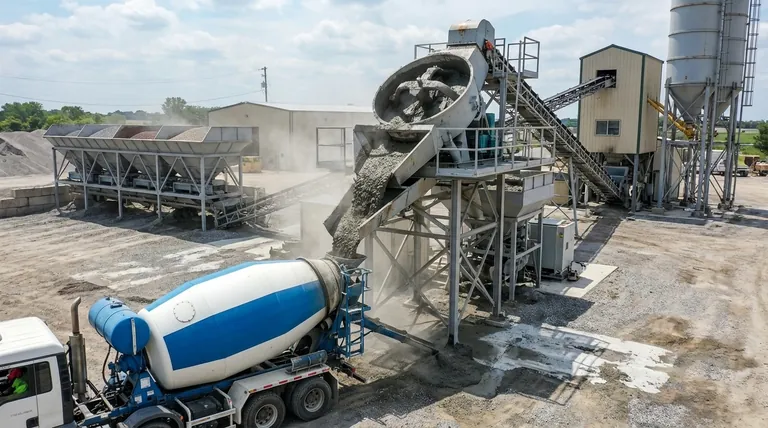
Once the mixing cycle is complete, finished concrete is unloaded from a central mixer by opening a large discharge door. The concrete then flows through a dedicated discharge hopper, or chute, directly into a waiting mixer truck. This gravity-fed process is the final and critical step in the batch plant's production sequence before the material is transported to a construction site.
The unloading of finished concrete is not merely a transfer of material; it is a precisely controlled handoff from the plant's static production environment to its mobile delivery fleet. This process is engineered for speed and cleanliness to maintain concrete quality and maximize plant throughput.
The Unloading Process in Context
To fully appreciate the unloading step, it's essential to see it as the conclusion of a larger, highly controlled manufacturing sequence.
Step 1: Raw Material Proportioning
Before any mixing occurs, the plant's system meticulously weighs all raw materials. This includes cement, supplementary materials like fly ash, aggregates (sand and stone), water, and chemical admixtures.
Step 2: Centralized Mixing
The precisely measured ingredients are then conveyed into a large, powerful central mixer. Here, they are blended together for a specific duration to create a homogenous batch of concrete that meets design specifications.
Step 3: The Unloading Sequence
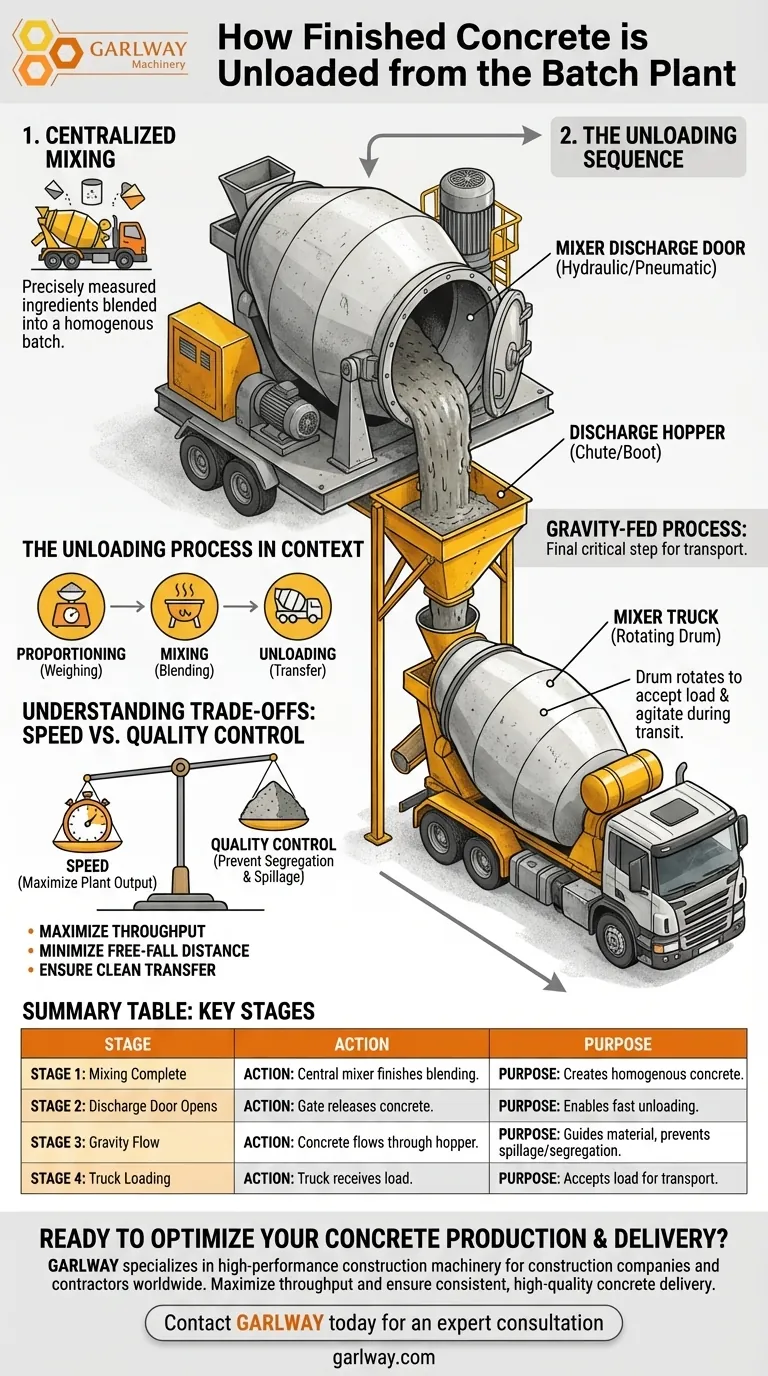
This is the final stage within the plant. The moment the mixing is complete, the mixer's discharge door opens, releasing the entire batch. The concrete flows downward through a hopper, which channels the material cleanly into the rotating drum of the concrete truck positioned directly below. The entire cycle then repeats for the next batch.
Key Components of the Unloading System
The unloading process relies on a few simple but critical pieces of equipment designed for efficiency and reliability.
The Mixer Discharge Door
This is a heavy-duty gate at the bottom of the mixer. It is hydraulically or pneumatically operated to open quickly, allowing the full volume of concrete to be discharged in a short amount of time.
The Discharge Hopper
Also known as a chute or boot, this component is essential for guiding the flow of concrete. It prevents spillage and ensures the material is directed into the center of the truck's receiving funnel, which is crucial for proper loading.
The Mixer Truck
The transport vehicle is an active participant. The driver must position the truck precisely under the hopper, and the truck's drum is typically already rotating to accept the new batch and continue the gentle agitation required during transit.
Understanding the Trade-offs: Speed vs. Quality Control
The design of the unloading process is a balance between maximizing plant output and protecting the integrity of the finished product.
The Need for Speed
The time it takes to discharge one batch and position the next truck is a primary factor in a plant's overall production capacity. A fast and efficient unloading sequence allows the mixer to be reloaded and begin the next cycle immediately, maximizing throughput.
Preventing Material Segregation
Discharging concrete improperly can cause segregation, where the heavier aggregates separate from the cement paste. The hopper is designed to minimize the free-fall distance and guide the concrete smoothly, ensuring the mix remains homogenous as it enters the truck.
Ensuring a Clean Transfer
Spillage is not only wasteful but can also create safety hazards and maintenance problems. A well-designed system ensures a clean transfer from the mixer to the truck, reducing cleanup and material loss.
How This Process Impacts Your Project
Understanding this final step in production gives you insight into the logistics and quality control of your concrete supply.
- If your primary focus is project scheduling: The speed of the plant's unloading cycle directly dictates how many trucks can be dispatched per hour, impacting the delivery rate to your job site.
- If your primary focus is concrete quality: A properly managed discharge process is the last point of quality control within the plant, ensuring the homogenous mix you ordered is what actually gets loaded for delivery.
- If your primary focus is operational efficiency: For plant managers, the unloading system is a key bottleneck; optimizing this step is critical for maximizing the entire facility's production capacity.
Recognizing the mechanics of this simple transfer reveals the vital link between controlled manufacturing and successful on-site delivery.
Summary Table:
| Stage | Key Action | Purpose |
|---|---|---|
| 1. Mixing Complete | Central mixer finishes blending. | Creates a homogenous batch of concrete. |
| 2. Discharge Door Opens | Hydraulic/pneumatic gate releases concrete. | Enables fast, complete unloading of the batch. |
| 3. Gravity Flow | Concrete flows through a discharge hopper/chute. | Guides material cleanly into the truck's drum, preventing spillage and segregation. |
| 4. Truck Loading | Mixer truck is positioned under the hopper; drum rotates. | Accepts the load and begins agitation for transport to the site. |
Ready to Optimize Your Concrete Production and Delivery?
A reliable and efficient batching plant is the backbone of any successful construction project. The unloading process is a critical step that directly impacts your project's schedule, budget, and the quality of the final structure.
GARLWAY specializes in providing high-performance construction machinery—including durable concrete batching plants, concrete mixers, and winches—for construction companies and contractors worldwide. We help you maximize throughput and ensure consistent, high-quality concrete delivery.
Let's discuss how our solutions can bring value to your operations: Contact GARLWAY today for a expert consultation
Visual Guide
Related Products
- HZS120 Ready Mix Concrete Batching Plant Commercial Mud Cement Mixer
- HZS35 Small Cement Concrete Mixing Batch Plant
- HZS75 Concrete Batching Plant Cement Mixer Price Concrete Mixer Bunnings Mixing Plant
- Commercial Electric Concrete Mixer Machine HZS 50 Small Batch Plant for Sale
- HZS180 Ready Mix Concrete Plant for Foundations with Sand and Cement
People Also Ask
- What is a ready mix concrete batching plant? The Engine of Modern Construction
- What is the name of the machine used in ready mix? Unpacking the Complete Concrete System
- What is the core component of a concrete batching plant? The Mixer Unit Defines Your Concrete Quality
- What are the types of concrete mixers used in batching plants? Choose the Right Mixer for Your Project
- What are the advantages and disadvantages of concrete batching plants? Maximize Quality & Efficiency