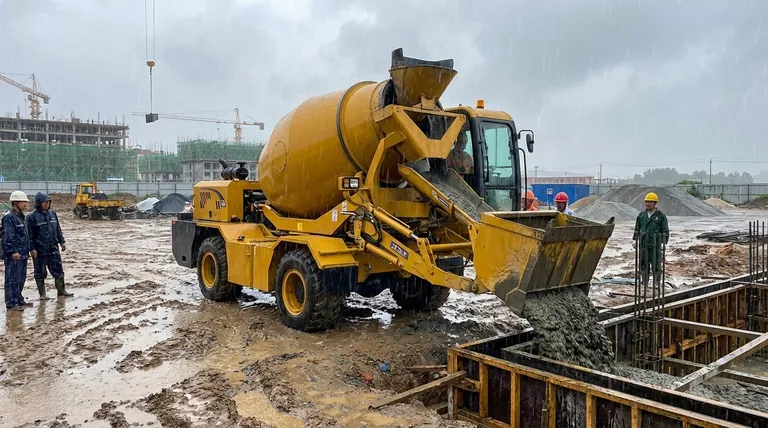
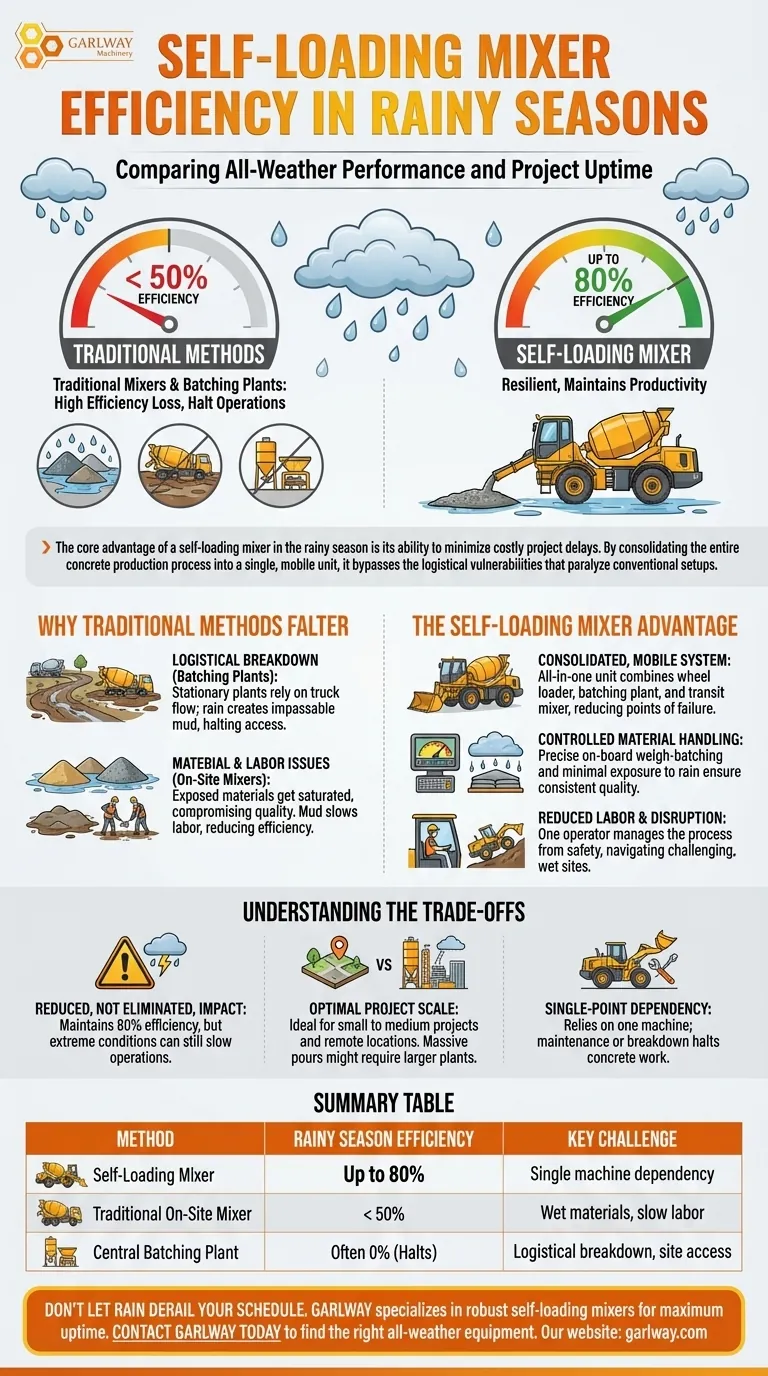
In rainy conditions, a self-loading concrete mixer is dramatically more efficient than traditional methods. While conventional mixers can lose over 50% of their efficiency and central batching plants may be forced to halt operations entirely, a self-loading mixer typically maintains up to 80% of its normal productivity. This resilience makes it a critical asset for keeping projects on schedule despite adverse weather.
The core advantage of a self-loading mixer in the rainy season is its ability to minimize costly project delays. By consolidating the entire concrete production process into a single, mobile unit, it bypasses the logistical vulnerabilities that paralyze conventional setups.
Why Traditional Methods Falter in the Rain
To understand the self-loading mixer's advantage, we must first analyze why other methods fail. The core issues are logistics, material integrity, and site accessibility.
The Problem with Batching Plants
Central batching plants are stationary and rely on a constant flow of trucks to deliver raw materials and transport mixed concrete. Rain creates mud, making site access for these heavy vehicles difficult or impossible.
This logistical breakdown is often the primary reason batching plants cease operations entirely during wet seasons.
The Efficiency Loss in Traditional Mixers
Standard on-site mixers suffer from a different set of problems. Material stockpiles (sand, aggregate) are often exposed to the elements.
Rain can saturate these materials, upsetting the critical water-to-cement ratio and compromising concrete quality. Furthermore, moving materials across a muddy, hazardous site slows down labor, directly contributing to the significant drop in efficiency.
The Self-Loading Mixer's All-Weather Advantage
The self-loading mixer's design inherently solves the problems that plague other systems. Its effectiveness stems from its all-in-one, self-contained nature.
A Consolidated, Mobile System
The machine combines the functions of a wheel loader, a batching plant, and a transit mixer into one vehicle. A single operator can drive to the materials, load the precise amount needed, mix the concrete, and deliver it directly to the pour site.
This eliminates the complex chain of vehicles and personnel required by other methods, drastically reducing the points of failure caused by weather.
Controlled Material Handling
Because the machine loads materials itself immediately before mixing, it minimizes their exposure to rain. The onboard electronic weigh-batching system and water tank allow the operator to precisely control the mix design, ensuring consistent quality.
Reduced Labor and Site Disruption
The entire process is managed by one operator from the safety of a cab. This reduces the number of workers needed on a potentially slippery and dangerous site.
The machine's mobility also means it can navigate challenging terrain to get materials and deliver concrete, keeping the project moving forward when it would otherwise be at a standstill.
Understanding the Trade-offs
While highly effective, it's important to recognize the context in which a self-loading mixer operates best. Objectivity requires acknowledging its limitations.
Reduced, Not Eliminated, Impact
Maintaining 80% efficiency is a remarkable advantage, but it is not 100%. Extreme weather, impassable mud, or completely saturated material stockpiles can still present challenges and slow down operations.
Optimal Project Scale
Self-loading mixers are ideal for small to medium-sized projects, remote locations, or sites with difficult access. For massive, continuous high-volume pours in good weather, a full-scale batching plant will have a higher peak output.
Single-Point Dependency
The project's entire concrete production relies on a single piece of equipment. If that one machine requires maintenance or breaks down, all concrete work stops until it is repaired.
Making the Right Choice for Your Project
Your decision should be based on your project's primary risks and priorities.
- If your primary focus is maximizing uptime during unpredictable weather: The self-loading mixer is the superior choice, providing reliable production when other methods stop.
- If your primary focus is minimizing on-site labor costs and logistical complexity: The all-in-one nature of the self-loading mixer offers a distinct advantage by reducing personnel and vehicle coordination.
- If your primary focus is the highest possible volume for a massive project in stable weather: A traditional batching plant may offer greater peak output, but it carries a significant risk of weather-related delays.
Ultimately, choosing a self-loading mixer is a strategic decision to de-risk your project timeline against the unpredictability of weather.
Summary Table:
| Method | Rainy Season Efficiency | Key Challenge |
|---|---|---|
| Self-Loading Mixer | Up to 80% | Single machine dependency |
| Traditional On-Site Mixer | < 50% | Wet materials, slow labor |
| Central Batching Plant | Often 0% (Halts) | Logistical breakdown, site access |
Don't let the rainy season derail your construction schedule. GARLWAY specializes in robust construction machinery, offering self-loading mixers, winches, and batching plants designed for maximum uptime. Our solutions help construction companies and contractors globally maintain productivity in challenging conditions.
Contact GARLWAY today to find the right all-weather equipment for your project and keep your timeline on track.
Visual Guide
Related Products
- Skid Steer Self Loading Concrete Mixers for Construction
- Belle Mixer Drum Self Loading Mortar Mixers JS3000
- Portable Cement Mixer with Lift Concrete Machine
- Portable Concrete Mixer Machine Equipment for Mixing Concrete
- Portable Ready Mix Concrete Mixer Equipment
People Also Ask
- How does the control system improve production efficiency in a self loading concrete mixer? Automate Mixing for Speed & Quality
- What is the purpose of keeping the drum rotating during transportation in a self loading concrete mixer? Ensure Quality & Consistency
- How does the weighing process work in a self loading concrete mixer? Achieve Precise, On-Site Concrete Batching
- What components are involved in the loading process of a self loading concrete mixer? A Guide to the Key Systems
- How should materials be loaded into a self-loading concrete mixer? Master the Step-by-Step Process