
In a wire rope hoist, the emergency stop button functions as a critical failsafe device. By pushing the button, an operator immediately and completely cuts electrical power to the hoist's motor, which in turn engages the primary brake and halts all movement. This provides an immediate manual override to prevent accidents or injury during an unforeseen event.
The emergency stop is not just another button; it is the operator's ultimate manual intervention tool. It is fundamentally different from automated safety features because it provides absolute control to stop operations instantly in any emergency situation, regardless of the cause.
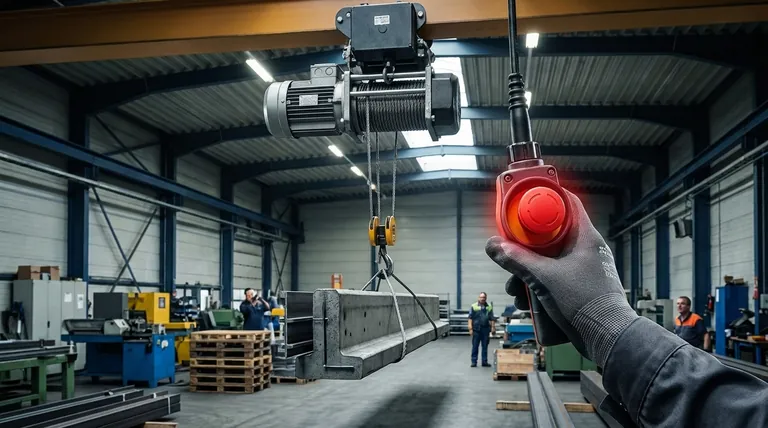
The Core Mechanism: How an E-Stop Works
An emergency stop (E-stop) system is designed for simplicity and reliability. Its function goes beyond simply signaling the hoist to stop; it physically interrupts the machine's ability to operate.
Breaking the Main Power Circuit
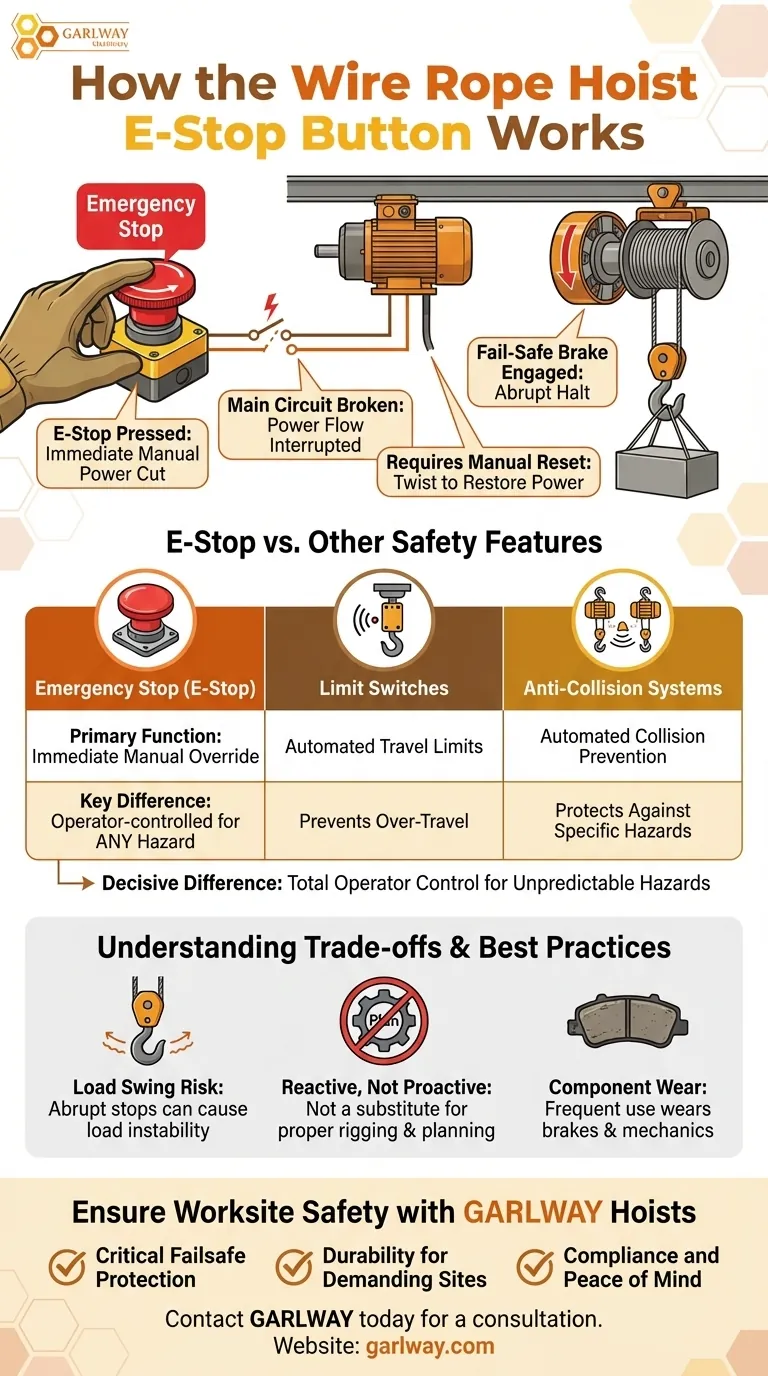
When pressed, the E-stop button physically opens a switch in the hoist’s main control circuit. This immediately cuts off the flow of electricity to the electric motor that drives the wire rope. It is a direct, hardwired interruption, not a software command.
Engaging the Hoist Brake
Most modern wire rope hoists use a fail-safe electromagnetic brake. This brake is held open by electrical power when the hoist is running. When the E-stop cuts the power, the brake automatically engages, bringing the load to an abrupt halt.
Requiring a Manual Reset
After being activated, the E-stop button will remain in the "off" position. Power cannot be restored to the hoist until the operator deliberately resets the button, which typically involves twisting or pulling it. This prevents an accidental restart of the machinery while a hazard is still present.
E-Stop vs. Other Hoist Safety Features
Understanding the E-stop's unique role requires comparing it to other automated safety systems that protect the equipment and the load.
E-Stop vs. Limit Switches
Limit switches are automated controls that define the safe upper and lower travel range of the hook. They automatically cut motor power when the hoist reaches a pre-set high or low point, preventing the rope from tangling or the hook block from hitting the drum. This is a routine, preventative function.
E-Stop vs. Anti-Collision Systems
Anti-collision systems are automated sensors designed to prevent hoists on the same runway from crashing into each other. They use proximity detectors to automatically slow or stop a hoist if it gets too close to another unit. This is a specific, automated safety feature.
The Decisive Difference
The E-stop is the only feature that gives the operator total manual control to stop the hoist for any reason. It overrides all other functions and is intended for unpredictable hazards that automated systems cannot detect, such as a snagged load, a sudden obstruction, or a developing mechanical failure.
Understanding the Trade-offs
While essential, the E-stop is a blunt instrument with specific implications that operators must understand.
Abrupt Stops Can Cause Load Swing
The immediate braking action caused by an E-stop can induce load swing or shock loading. While this is a necessary consequence of stopping a dangerous situation, it is a key reason E-stops should not be used for routine stopping.
Not a Substitute for Proper Planning
The emergency stop is a reactive measure, not a proactive one. It relies on the operator's ability to see a hazard and react in time. It is not a replacement for proper rigging, clear travel paths, and vigilant operation.
Wear on Components
Frequent use of the emergency stop can cause premature wear on the hoist's braking system and other mechanical components due to the harshness of the stop. It is designed and intended for emergency use only.
Making the Right Safety Decision
Each safety feature on a wire rope hoist has a distinct purpose. Integrating them into your operational mindset is the key to creating a truly safe lifting environment.
- If your primary focus is preventing equipment damage from over-travel: Rely on correctly calibrated limit switches as your first line of automated defense.
- If your primary focus is avoiding hoist-to-hoist collisions in a busy bay: Implement anti-collision systems for automated, proactive protection.
- If your primary focus is preparing for any unforeseen hazard that requires immediate human intervention: The emergency stop is your indispensable, final safety control.
Ultimately, a comprehensive safety strategy relies on both automated protections and the operator's vigilant, manual control.
Summary Table:
| Feature | Primary Function | Key Difference |
|---|---|---|
| Emergency Stop (E-Stop) | Immediate manual override to stop all movement. | Operator-controlled for any unforeseen hazard. |
| Limit Switches | Automated stop at pre-set travel limits. | Prevents equipment damage from over-travel. |
| Anti-Collision Systems | Automated stop to prevent hoist collisions. | Protects against specific, predictable hazards. |
Ensure Your Worksite Safety with GARLWAY Hoists
A reliable emergency stop is non-negotiable for safe lifting operations. At GARLWAY, we specialize in engineering robust construction machinery, including wire rope hoists, winches, and concrete batching plants, designed with the highest safety standards for construction companies and contractors globally.
Our hoists provide:
- Critical Failsafe Protection: Immediate power cut-off and fail-safe brake engagement.
- Durability for Demanding Sites: Built to withstand harsh conditions and reduce component wear.
- Compliance and Peace of Mind: Meet industry safety regulations to protect your team and assets.
Ready to enhance your lifting safety? Let our experts help you select the right hoist for your project's needs.
Contact GARLWAY today for a consultation and invest in machinery safety you can trust.
Visual Guide
Related Products
People Also Ask
- How does an electric anchor winch work? Power, Safety, and Reliable Operation Explained
- What are the advantages of installing an electric anchor winch on a boat? Boost Safety & Ease for Boaters
- What are the operational differences between electric hoists and winches? A Guide to Safe Lifting vs. Pulling
- What are the main benefits of a boat anchor winch? Boost Safety & Efficiency for Your Vessel
- How does a boat anchor winch work? A Guide to Reliable Anchor Handling
