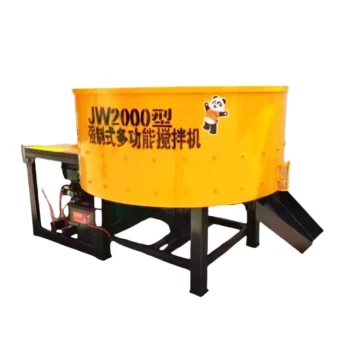
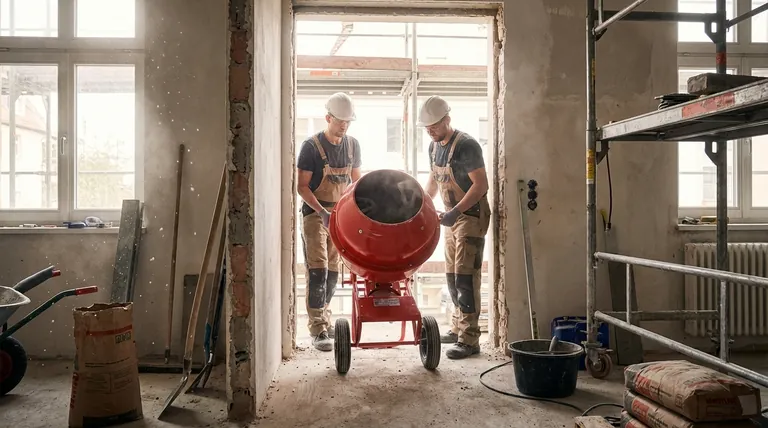
The design of a mortar mixer enhances portability by prioritizing a lightweight, compact build with a small physical footprint. This deliberate engineering focus allows it to be easily transported in smaller vehicles and maneuvered by one or two people through constrained areas on a job site, such as doorways and tight corners.
A mortar mixer’s design isn't just about moving it from one site to another; it's engineered for exceptional maneuverability within the job site itself. This distinguishes it from larger, heavier mixers that are built for towing rather than carrying.
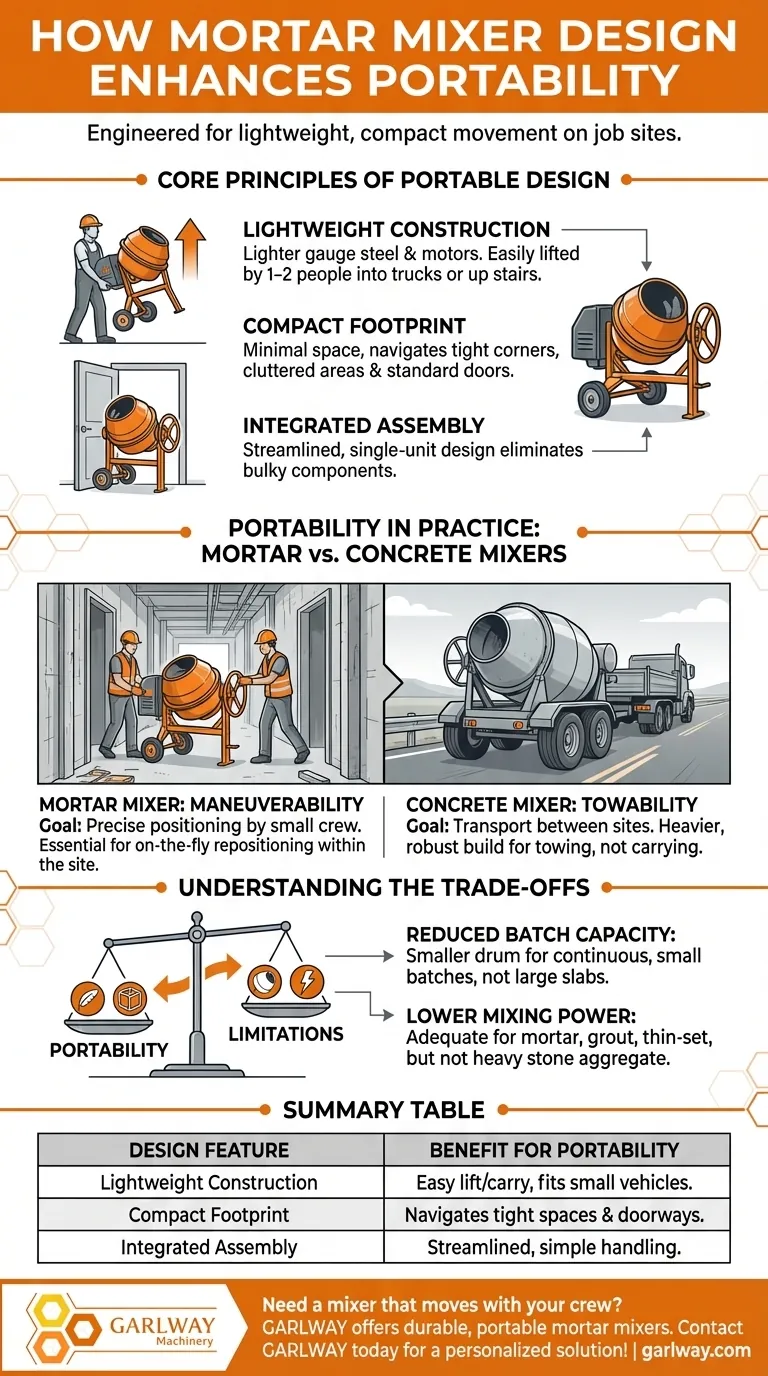
The Core Principles of Portable Design
To understand portability, we must look at the specific design choices that differentiate mortar mixers from their larger counterparts, like concrete mixers. These choices are intentional and directly serve the needs of masons and plasterers.
Lightweight Construction
The primary factor is weight. Mortar mixers use lighter gauge steel and smaller, less powerful electric or gas motors. This keeps the overall weight low enough to be lifted into a truck or carried up a small flight of stairs without mechanical assistance.
Compact Footprint
A small footprint means the mixer takes up minimal space, both during transport and on-site. This compact design is critical for navigating cluttered work areas, fitting through standard residential doorways, and setting up in confined spaces where a larger mixer would be impractical.
Integrated Assembly
Unlike some industrial equipment, mortar mixers are designed as a single, integrated unit. The drum, motor, and frame are a cohesive assembly, eliminating bulky components and contributing to a streamlined, easily handled shape.
Portability in Practice: Mortar vs. Concrete Mixers
The definition of "portable" changes based on the tool's intended use. The contrast between mortar and concrete mixers clearly illustrates this distinction.
The Goal of Maneuverability
A mortar mixer is designed for maneuverability. The goal is for a small crew to position it precisely where the mortar is needed, which may change frequently throughout the day. Its light weight and small size are essential for this kind of on-the-fly repositioning.
The Goal of Towability
A concrete mixer, on the other hand, is designed for towability. It is far heavier and sturdier to handle the stress of mixing gravel and sand. Its portability comes from being equipped with robust wheels and a tow bar, allowing it to be hitched to a vehicle for transport between job sites. It is not designed to be easily carried or repositioned by hand.
Understanding the Trade-offs
This specialized focus on portability comes with inherent limitations. These trade-offs are fundamental to the mixer's purpose.
Reduced Batch Capacity
The most significant trade-off is capacity. A compact, lightweight design means a smaller mixing drum. Mortar mixers are suited for the smaller, continuous batches required for masonry or plastering, not for pouring large concrete slabs.
Lower Mixing Power
Lighter motors produce less torque. This is perfectly adequate for blending the fine aggregates in mortar, thin-set, or grout. However, this lower power is insufficient for mixing the heavy stone aggregate found in concrete.
Making the Right Choice for Your Job Site
Selecting the right mixer depends entirely on the logistics of your project and the material you are working with.
- If your primary focus is maneuverability inside buildings or on tight job sites: A mortar mixer's lightweight and compact design is purpose-built for this task.
- If your primary focus is producing large volumes of material and moving equipment between locations: A larger, towable concrete mixer is the more efficient and practical solution.
Ultimately, understanding these fundamental design distinctions allows you to choose the tool that truly fits the demands of your project.
Summary Table:
| Design Feature | Benefit for Portability |
|---|---|
| Lightweight Construction | Easy to lift and carry by 1-2 people, fits in small vehicles. |
| Compact Footprint | Navigates tight spaces, doorways, and cluttered job sites with ease. |
| Integrated Assembly | Streamlined, single-unit design eliminates bulky components for simple handling. |
Need a mixer that moves with your crew? GARLWAY specializes in construction machinery, offering durable and highly portable mortar mixers designed for the precise needs of masons and contractors. Let us help you find the perfect equipment to boost efficiency on your job site. Contact GARLWAY today for a personalized solution!
Visual Guide
Related Products
- JDY350 Electric Hydraulic Mortar Mud Concrete Mixer
- JDC350 Small Cement Concrete Mortar Mixer
- Mini Cement Mortar Mixer Truck for Construction
- Belle Mixer Drum Self Loading Mortar Mixers JS3000
- JS1000 Volumetric Concrete Mortar Mixer for Sale Skid Steer Cement Mixer
People Also Ask
- When are electric mortar mixers typically used? Find the Perfect Tool for Small to Medium-Sized Jobs
- What are hydraulic concrete mixers used for? Powering Large-Scale Construction Projects
- How are mortar mixers utilized in concrete and grout projects? Maximize Your Mixing Efficiency
- What are the benefits of electric concrete mixers? Quiet, Clean, and Low-Maintenance Mixing
- What is a mortar mixer and what is its primary use? Master Masonry with the Right Equipment