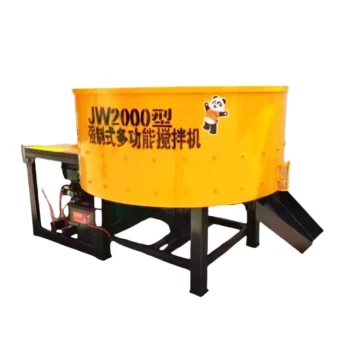
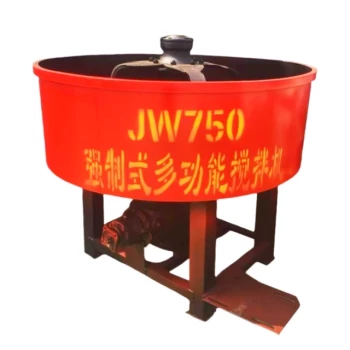
At its core, a continuous mixer operates as an uninterrupted production line, while a batch mixer functions in distinct, sequential cycles. Continuous mixers constantly feed raw materials in one end and discharge finished product from the other, whereas batch mixers load all ingredients, mix them for a set time, and then discharge the entire completed quantity at once.
The fundamental choice between a continuous and batch mixer is not about which is superior, but which operational model—uninterrupted flow versus discrete cycles—best matches your project's scale, consistency requirements, and need for flexibility.
The Fundamental Difference: Process Flow
The primary distinction between these two systems lies in how they handle the stages of production: loading, mixing, and discharging.
The Batch Mixing Cycle
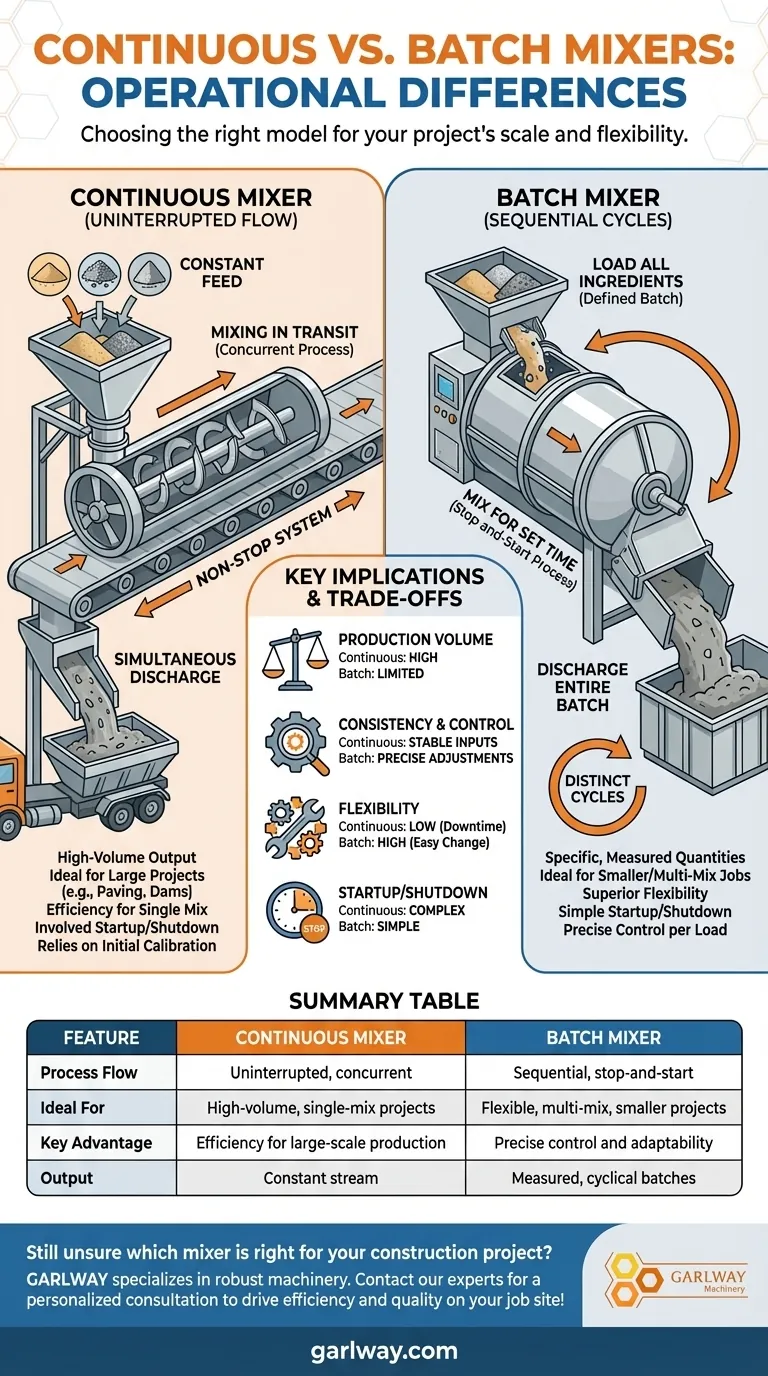
A batch mixer operates in a sequential, stop-and-start process. First, all raw materials for a single, defined quantity (the "batch") are loaded into the mixing chamber.
The machine then mixes these materials for a specific duration. Once the mix is complete, the entire batch is discharged before the cycle can begin again.
The Continuous Mixing Stream
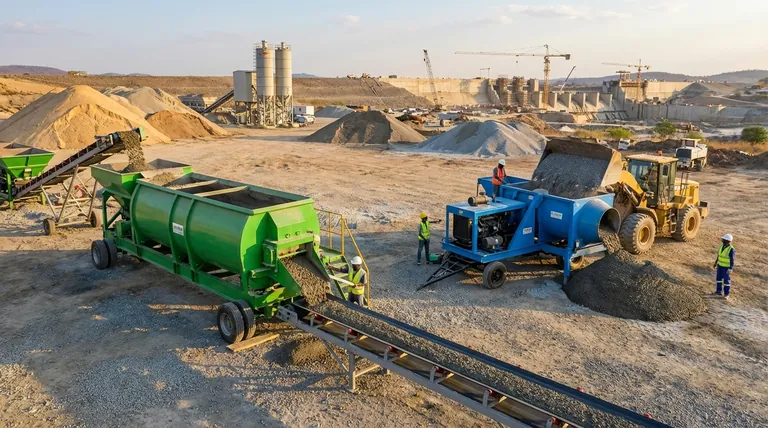
A continuous mixer works as a concurrent, non-stop system. Raw materials are metered and fed into the machine continuously at one end.
The mixing occurs as the materials travel through the length of the mixing chamber. Simultaneously, the finished, mixed product is discharged at the other end, creating a constant output.
Key Operational Implications
This core difference in process flow leads to significant variations in performance, volume, and control.
Production Volume and Speed
Continuous mixers are designed for high-volume output. Their non-stop operation makes them ideal for large projects, such as paving or dam construction, that require a massive, uninterrupted supply of material.
Batch mixers are better suited for projects requiring specific, measured quantities. Their output is limited by the time it takes to complete each individual cycle.
Consistency and Control
Batch mixers offer precise control over each individual load. You can verify the quality and make adjustments from one batch to the next.
Continuous mixers depend heavily on the initial calibration of the material feed rates. Consistency is maintained as long as the inputs are stable, but there is less opportunity for intervention during the run.
Understanding the Trade-offs
Choosing between these systems involves balancing efficiency against flexibility and control.
Flexibility vs. Efficiency
Batch mixers provide superior flexibility. It is simple to change the mix design between batches, making them perfect for jobs that require multiple different material specifications.
Continuous mixers are paragons of efficiency for a single, consistent mix. However, changing the mix design is a more involved process that requires recalibrating the entire feed system, leading to downtime.
Startup and Shutdown
A batch mixer is simple to start for a single load and stop when it's done. This makes it highly effective for smaller jobs or situations with intermittent demand.
A continuous mixer requires a more involved startup and shutdown procedure to prime the system and then clear it of all materials. It operates most efficiently when running for long, uninterrupted periods.
Making the Right Choice for Your Goal
Your project's specific demands will dictate the optimal mixing solution.
- If your primary focus is high-volume, uninterrupted production for large-scale projects: A continuous mixer is the clear choice due to its non-stop operational flow.
- If your primary focus is precise quality control, mix design flexibility, or smaller job quantities: A batch mixer provides the superior control and adaptability needed for these applications.
Ultimately, understanding this core operational difference empowers you to align your equipment choice directly with your project's goals for efficiency and quality.
Summary Table:
| Feature | Continuous Mixer | Batch Mixer |
|---|---|---|
| Process Flow | Uninterrupted, concurrent | Sequential, stop-and-start |
| Ideal For | High-volume, single-mix projects | Flexible, multi-mix, smaller projects |
| Key Advantage | Efficiency for large-scale production | Precise control and adaptability |
| Output | Constant stream | Measured, cyclical batches |
Still unsure which mixer is right for your construction project?
GARLWAY specializes in providing robust construction machinery, including concrete mixers and batching plants, for contractors and construction companies worldwide. Our experts can help you analyze your project's scale, consistency requirements, and flexibility needs to select the perfect mixing solution.
Contact our team today for a personalized consultation and discover how GARLWAY's equipment can drive efficiency and quality on your job site!
Visual Guide
Related Products
- JS1000 Volumetric Concrete Mortar Mixer for Sale Skid Steer Cement Mixer
- Portable Concrete Mixer Machine Equipment for Mixing Concrete
- Portable Cement Mixer with Lift Concrete Machine
- JDY350 Electric Hydraulic Mortar Mud Concrete Mixer
- Portable Electric Concrete Mixer Machine for Cement Mixing
People Also Ask
- What is the basic working principle of volumetric concrete mixers? On-Demand Mixing for Zero Waste
- What are the advantages of using volumetric mixers for small concrete jobs? Save Costs and Gain On-Site Control
- What are the advantages of volumetric concrete mixers compared to drum mixers? Achieve On-Demand Mixing & Zero Waste
- What are some innovations in volumetric concrete mixers? Boost Efficiency with On-Demand Production
- Why do volumetric mixers provide better ROI? Maximize Profit with On-Demand Concrete Production