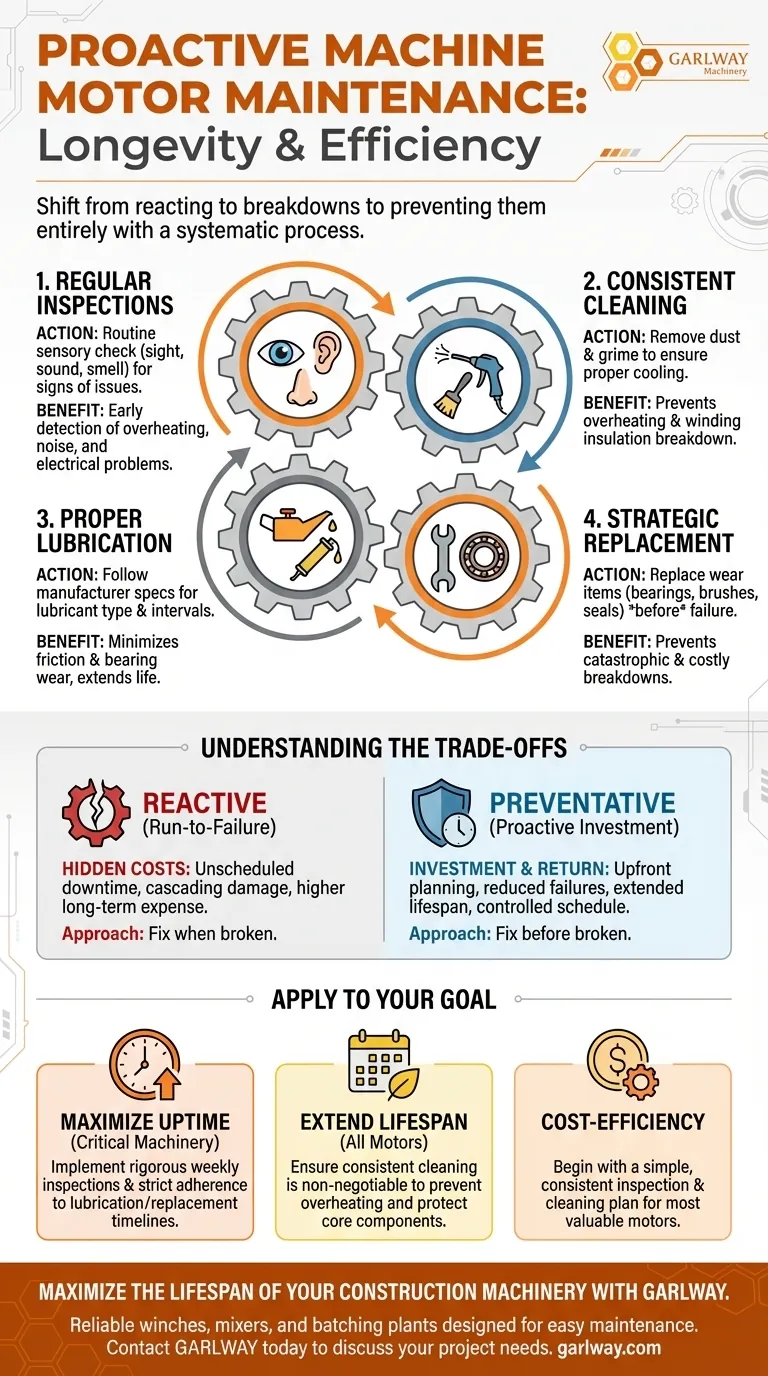
To maintain machine motors for longevity and efficiency, you must implement a proactive maintenance program built on four key activities: regular inspection, consistent cleaning, proper lubrication, and the strategic replacement of worn components before they fail. This shifts your approach from reacting to breakdowns to preventing them entirely.
The core principle of effective motor maintenance is not just about fixing problems, but about creating a systematic process to prevent them. This discipline transforms a motor from a potential point of failure into a reliable, long-lasting asset.
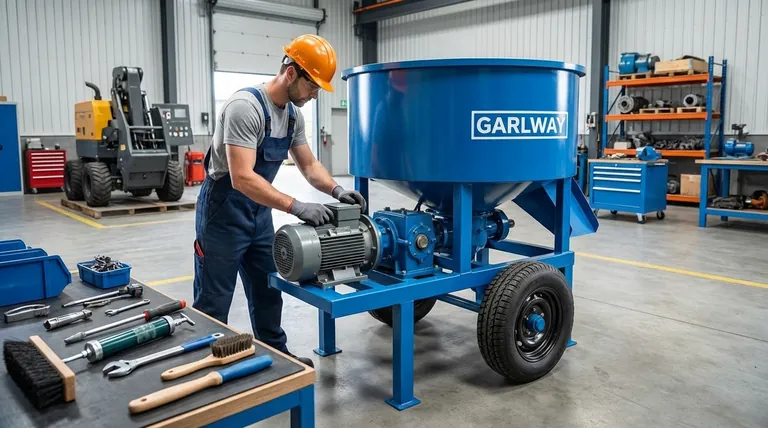
The Pillars of a Proactive Motor Maintenance Program
A robust maintenance plan relies on consistent, scheduled actions rather than waiting for a motor to show obvious signs of distress. Each pillar addresses a different mode of potential failure, working together to ensure reliability.
Regular Inspections: Your First Line of Defense
The easiest and most effective maintenance task is a routine inspection. Your senses are powerful diagnostic tools.
Look for signs of overheating, like discoloration on the motor housing. Listen for unusual noises such as grinding, squealing, or excessive humming. Note any strange odors, particularly the smell of burning insulation, which indicates a serious electrical issue.
The Critical Role of Cleaning
A clean motor is a cool motor. Dust, oil, and grime act as an insulator, trapping heat and preventing the motor from cooling itself effectively.
This trapped heat is a primary cause of winding insulation breakdown and premature failure. Regular cleaning with compressed air or soft brushes ensures proper ventilation and heat dissipation, directly extending the motor's operational life.
Lubrication: The Lifeblood of Mechanical Parts
Improper lubrication is one of the leading causes of bearing failure. Bearings require a specific type and amount of grease or oil to minimize friction and heat.
Too little lubrication causes excessive wear, while too much can lead to overheating and contamination of the motor windings. Always follow the manufacturer's recommendations for lubricant type and re-lubrication intervals.
Strategic Component Replacement
Parts like bearings, brushes, and seals have a finite lifespan. A proactive maintenance plan involves tracking the operational hours of a motor and replacing these wear items before they fail.
This scheduled replacement prevents a small, inexpensive component failure from causing a catastrophic and costly motor breakdown.
Understanding the Trade-offs: Reactive vs. Preventative
Choosing your maintenance strategy is a conscious business decision with clear consequences for your operations and budget.
The Hidden Costs of a "Run-to-Failure" Approach
While doing no maintenance seems "free" initially, it carries significant hidden costs. Unscheduled downtime brings operations to a halt, often at the worst possible moment.
Furthermore, a failure in one component often causes cascading damage to other parts of the motor, turning a simple repair into a complete replacement. This reactive approach is almost always more expensive in the long run.
The Investment of Preventative Maintenance
A preventative plan requires an upfront investment in labor, scheduled downtime, and a stock of replacement parts. It is a commitment of resources.
However, this investment provides a massive return by dramatically reducing surprise failures, extending the asset's lifespan, and allowing maintenance to be performed on your schedule, not an emergency's.
How to Apply This to Your Goal
Your maintenance strategy should align with your specific operational priorities.
- If your primary focus is maximizing uptime for critical machinery: Implement a rigorous weekly inspection schedule and strictly adhere to the manufacturer's lubrication and component replacement timelines.
- If your primary focus is extending the lifespan of all motors: Ensure consistent cleaning is a non-negotiable part of your routine, as preventing overheating is the single most effective way to protect a motor's core components.
- If your primary focus is cost-efficiency: Begin by creating a simple but consistent inspection and cleaning plan for your most valuable motors to prevent the most common and costly failures.
A disciplined maintenance routine is the most powerful tool you have for ensuring your equipment remains efficient and reliable for years to come.
Summary Table:
| Maintenance Pillar | Key Action | Primary Benefit |
|---|---|---|
| Regular Inspections | Use sight, sound, and smell to check for issues. | Early detection of problems like overheating. |
| Consistent Cleaning | Remove dust and grime with compressed air or brushes. | Prevents overheating and insulation breakdown. |
| Proper Lubrication | Follow manufacturer specs for grease/oil type and intervals. | Minimizes bearing friction and wear. |
| Strategic Replacement | Replace wear items like bearings before they fail. | Prevents catastrophic motor breakdowns. |
Maximize the Lifespan of Your Construction Machinery with GARLWAY
A proactive maintenance plan is essential, but it starts with reliable equipment. GARLWAY specializes in durable construction machinery, including winches, concrete mixers, and batching plants, designed for easy maintenance and long-term performance on demanding job sites.
Let our experts help you build a more reliable and efficient fleet. Contact GARLWAY today to discuss your project needs and discover machinery built to last.
Visual Guide
Related Products
- Portable Electric Concrete Mixer Machine for Cement Mixing
- Commercial Electric Concrete Mixer Machine HZS 50 Small Batch Plant for Sale
- Hydraulic Concrete Mixer Machine Cement Mixing Equipment for Mixture Concrete
- Portable Electric Small Cement Mixer Concrete Machine
- Auto Concrete Cement Mixer Machine New
People Also Ask
- How much concrete can you pour with a portable mixer? Find the Perfect Fit for Your Project
- Why is it necessary to use a portable concrete mixer? Gain Total Control & Efficiency
- What was the first recorded version of the portable concrete mixer and who invented it? Discover the 1904 Horse-Drawn Innovation
- How does a portable concrete mixer benefit construction projects? Boost Efficiency & Cut Costs On-Site
- How does the portable concrete mixer optimize time in small construction projects? Gain On-Demand Control & Efficiency