
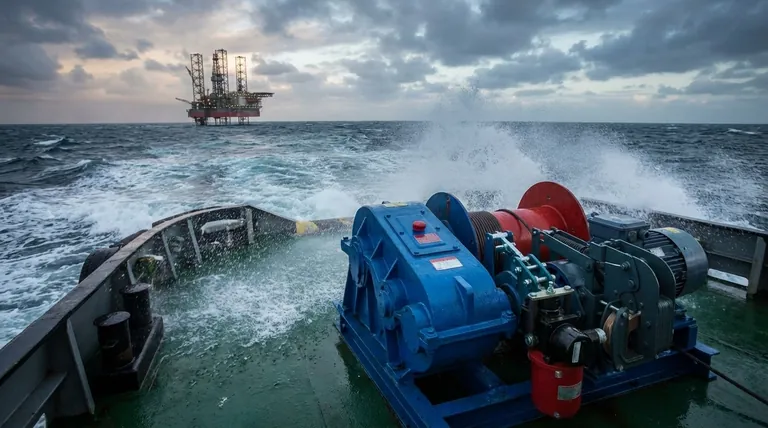
In short, hydraulic towing winches excel in challenging environments. They are specifically engineered for superior performance where conditions are harsh, loads are heavy, and reliability is non-negotiable. Their design inherently protects them from extreme temperatures, moisture, and corrosive elements, making them the standard for demanding marine, offshore, and industrial applications.
The core principle to understand is that hydraulic winches trade the simplicity of electric systems for unparalleled power, safety, and durability. Their resilience is not an add-on feature; it is a direct result of their fundamental design.
The Foundation of Hydraulic Resilience
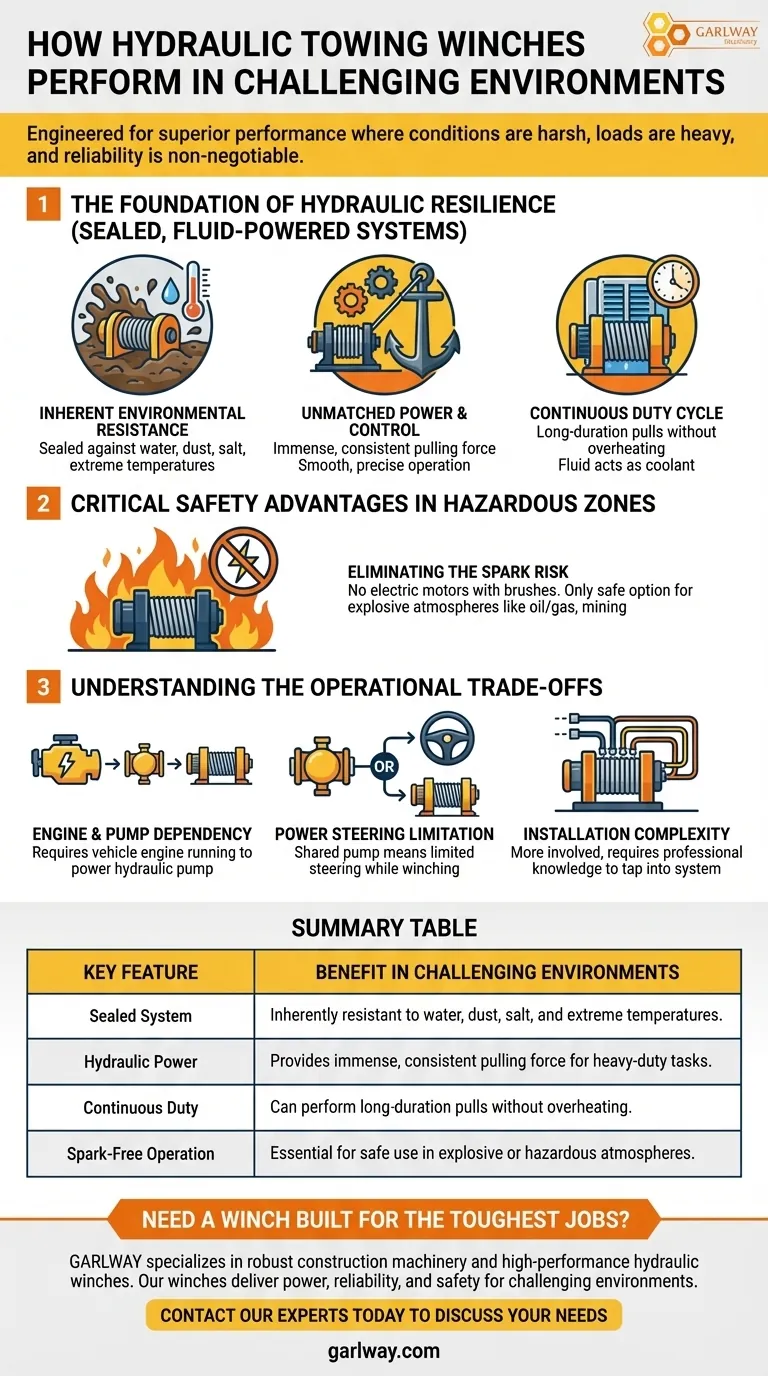
The exceptional performance of hydraulic winches stems from their sealed, fluid-powered systems. This architecture makes them fundamentally more robust than their electrical counterparts in several key areas.
Inherent Environmental Resistance
Hydraulic systems are intrinsically sealed against the elements. This makes them highly resistant to damage from water, dust, salt spray, and mud.
Because they don't rely on sensitive electronics, they operate reliably across extreme temperature ranges, from freezing cold to intense heat, without a significant drop in performance.
Unmatched Power and Control
Hydraulic motors generate immense and consistent pulling force, making them the ideal choice for heavy-duty recovery and industrial tasks.
The use of hydraulic fluid allows for incredibly smooth and precise control over the winching operation, even when managing immense loads under difficult conditions.
Continuous Duty Cycle
A key advantage of hydraulic winches is their ability to perform long-duration pulls without the risk of overheating.
The hydraulic fluid acts as a coolant, dissipating heat efficiently. This is why they are trusted in military and commercial applications where sustained, repetitive use is common.
Critical Safety Advantages in Hazardous Zones
Beyond raw power, hydraulic systems offer significant safety benefits, particularly in environments where a spark could be catastrophic.
Eliminating the Spark Risk
Hydraulic winches do not use electric motors with brushes that can create sparks during operation.
This makes them the only safe and viable option for use in explosive atmospheres, such as those found in the oil and gas industry or certain mining operations with gas or dust hazards.
Understanding the Operational Trade-offs
While incredibly capable, hydraulic winches have specific operational requirements and limitations that must be understood. Their power comes with a higher degree of system integration.
Engine and Pump Dependency
A hydraulic winch cannot operate without the vehicle's engine running, as the engine powers the hydraulic pump.
This pump, often the vehicle's power steering pump, provides the necessary fluid pressure to drive the winch motor.
The Power Steering Limitation
When the winch is operating, it places a heavy demand on the hydraulic pump.
On systems that share the power steering pump, this means you often cannot effectively turn the steering wheel and winch at the same time, as there isn't enough hydraulic pressure to do both.
Installation Complexity
Installing a hydraulic winch is more involved than a typical electric winch. It requires tapping into the vehicle's existing hydraulic system or installing a dedicated pump, which demands professional knowledge.
Making the Right Choice for Your Application
Choosing the right winch requires a clear understanding of your primary operational demands and environment.
- If your primary focus is maximum safety in hazardous environments: A hydraulic winch is the only acceptable choice due to its spark-free operation.
- If your primary focus is heavy, continuous-duty industrial or marine work: The power and thermal stability of a hydraulic system are essential for reliability.
- If your primary focus is vehicle recovery with extreme loads: The consistent pulling power and durability of a hydraulic winch make it the superior tool.
Ultimately, selecting a hydraulic winch is a decision to prioritize industrial-grade reliability and safety over installation simplicity.
Summary Table:
| Key Feature | Benefit in Challenging Environments |
|---|---|
| Sealed System | Inherently resistant to water, dust, salt, and extreme temperatures. |
| Hydraulic Power | Provides immense, consistent pulling force for heavy-duty tasks. |
| Continuous Duty | Can perform long-duration pulls without overheating. |
| Spark-Free Operation | Essential for safe use in explosive or hazardous atmospheres. |
Need a winch built for the toughest jobs?
GARLWAY specializes in engineering robust construction machinery, including high-performance hydraulic winches designed for demanding applications. Our winches deliver the power, reliability, and safety your construction company or contracting business requires to operate confidently in challenging environments.
Contact our experts today to discuss your specific needs and find the perfect winch solution for your projects.
Visual Guide
Related Products
- Hydraulic Winding Engine Harbor Freight Winch
- Electric and Hydraulic Winch for Heavy Duty Applications
- Warn Winch Windlass Boat Trailer Winch
- 12000 lb Electric Boat Trailer Winch with Windlass Anchor Warn
- Portable Small Trailer Winch
People Also Ask
- What role does hydraulic fluid play in hydraulic winches? It's the Lifeblood of Your Heavy-Duty Pulling Power
- What vehicles commonly use hydraulic winches? For Industrial Trucks Needing Unmatched Power
- What are the features of hydraulic winches? Unmatched Power and Continuous Duty for Heavy Loads
- What preventive measures can be taken to avoid oil leakage in hydraulic winches? Ensure Long-Term Reliability
- What does 'power out' mean in a hydraulic winch? Achieve Absolute Control When Lowering Heavy Loads



