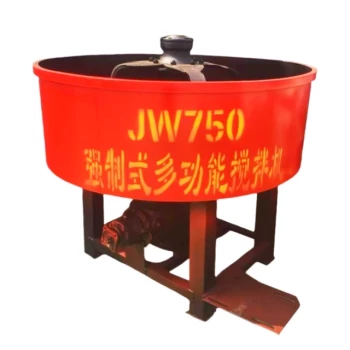
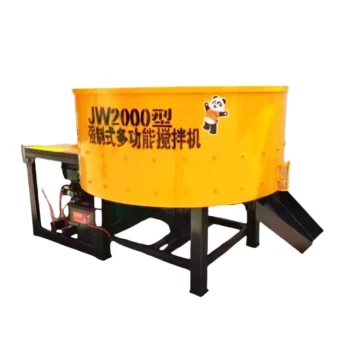
At its core, a continuous mixer operates like an assembly line for materials. It works by constantly feeding raw ingredients (like cement, sand, and water) into one end of a mixing chamber, mixing them as they travel through the system, and discharging the finished product from the other end in a steady, uninterrupted stream. This process eliminates the stop-and-start cycles of traditional mixers.
The fundamental shift from a batch mixer is moving from a contained, time-based process to a continuous, flow-based one. This design prioritizes high-volume, uninterrupted production over the discrete, measured quantities of batching.
The Core Principle: A Continuous Flow System
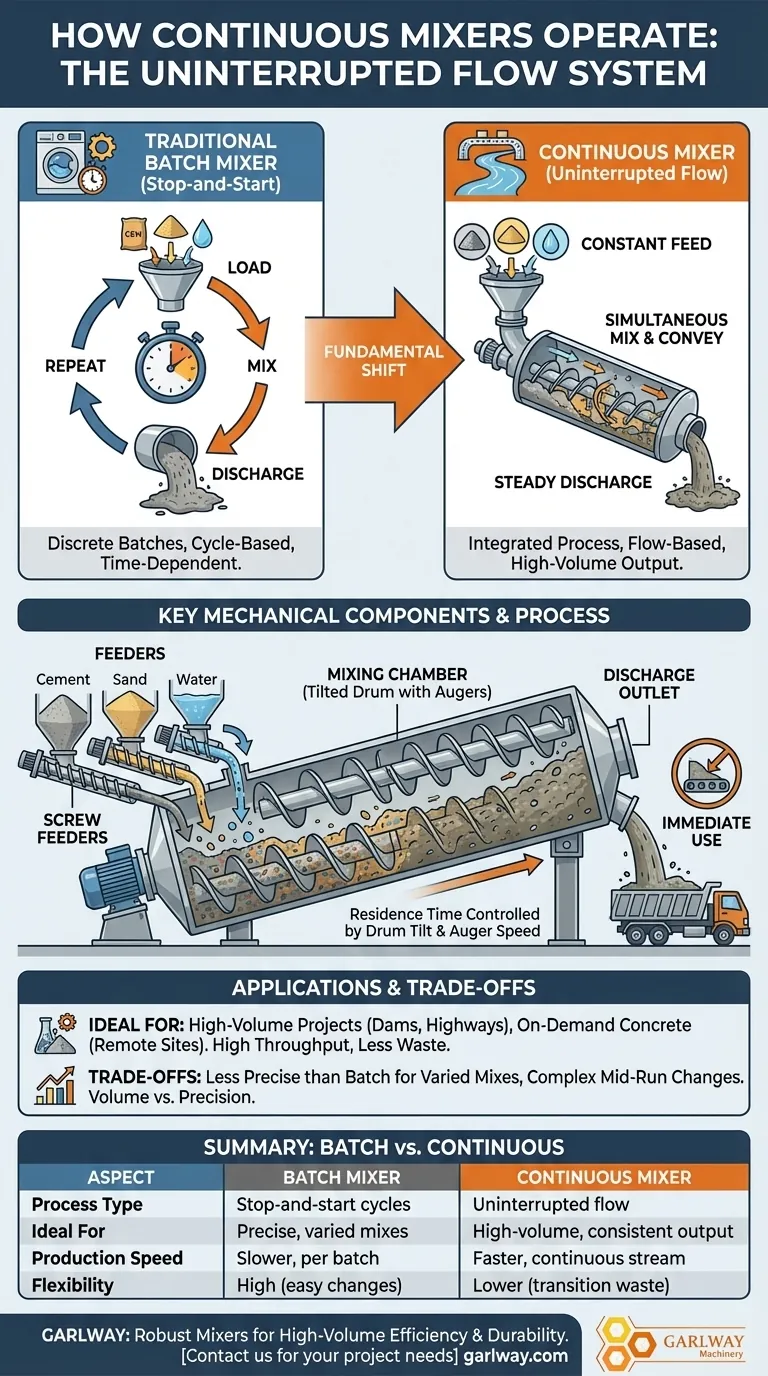
To understand how a continuous mixer works, it's best to contrast it with the more familiar batch mixer. A batch mixer is like a washing machine: you load it, run a specific cycle, and then unload the finished batch. A continuous mixer, however, operates like a flowing river.
From Discrete Batches to Uninterrupted Flow
A batch process is defined by its cycle. Every component is carefully measured and loaded, mixed for a set time, and then completely discharged before the next cycle can begin.
A continuous mixer eliminates these cycles. The process is integrated, with loading, mixing, and discharging all happening simultaneously. This allows for a much higher rate of production.
The Key Mechanical Components
The system relies on a few critical parts working in concert:
- Feeders: Raw materials are typically loaded into the mixing chamber using screw feeders (augers). These feeders control the rate at which each ingredient enters the mixer, which is crucial for maintaining the correct mix ratio.
- Mixing Chamber: This is often a tilted drum or trough. As materials enter, internal paddles or augers mix them together while simultaneously conveying them toward the exit.
- Discharge Outlet: The finished, mixed concrete is discharged continuously from the outlet, ready for immediate use.
How Mixing Time is Controlled
Unlike a batch mixer where you set a timer, a continuous mixer controls the mixing duration through physical and mechanical properties.
The residence time—how long the material spends in the chamber—is determined by factors like the downward tilt of the drum and the speed of the internal mixing augers. A steeper angle or faster auger speed results in a shorter mixing time as the material moves through the chamber more quickly.
Understanding the Applications and Trade-offs
Continuous mixers are not a one-size-fits-all solution. Their unique operational model presents clear advantages for some projects and disadvantages for others.
When Continuous Mixing Excels
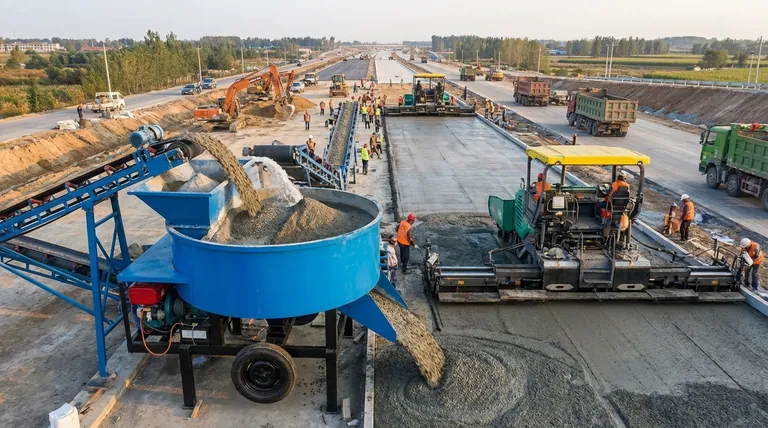
The primary advantage is high-volume throughput. For massive projects like dams, pavement for highways, or large foundations, a continuous mixer can produce a vast and consistent supply of concrete without interruption.
They are also highly effective for remote sites or jobs requiring on-demand concrete. Truck-mounted volumetric mixers are a type of continuous mixer that carries materials separately and mixes them on-site. This prevents waste and ensures the concrete is fresh.
Common Pitfalls and Limitations
The main trade-off is often between volume and precision.
- Mix Control: While modern continuous mixers are highly accurate, traditional batch plants can offer slightly more precise control over the exact composition of each individual load.
- Flexibility: Changing a mix design mid-run is more complex in a continuous system. It requires adjusting feeder rates and waiting for the new mix to work its way through the chamber, which can create transition waste.
- Startup and Shutdown: The very beginning and end of a production run may not be perfectly homogenous until the flow of all materials has stabilized.
Making the Right Choice for Your Project
Choosing the correct mixing technology depends entirely on your project's scale, location, and required precision.
- If your primary focus is massive, consistent output for a single mix design: A stationary continuous mixer is unmatched for its sheer throughput and efficiency.
- If your primary focus is on-site flexibility and minimizing waste for varied pours: A mobile, truck-mounted continuous mixer provides fresh concrete exactly when and where you need it.
- If your primary focus is absolute mix precision and frequent design changes: A traditional batch mixer provides superior control over each distinct and separate load.
Ultimately, understanding that continuous mixers are flow-based systems is the key to leveraging their powerful production capabilities effectively.
Summary Table:
| Aspect | Batch Mixer | Continuous Mixer |
|---|---|---|
| Process Type | Stop-and-start cycles | Uninterrupted flow |
| Ideal For | Precise, varied mixes | High-volume, consistent output |
| Production Speed | Slower, per batch | Faster, continuous stream |
| Flexibility | High (easy mix changes) | Lower (transition waste) |
Need a reliable concrete mixer for your large-scale project?
GARLWAY specializes in construction machinery, offering robust concrete mixers and batching plants designed for high-volume efficiency and durability. Whether you're a contractor working on a highway or a company building a dam, our equipment ensures consistent, uninterrupted production.
Contact us today to discuss your project needs and find the perfect mixing solution!
Visual Guide
Related Products
- JS1000 Volumetric Concrete Mortar Mixer for Sale Skid Steer Cement Mixer
- Portable Concrete Mixer Machine Equipment for Mixing Concrete
- HZS25 Best Cement Mixer for Quick Mix Concrete at Bunnings
- JDY350 Electric Hydraulic Mortar Mud Concrete Mixer
- Portable Cement Mixer with Lift Concrete Machine
People Also Ask
- What is the basic working principle of volumetric concrete mixers? On-Demand Mixing for Zero Waste
- What are the advantages of using volumetric mixers for small concrete jobs? Save Costs and Gain On-Site Control
- What are the advantages of volumetric concrete mixers compared to drum mixers? Achieve On-Demand Mixing & Zero Waste
- What are some innovations in volumetric concrete mixers? Boost Efficiency with On-Demand Production
- Why do volumetric mixers provide better ROI? Maximize Profit with On-Demand Concrete Production