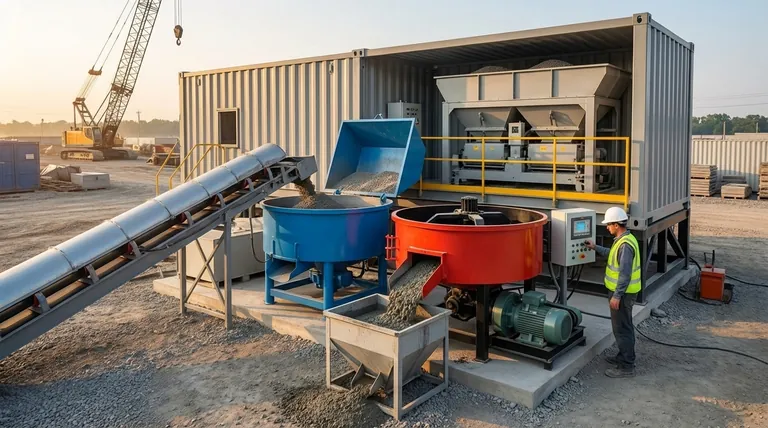
At their core, concrete mixing plant containers improve quality control by transforming the batching process from a variable, manual effort into a precise, automated, and protected system. They leverage advanced technology for consistent mixing and a self-contained design that shields materials from contamination, ensuring the final product meets exact specifications.
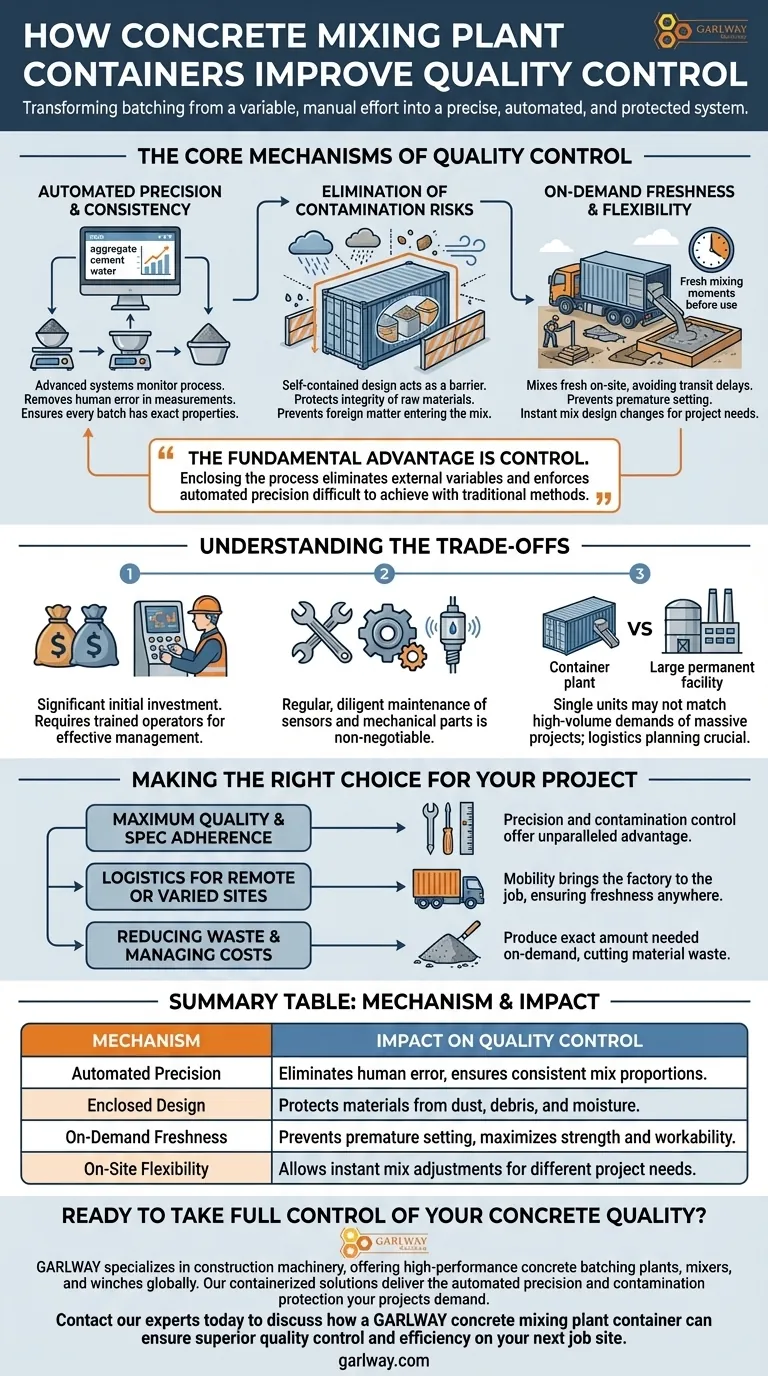
The fundamental advantage is control. By enclosing the entire mixing process within a container, you eliminate external variables and enforce a level of automated precision that is difficult to achieve with traditional, open-air methods.
The Core Mechanisms of Quality Control
The claim of higher quality isn't just a marketing point; it's the result of several specific engineering and logistical advantages. Understanding these mechanisms is key to appreciating their value on a project site.
Automated Precision and Consistency
Concrete mixing plant containers are equipped with advanced control systems that carefully monitor and manage the entire process. This automation removes the potential for human error in measuring and combining aggregates, cement, and water.
Volumetric mixers, a common type of containerized plant, allow for highly accurate, on-the-fly adjustments. This ensures every batch has the exact same properties, leading to a consistent and reliable finished product.
Elimination of Contamination Risks
The self-contained nature of these units provides a crucial barrier against the environment. This design minimizes the risk of contaminants like dust, debris, or excess rainwater entering the mix.
Protecting the integrity of the raw materials is the first step to high-quality concrete. An enclosed system guarantees that what you specified is exactly what goes into the final product.
On-Demand Freshness and Flexibility
One of the biggest threats to concrete quality is premature setting during long transit times from a central plant. Mobile containers mix the concrete fresh on-site, just moments before it is poured.
This on-demand capability ensures the concrete is at its maximum strength and workability. It also allows for mix designs to be changed instantly to meet the specific needs of different parts of a project without costly delays.
Understanding the Trade-offs
While the quality benefits are significant, it's important to approach this technology with a complete picture. Adopting containerized mixing involves a different set of considerations than relying on a traditional supply chain.
Initial Investment and Operator Skill
These units represent a significant capital investment compared to simply ordering ready-mix concrete. The advanced technology also requires trained operators who can manage the systems effectively.
Without proper training, the potential for precision and quality can be undermined by incorrect operation or poor on-site management.
Maintenance and Calibration
The automated systems that guarantee precision rely on well-maintained sensors and mechanical parts. Regular, diligent maintenance and calibration are non-negotiable.
A poorly calibrated machine can produce a worse result than a skilled manual operator. The system's reliability is directly tied to its upkeep.
Output Volume and Project Scale
A single containerized plant may not match the sheer hourly output of a large, permanent batching facility. For massive-scale projects requiring continuous high-volume pours, logistics must be planned carefully.
It's crucial to match the plant's capacity to the project's demand to avoid becoming a bottleneck in the construction schedule.
Making the Right Choice for Your Project
Selecting the right concrete production method depends entirely on your project's specific goals and constraints.
- If your primary focus is maximum quality and spec adherence: The precision and contamination control of a containerized plant offer an unparalleled advantage.
- If your primary focus is logistics for remote or varied sites: The mobility of these units allows you to bring the factory to the job, ensuring fresh concrete regardless of location.
- If your primary focus is reducing waste and managing costs: The ability to produce the exact amount of concrete needed, on-demand, significantly cuts down on material waste and over-ordering.
By controlling the process from start to finish, you gain direct command over the quality and reliability of your project's most critical structural component.
Summary Table:
| Mechanism | Impact on Quality Control |
|---|---|
| Automated Precision | Eliminates human error, ensures consistent mix proportions |
| Enclosed Design | Protects materials from dust, debris, and moisture |
| On-Demand Freshness | Prevents premature setting, maximizes strength and workability |
| On-Site Flexibility | Allows instant mix adjustments for different project needs |
Ready to take full control of your concrete quality?
GARLWAY specializes in construction machinery, offering high-performance concrete batching plants, mixers, and winches for construction companies and contractors globally. Our containerized solutions deliver the automated precision and contamination protection your projects demand.
Contact our experts today to discuss how a GARLWAY concrete mixing plant container can ensure superior quality control and efficiency on your next job site.
Visual Guide
Related Products
- HZS35 Small Cement Concrete Mixing Batch Plant
- Construction Products Concrete Plant Machine Mixing Concrete Mixer
- HZS120 Ready Mix Concrete Batching Plant Commercial Mud Cement Mixer
- HZS75 Concrete Batching Plant Cement Mixer Price Concrete Mixer Bunnings Mixing Plant
- Commercial Electric Concrete Mixer Machine HZS 50 Small Batch Plant for Sale
People Also Ask
- Why buy concrete batch plant parts only from the manufacturer? Protect Your Investment and Maximize Uptime
- Why is proper maintenance important for a concrete batch mix plant? Maximize Uptime & Profitability
- What is the advantage of a mobile concrete batching plant? Achieve On-Site Production & Total Control
- What are the advantages and disadvantages of concrete batching plants? Maximize Quality & Efficiency
- What are the two methods of material charging in a concrete mixing station? Single vs. Multiple Charging Explained