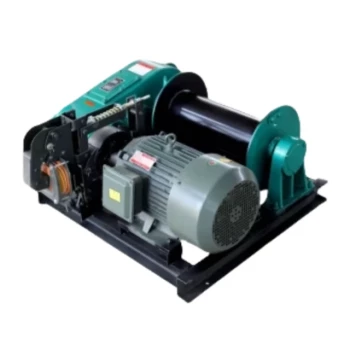
To determine the correct trailer winch size, you must primarily match the winch's pulling capacity to the total weight of the boat or cargo you intend to move. This capacity is the single most important factor, ensuring the winch can handle the load safely and effectively without strain or failure.
The core principle is simple: select a winch with a rated capacity that significantly exceeds the total, fully-loaded weight of your boat. Factoring in additional considerations like your trailer's physical constraints and the type of cable will ensure you make a safe and reliable choice.
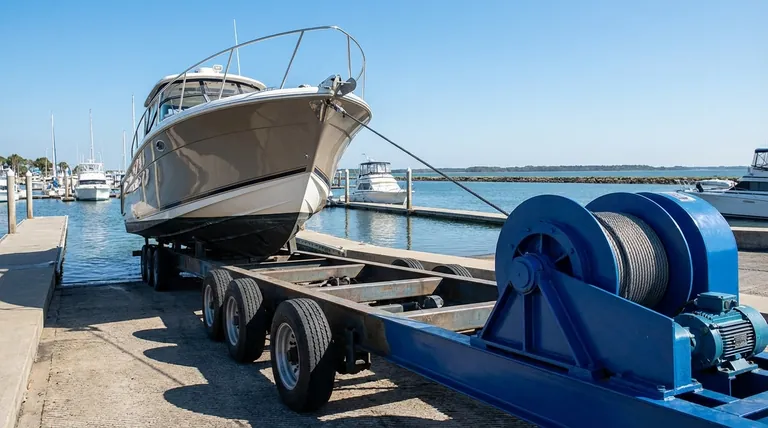
The Core Principle: Matching Winch to Load
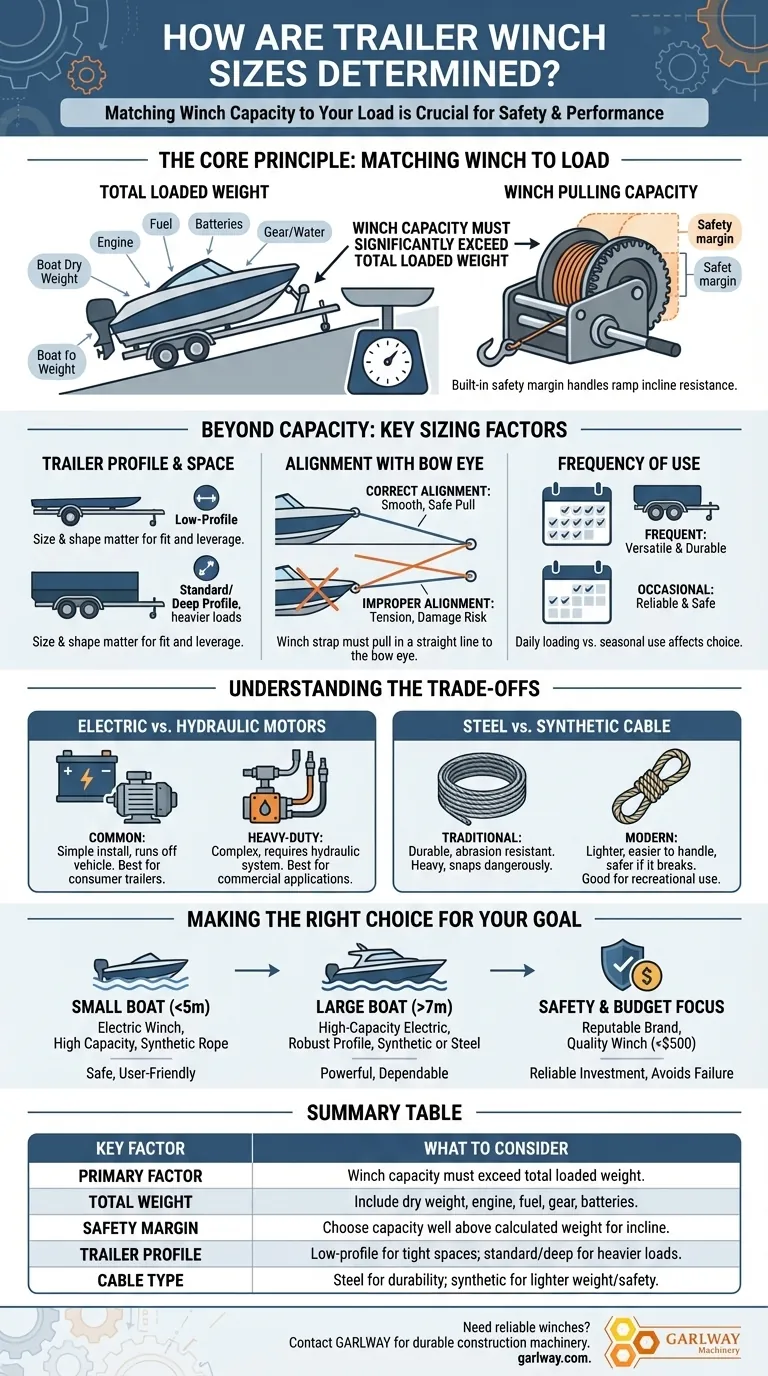
The foundation of choosing a winch is understanding its capacity relative to your specific needs. This isn't just about the boat's factory weight; it's about the real-world weight it presents on the loading ramp.
Calculating Your Total Weight
Your boat's "dry weight" is only a starting point. To find the true number, you must account for everything the winch will be pulling.
This includes the weight of the engine, a full tank of fuel, batteries, water tanks, and all your gear. Underestimating this total weight is the most common mistake.
Understanding Winch Capacity Ratings
Winch capacity is measured in the maximum number of pounds it can pull. You should always select a winch with a capacity rating well above your calculated total weight.
This built-in safety margin accounts for the additional resistance of pulling a boat up an inclined ramp and out of the water. Never choose a winch rated at or near your boat's total weight.
Beyond Capacity: Key Sizing Factors
While weight capacity is paramount, other physical and operational factors influence the best winch for your setup.
Trailer Profile and Space
The physical size and shape—or "profile"—of the winch matters. A trailer with tight space constraints may require a low-profile winch.
Heavier loads, conversely, often demand deeper profile winches that provide greater strength and leverage.
Alignment with the Bow Eye
Proper installation is critical for performance and safety. The winch must be mounted so that its strap or cable pulls in a straight line from the boat's bow eye.
If the winch is mounted too high or too low, it will create improper tension on the bow eye and the winch itself, leading to potential damage.
Frequency of Use
Consider how often you will be using the winch. If you are frequently loading and unloading in various conditions, a robust, standard-profile winch is often a versatile and durable choice.
For less frequent, occasional use, you may not need the most high-end model, but reliability should never be compromised.
Understanding the Trade-offs
Choosing a winch involves balancing different technologies. Each has distinct advantages and disadvantages that affect installation, performance, and cost.
Electric vs. Hydraulic Motors
Electric winches are the most common type for consumer trailers because they are relatively simple to install and wire into your vehicle's electrical system.
Hydraulic winches are more complex, requiring a hydraulic pump system. They are typically reserved for heavy-duty commercial applications where immense power and continuous operation are needed.
Steel vs. Synthetic Cable
Steel cable is the traditional choice, known for its durability and abrasion resistance. However, it is heavy and can be dangerous if it snaps under load.
Synthetic rope is a modern alternative that is significantly lighter, easier to handle, and less prone to dangerous snapping. It is often considered a safer option for recreational use.
Making the Right Choice for Your Goal
Your specific situation will guide your final decision. Use your primary goal to focus your selection.
- If your primary focus is a small boat (under 5m): A quality electric winch with a capacity well over your boat's fully-loaded weight and a synthetic rope is a safe and user-friendly choice.
- If your primary focus is a large, heavy boat (over 7m): Prioritize a high-capacity electric winch with a robust profile and consider either premium synthetic rope or steel cable depending on your ramp conditions.
- If your primary focus is safety and budget: Invest in a reputable brand known for reliability, even if it's not the top-end model. A quality winch under $500 is a far better investment than a low-end model prone to failure.
Choosing the right winch is about ensuring a safe, stress-free experience every time you move your boat.
Summary Table:
| Key Factor | What to Consider |
|---|---|
| Primary Factor | Winch capacity must exceed the boat's total loaded weight. |
| Total Weight | Include dry weight, engine, fuel, gear, and batteries. |
| Safety Margin | Choose a capacity well above the calculated weight for ramp incline. |
| Trailer Profile | Low-profile for tight spaces; standard/deep for heavier loads. |
| Cable Type | Steel for durability; synthetic for lighter weight and safety. |
Need a reliable winch for your construction or hauling project?
GARLWAY specializes in durable construction machinery, offering a range of winches, concrete mixers, and batching plants designed for the demanding needs of construction companies and contractors worldwide. Our winches are built for performance and safety, ensuring your equipment and materials are moved efficiently.
Contact GARLWAY today to discuss your specific requirements and find the perfect winch solution for your business!
Visual Guide
Related Products
- Portable Small Trailer Winch
- 12000 lb Electric Boat Trailer Winch with Windlass Anchor Warn
- Warn Winch Windlass Boat Trailer Winch
- Best 18000 Pound Drum Anchor Trailer Winch
- Quick Windlass Portable Winch for Truck and Boat Best Boat Winch
People Also Ask
- What features were incorporated into the upgraded portable winch system? Boost Your Recovery Power & Safety
- What are some uses mentioned for portable winches beyond vehicle recovery? Essential Versatility for Property & Work
- How could the twisting issue with a portable winch be mitigated? Achieve Safe, Centered Pulls with Proper Rigging
- What is the significance of trailer winches in the boating industry? Ensure Safe and Efficient Boat Recovery
- What should be considered when mounting a winch on a trailer? Ensure a Safe, Aligned Installation