The Allure of the "Good Enough" Tool
On a busy construction site, time is the scarcest resource. A team needs to move a heavy steel beam into position. The pulling winch is right there, already rigged. The specialized lifting hoist is across the yard, requiring a separate setup.
The temptation is immense. A winch pulls, a hoist lifts. They both use a motor and a line. To the untrained eye, they solve the same problem: moving something heavy from A to B.
This is a dangerous cognitive shortcut. Confusing these tools is not a minor operational error; it is a fundamental misunderstanding of physics that can lead to catastrophic failure.
A Tale of Two Forces
The core difference between a winch and a hoist isn't in their power, but in their philosophy of handling a load. It's a distinction rooted in their mechanical design, which dictates whether they are built to manage friction or to defy gravity.
The Winch: A Master of Horizontal Tension
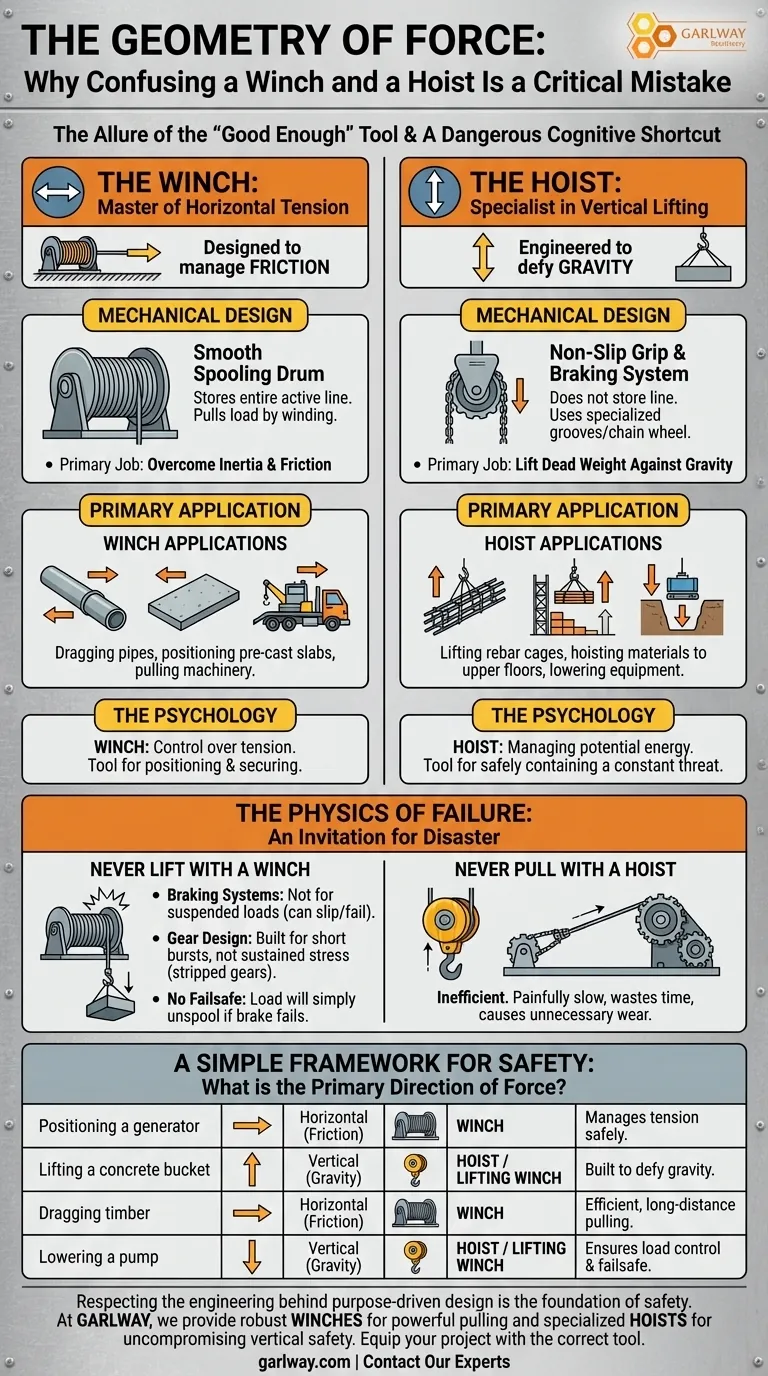
A winch is designed for horizontal pulling. Its primary job is to overcome the inertia and friction of an object on a surface.
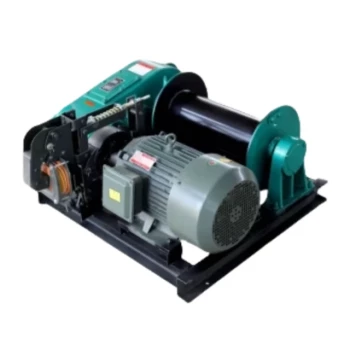
- Mechanical Design: A winch features a drum that spools and stores the cable. As it turns, it pulls the load and wraps the line neatly around itself. The entire length of the active line is held on the drum.
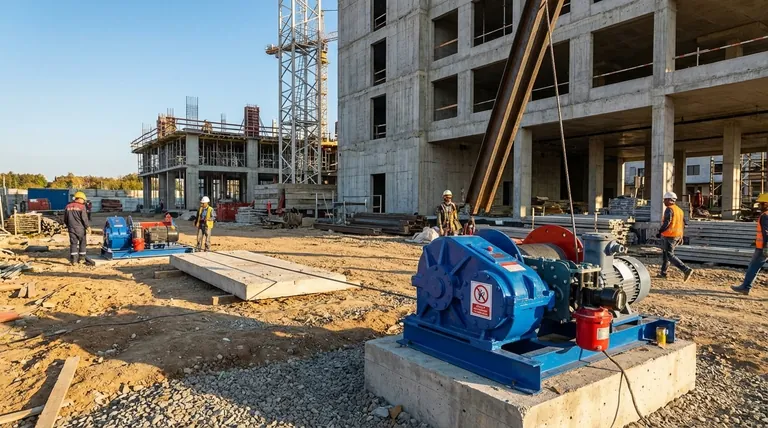
- Primary Application: Think of dragging heavy pipes into place, positioning pre-cast concrete slabs on the ground, or pulling a heavy piece of machinery onto a trailer. The force is primarily horizontal.
- The Psychology: A winch gives you control over tension across a distance. It’s a tool for positioning and securing.
The Hoist: A Specialist in Vertical Lifting
A hoist (the industrial equivalent of a marine windlass) is engineered for one, high-stakes job: lifting a dead weight vertically against the full, unrelenting force of gravity.
- Mechanical Design: A true lifting machine often uses a different mechanism. Instead of just a smooth storage drum, it employs specialized grooves or a chain wheel (like a windlass's gypsy) that provides a non-slip grip. Crucially, it incorporates a braking system designed to automatically lock the load in place if power is lost. It doesn't store the line; it passes it through or uses a drum designed specifically for vertical load integrity.
- Primary Application: Lifting rebar cages, hoisting building materials to upper floors, or lowering equipment into an excavation. The force is almost entirely vertical.
- The Psychology: A hoist is a tool for managing potential energy. The load isn't just heavy; it's a constant threat that the machine must safely and reliably contain.
The Physics of Failure
Using the wrong tool isn't just inefficient; it’s an invitation for disaster. The engineering tolerances are built around entirely different stress scenarios.
Why You Never Lift with a Pulling Winch
When you use a standard winch for a vertical lift, you are betting against physics.
- Braking Systems: The dynamic brake on a pulling winch is designed to handle rolling loads, not to hold a dead-weight suspended load. It can slip or fail completely under the constant, unforgiving pull of gravity.
- Gear Design: Winch gear trains are built for high torque in short bursts, not for the sustained stress of a suspended load. This can lead to stripped gears and a free-falling object.
- No Failsafe: The smooth drum offers no mechanical failsafe if the brake gives way. The load will simply unspool.
Why You Don't Pull with a Hoist
This is a less dangerous but far more inefficient choice. Hoists are geared for slow, powerful, and precise vertical movement. Using one for a long horizontal pull is painfully slow, wasting operational time and causing unnecessary wear on a specialized, high-cost piece of equipment.
A Simple Framework for Safety
The choice becomes simple when you ask one question: What is the primary direction of force?
| Scenario | Primary Force | Correct Tool | The "Why" |
|---|---|---|---|
| Positioning a generator on a foundation | Horizontal (Friction) | Winch | Manages tension and rolling resistance safely. |
| Lifting a concrete bucket to the 3rd floor | Vertical (Gravity) | Hoist / Lifting Winch | Brake and gear systems are built to defy gravity. |
| Dragging timber across the yard | Horizontal (Friction) | Winch | Designed for efficient, long-distance pulling. |
| Lowering a pump into a well | Vertical (Gravity) | Hoist / Lifting Winch | Ensures load control and failsafe operation. |
This isn't about being pedantic. It's about respecting the engineering. Each machine represents a brilliant solution to a very specific physical problem. Honoring that distinction is the foundation of a safe and efficient operation.
At GARLWAY, our construction machinery is built on this principle of purpose-driven design. We provide robust, reliable winches engineered for powerful horizontal pulling and specialized lifting solutions built for uncompromising vertical safety. Understanding the physics behind the work is the first step to doing it right. If you're ready to equip your project with the correct tool for the job, Contact Our Experts.
Visual Guide
Related Products
- Warn Winch Windlass Boat Trailer Winch
- Electric and Hydraulic Winch for Heavy Duty Applications
- Small Electric Winch 120V and 240V for Compact Applications
- 12000 lb Electric Boat Trailer Winch with Windlass Anchor Warn
- Quick Windlass Portable Winch for Truck and Boat Best Boat Winch
Related Articles
- Beyond the Bumper: The Critical System Choice in Powering Your Trailer Winch
- Force vs. Mass: The Critical Difference in Sizing a Boat Winch
- Lines of Force: The Unseen Geometry of a Boat Winch
- More Than a Number: The Engineering Psychology of Choosing a Boat Winch
- How to Choose and Optimize Winch Speed for Maximum Efficiency