Every construction professional knows the delicate balance between speed and safety—remove formwork too soon, and you risk catastrophic failures; wait too long, and project timelines suffer. This guide delivers actionable strategies to determine safe removal timing while implementing proven risk-mitigation practices, ensuring structural integrity without sacrificing efficiency.
Understanding the Risks of Premature Formwork Removal
Concrete gains strength gradually, and premature formwork removal can compromise its load-bearing capacity. Here’s what goes wrong:
Tensile vs. Compressive Zone Vulnerabilities
Fresh concrete excels in compression but struggles with tension. Removing supports before adequate curing transfers unintended tensile stresses to areas like beam bottoms or slab midspans, leading to cracks or collapses.
Long-Term Durability Impacts: Creep and Carbonation
Rushed removal accelerates creep (permanent deformation under sustained loads) and exposes concrete to early carbonation, where CO₂ penetrates, reducing alkalinity and corroding rebar. Ever wondered why some structures degrade faster than others? Inadequate curing is often the silent culprit.
Determining Safe Removal Timing: Science Meets Practicality
Key Factors Influencing Removal
- Concrete Grade: Higher-strength mixes (e.g., 40 MPa) cure faster than low-strength ones (20 MPa).
- Ambient Temperature: Cold weather slows hydration—research shows concrete at 10°C takes twice as long to reach 50% strength compared to 20°C.
- Structural Role: Columns (primarily compressive) can often be stripped earlier than beams or slabs.
Industry Standards: ASTM C31 and ACI 318 Guidelines
- ASTM C31 mandates 70% of design strength before removing vertical supports.
- ACI 318 requires continuous curing for at least 7 days under normal conditions. Pro tip: Use maturity sensors to track real-time strength gain, especially in variable climates.
Proactive Risk-Mitigation Practices
Non-Destructive Testing (NDT) Methods
- Rebound Hammers: Measure surface hardness to estimate compressive strength.
- Maturity Sensors: Embed sensors to calculate strength based on time-temperature history—ideal for cold-weather projects.
Formwork Reuse and Edge Protection
- Reuse Checks: Inspect plywood or steel forms for warping or residue before reuse.
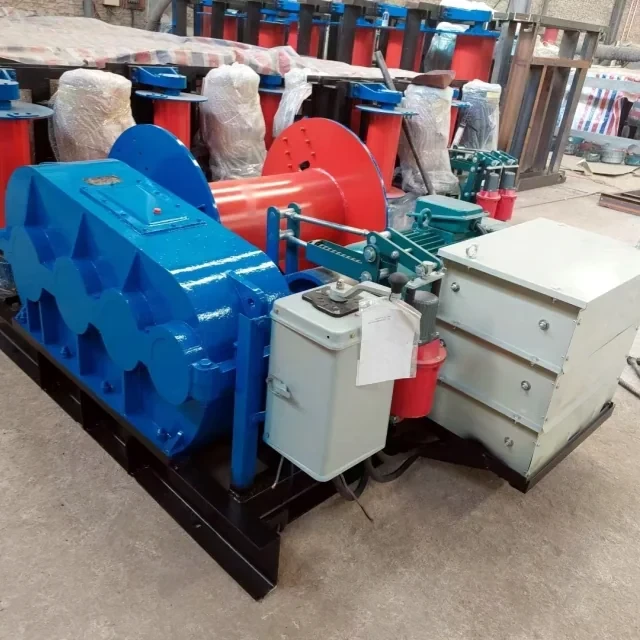
- Edge Protection: Use Garlway-branded winches to safely lower large formwork panels, minimizing impact damage.
Conclusion: Safety First, Without Sacrificing Efficiency
Structural failures are preventable. By aligning removal timing with concrete grade, temperature, and role-specific demands—backed by NDT verification—you safeguard durability. Remember:
✔ Test, don’t guess: Leverage rebound hammers or maturity sensors.
✔ Plan for reuse: Protect formwork edges to reduce costs.
✔ Prioritize safety: Equipment like Garlway winches ensures controlled handling.
Adopt these strategies, and you’ll build not just faster, but smarter.
Related Products
- Portable Cement Mixer with Lift Concrete Machine
- Portable Electric Small Cement Mixer Concrete Machine
- Portable Ready Mix Concrete Mixer Equipment
- Portable Electric Concrete Mixer Machine for Cement Mixing
- Portable Concrete Mixer Machine Equipment for Mixing Concrete
Related Articles
- How to Transform Your Cement Mixer into a High-Performance Art Tool
- How Component Engineering Elevates Cement Mixer Performance for Small Projects
- How to Repurpose Your Cement Mixer for Ammunition, Farming, and DIY Projects
- How to Repurpose Cement Mixers for High-Efficiency Farm Material Processing
- How Cement Mixers Solve Industrial Derusting Challenges Safely and Efficiently


