Introduction
Every concrete plant manager knows that material storage isn't just about space—it's about precision, safety, and regulatory compliance. Poor storage solutions lead to material contamination, safety hazards, and costly violations. This guide breaks down the science-backed methods for storing aggregates, powders, and admixtures while aligning with industry standards. Whether you're designing a new facility or upgrading an existing one, these insights will help you balance operational efficiency with compliance.
Material Storage Solutions in Concrete Plants
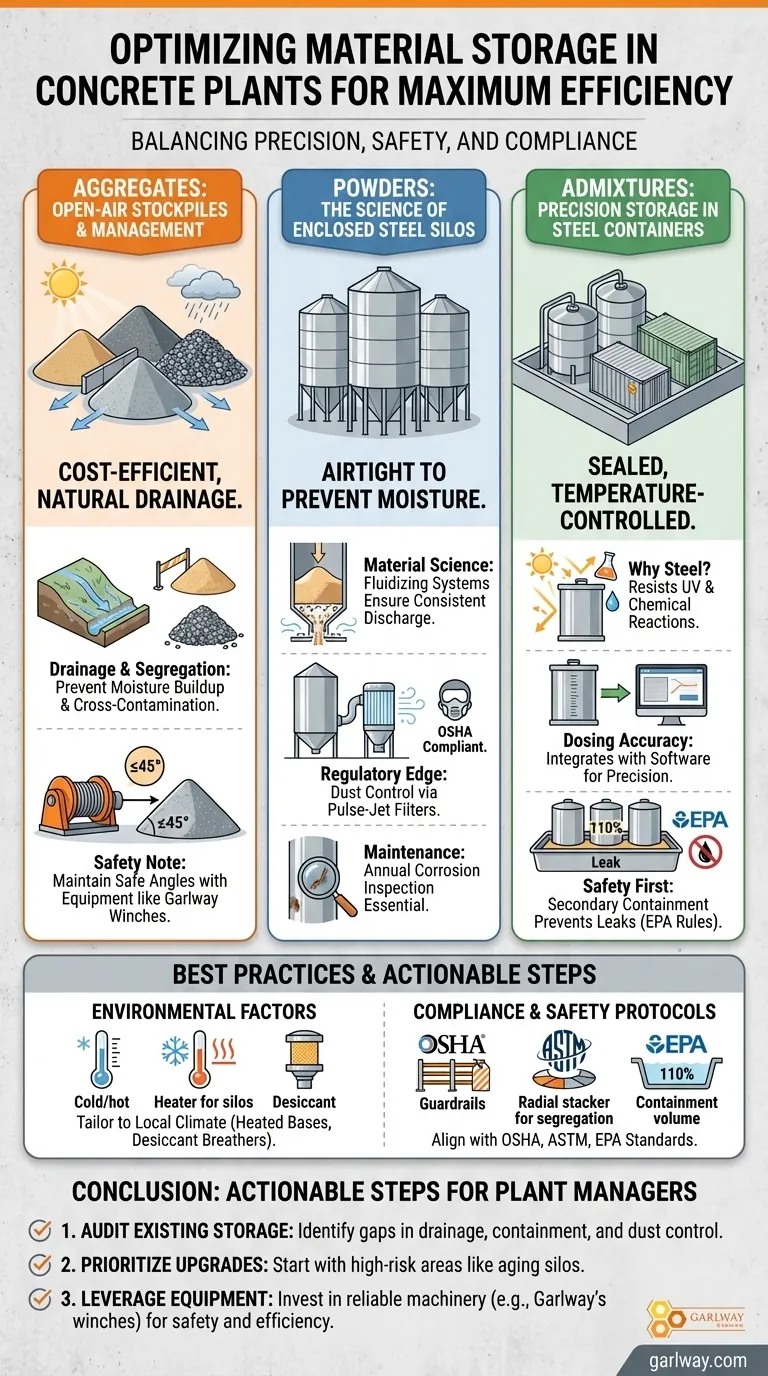
Aggregates: Why Open-Air Stockpiles Are Industry Standard
Key Takeaway: Open-air stockpiles dominate aggregate storage due to cost-efficiency and natural drainage, but require careful management to prevent contamination.
- Drainage & Segregation: Aggregates like sand and gravel need airflow to prevent moisture buildup, which can alter mix quality. Sloped stockpile bases with drainage channels are non-negotiable.
- Contamination Risks: Ever wondered why plants use barriers between stockpiles? Cross-contamination between aggregate sizes (e.g., fine vs. coarse) skews concrete strength.
- Safety Note: Unstable piles risk collapse—regular reshaping with equipment like Garlway winches maintains safe angles (typically ≤45°).
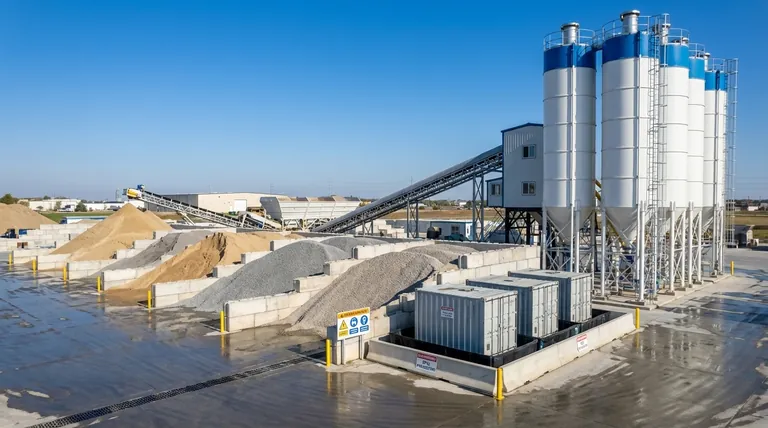
Powders: The Science Behind Enclosed Steel Silos
Key Takeaway: Cement and fly ash demand airtight steel silos to prevent moisture absorption and ensure flowability.
- Material Science: Powders clump when exposed to humidity. Enclosed silos with fluidizing systems (e.g., air pads) prevent bridging and ensure consistent discharge.
- Regulatory Edge: OSHA mandates dust control—silos with pulse-jet filters reduce airborne particulates, keeping plants compliant.
- Maintenance Hack: Inspect silo walls annually for corrosion; even stainless steel degrades over time from abrasive powders.
Admixtures: Precision Storage with Steel Containers
Key Takeaway: Liquid admixtures (e.g., accelerators) require sealed, temperature-controlled containers to maintain chemical integrity.
- Why Steel?: Unlike plastics, steel resists UV degradation and won’t react with corrosive admixtures.
- Dosing Accuracy: Pre-calibrated containers integrate with batching software, reducing human error.
- Safety First: Secondary containment trays (per EPA Spill Prevention rules) prevent groundwater contamination from leaks.
Best Practices for Storage System Design
Environmental Factors Influencing Storage Choices
Key Takeaway: Local climate dictates storage solutions—freezing winters or monsoon rains require tailored adaptations.
- Cold Climates: Heated silo bases prevent cement freezing, while insulated admixture tanks avoid viscosity changes.
- High Humidity: Desiccant breathers on powder silos absorb ambient moisture before it enters.
- Pro Tip: Map seasonal weather patterns during plant design—retrofitting is 3x costlier than proactive planning.
Compliance with Industry Standards and Safety Protocols
Key Takeaway: Storage systems must align with OSHA, EPA, and ASTM standards to avoid fines and accidents.
-
OSHA Checklist:
- Guardrails around open stockpiles (29 CFR 1926.502).
- Lockout/tagout procedures for silo maintenance (29 CFR 1910.147).
- ASTM C94: Requires aggregate segregation prevention—radial stackers or telescopic chutes ensure uniform stockpiling.
- EPA Compliance: Secondary containment must hold 110% of admixture tank volume (40 CFR 112).
Conclusion: Actionable Steps for Plant Managers
- Audit Existing Storage: Identify gaps in drainage, containment, or dust control using the above benchmarks.
- Prioritize Upgrades: Start with high-risk areas like aging silos or unlined aggregate stockpiles.
- Leverage Equipment: Invest in reliable machinery (e.g., Garlway’s winches for pile management) to enhance safety and efficiency.
By treating material storage as a strategic system—not just a space-filler—you’ll reduce waste, pass inspections effortlessly, and keep your plant running like a precision engine.
Visual Guide
Related Products
- HZS180 Ready Mix Concrete Plant for Foundations with Sand and Cement
- HZS35 Small Cement Concrete Mixing Batch Plant
- HZS75 Concrete Batching Plant Cement Mixer Price Concrete Mixer Bunnings Mixing Plant
- Commercial Electric Concrete Mixer Machine HZS 50 Small Batch Plant for Sale
- HZS120 Ready Mix Concrete Batching Plant Commercial Mud Cement Mixer
Related Articles
- Control vs. Chance: The Engineering Case for Concrete Batching Plants
- How to Control Raw Material Variables for Flawless Concrete Batching
- How to Minimize Measurement Errors in Concrete Batching: 4 Proven Strategies
- How Advanced Concrete Batching Technology Cuts Costs and Boosts Efficiency
- Optimizing Concrete Batching Accuracy: Technology-Driven Solutions for Modern Plants