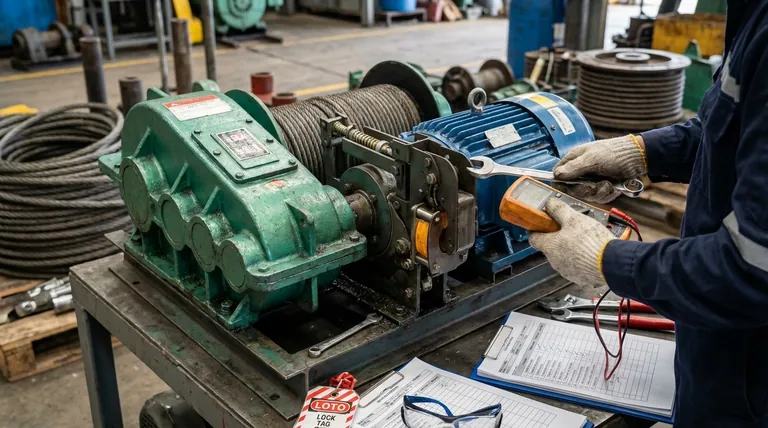
Electric winches are indispensable in construction, marine, and industrial applications—but their brake systems demand rigorous maintenance to prevent catastrophic failures. Unlike hydraulic systems, electric winch brakes rely on electromagnetic or mechanical components that require specific care protocols. This guide delivers a step-by-step maintenance framework aligned with safety standards, real-world failure case studies, and predictive tools to extend equipment life.
Ensuring Brake System Reliability in Electric Winches
Electric winch brakes stop loads precisely, but wear, contamination, or misalignment can compromise their function. Proactive maintenance isn’t optional—it’s a legal and operational necessity.
Critical Components and Safety Standards
Electric winches primarily use electromagnetic brakes (fail-safe designs that engage during power loss) or mechanical disc/drum brakes. Key components include:
- Brake linings/pads: Friction material prone to wear.
- Armature plates: Must remain clean and free of pitting.
- Springs/actuators: Ensure proper tension for immediate engagement.
Compliance with OSHA 1926.550 (for construction) and ISO 4309 (crane and winch standards) mandates:
✔ Monthly inspections for high-use winches
✔ Annual load testing
✔ Documentation of all maintenance
Ever wondered why some brakes squeal or slip? Contaminants like oil or rust are often the culprits.
Step-by-Step Inspection and Maintenance Procedures
1. Pre-Inspection Safety Measures
- De-energize the winch and lock out/tag out (LOTO) controls.
- Relieve tension from cables or ropes.
2. Visual and Functional Checks
-
Electromagnetic Brakes:
- Measure coil resistance with a multimeter (compare to manufacturer specs).
- Check for burnt smells or discoloration (signs of overheating).
-
Mechanical Brakes:
- Inspect pad thickness—replace if under 1/8 inch.
- Verify spring tension; adjust if engagement feels sluggish.
3. Cleaning and Lubrication
- Use isopropyl alcohol to clean armature surfaces (never grease or oil!).
- Lubricate pivot points with high-temperature lithium grease.
Pro Tip: A sticking brake often needs debris removal rather than replacement.
Identifying and Addressing Wear and Damage
| Symptom | Likely Cause | Solution |
|---|---|---|
| Delayed braking | Worn pads/linings | Replace friction material |
| Uneven braking | Misaligned armature plate | Realign or resurface |
| Overheating | Excessive cycling | Reduce duty cycle |
Case Example: A construction site winch failed to hold a load, causing a near-miss incident. Investigation revealed oil contamination on the brake liner—a preventable issue with routine cleaning.
Mitigating Operational Risks Through Proactive Care
Tools for Predictive Maintenance
- Infrared Thermometers: Detect abnormal heat in brake assemblies.
- Vibration Sensors: Identify misalignment before visible damage occurs.
- Garlway’s Winch Monitoring Systems: Track performance metrics like cycle counts and brake response times.
When to Call a Professional
- If brake torque drops below 10% of rated capacity.
- When corrosion affects structural components.
Key Takeaways for Safe Winch Operation
- Inspect monthly: Focus on friction materials and alignment.
- Clean diligently: Avoid lubricants near braking surfaces.
- Document everything: Maintenance logs prove compliance during audits.
Electric winches from trusted brands like Garlway simplify maintenance with modular designs—but even robust systems need vigilance. By adopting these protocols, you’re not just following regulations; you’re safeguarding lives and productivity.
Ready to upgrade your maintenance strategy? Explore tools that turn reactive fixes into predictive insights.
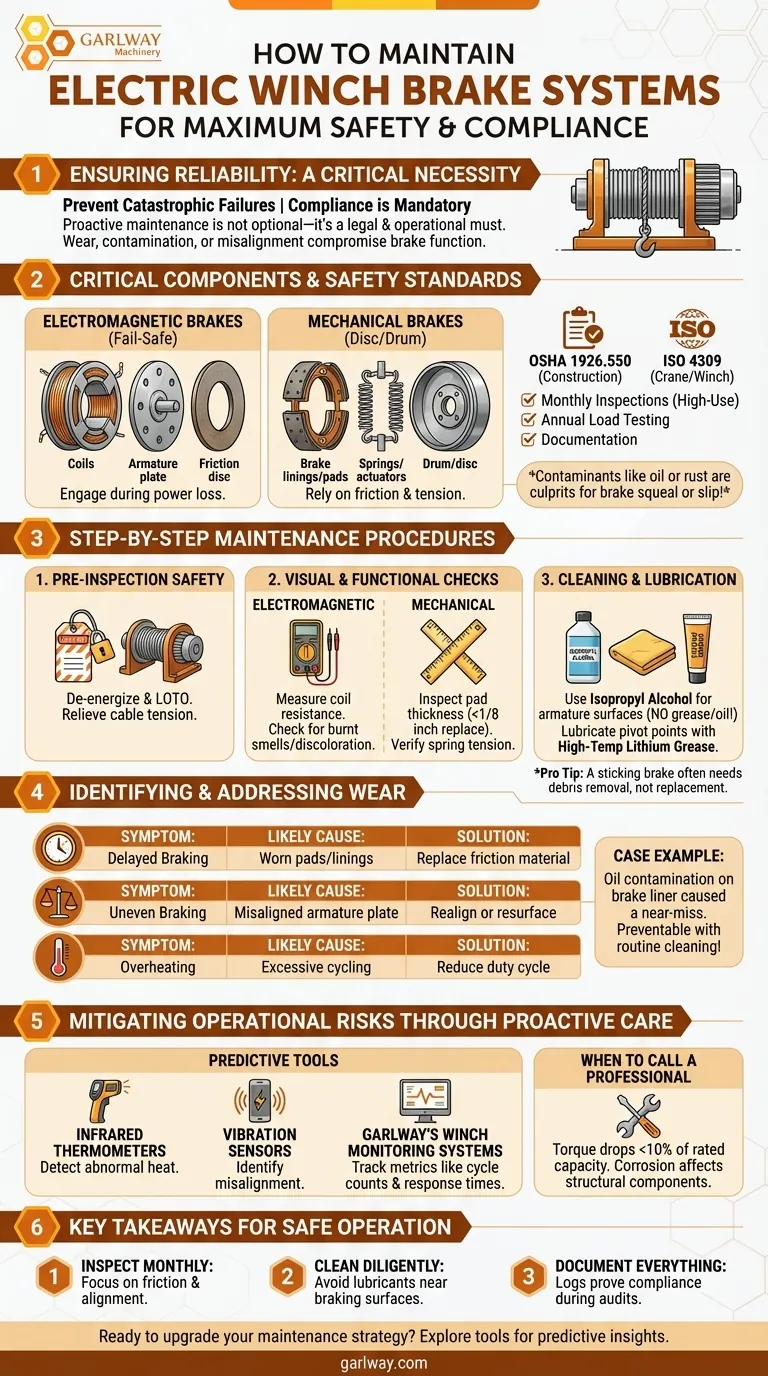
Visual Guide
Related Products
- Small Electric Winch 120V and 240V for Compact Applications
- Electric and Hydraulic Winch for Heavy Duty Applications
- Electric 120V Boat Winch by Badlands
- Electric Hoist Winch Boat Anchor Windlass for Marine Applications
- 12000 lb Electric Boat Trailer Winch with Windlass Anchor Warn
Related Articles
- How to Maximize Electrical Winch Performance in Challenging Environments
- How Electric Winch Safety Features Prevent Catastrophic Industrial Accidents
- How to Choose Between Manual and Electric Winches for Your Project
- How Electric Winches Solve Industrial Safety and Cost Challenges
- How Electric Winches’ Engineering Enhances Efficiency and Safety in Heavy-Duty Applications


