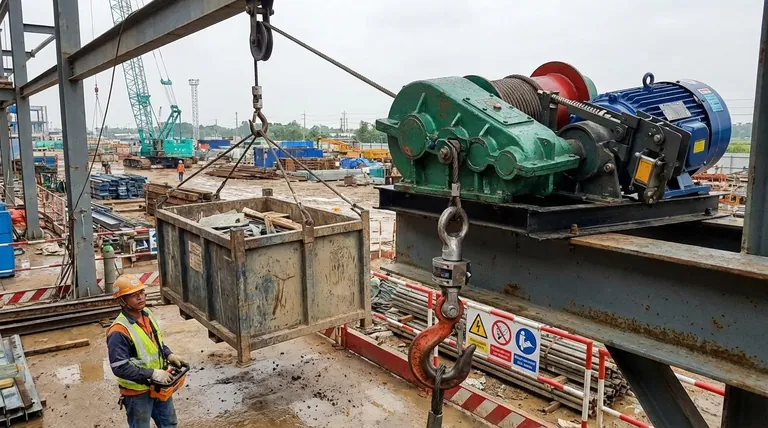
Industrial hoisting systems are the backbone of material handling, but their reliability hinges on precise engineering. This article breaks down the critical components that prevent accidents while maximizing productivity—from load-bearing hooks to fail-safe winch mechanisms.
Hoisting Device Components and Their Operational Roles
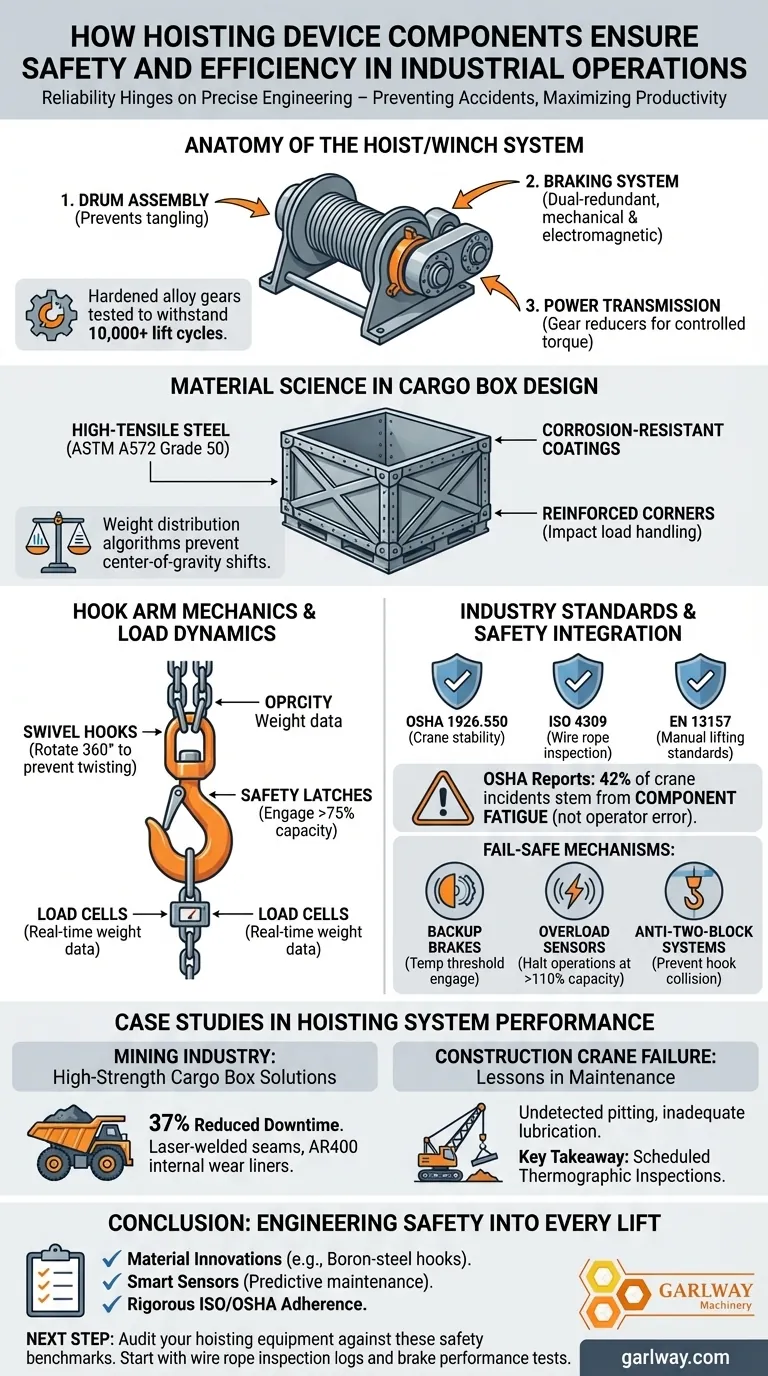
Anatomy of the Hoist/Winch System
Every hoist relies on three core subsystems:
- Drum Assembly: The spooling mechanism for cables, engineered to prevent tangling under load.
- Braking System: Often dual-redundant, combining mechanical and electromagnetic brakes.
- Power Transmission: Gear reducers that convert motor RPM into controlled lifting torque.
Ever wondered why some winches outlast others? The secret lies in hardened alloy gears—tested to withstand 10,000+ lift cycles.
Material Science in Cargo Box Design
Cargo containers for mining or construction use high-tensile steel (often ASTM A572 Grade 50) with:
- Corrosion-resistant coatings for wet environments
- Reinforced corners to handle impact loads
- Weight distribution algorithms to prevent center-of-gravity shifts
Hook Arm Mechanics and Load Dynamics
Load hooks aren’t just curved metal—they’re precision-calibrated tools:
- Swivel hooks rotate 360° to prevent cable twisting
- Safety latches automatically engage beyond 75% load capacity
- Load cells embedded in modern hooks provide real-time weight data
Industry Standards and Safety Integration
Compliance with OSHA and ISO Regulations
All Garlway hoisting equipment adheres to:
- OSHA 1926.550 (crane stability requirements)
- ISO 4309 (wire rope inspection protocols)
- EN 13157 (manual lifting equipment standards)
Did you know? OSHA reports show 42% of crane incidents stem from component fatigue—not operator error.
Fail-Safe Mechanisms in Critical Components
Redundancy is engineered into every system:
- Backup Brakes: Engage if primary brakes exceed temperature thresholds
- Overload Sensors: Halt operations when detecting >110% rated capacity
- Anti-Two-Block Systems: Prevent hook-collision accidents in cranes
Case Studies in Hoisting System Performance
Mining Industry: High-Strength Cargo Box Solutions
A Chilean copper mine reduced equipment downtime by 37% after switching to monocoque cargo boxes with:
- Laser-welded seams (vs. traditional riveting)
- Internal wear liners made of AR400 steel
Construction Crane Failure: Lessons in Maintenance
A 2022 incident involving a collapsed tower crane revealed:
- Undetected pitting corrosion in the winch drum
- Inadequate lubrication of wire ropes
- Key takeaway: Scheduled thermographic inspections could’ve identified these issues 3-6 months earlier.
Conclusion: Engineering Safety into Every Lift
Hoisting systems are only as reliable as their weakest component. By combining:
✔️ Material innovations like boron-steel hooks
✔️ Smart sensors for predictive maintenance
✔️ Rigorous adherence to ISO/OSHA standards
…operations can achieve both peak efficiency and accident-free worksites. For industries requiring mission-critical lifting, Garlway’s winch systems integrate these principles at every design phase.
Next Step: Audit your current hoisting equipment against the safety benchmarks discussed here—starting with wire rope inspection logs and brake performance tests.
Visual Guide
Related Products
- Electric Hoist Winch Boat Anchor Windlass for Marine Applications
- Electric and Hydraulic Winch for Heavy Duty Applications
- Hydraulic Winding Engine Harbor Freight Winch
- Portable Small Trailer Winch
- Quick Windlass Portable Winch for Truck and Boat Best Boat Winch
Related Articles
- How Boat Anchor Winches Prevent Injuries and Enhance Marine Safety
- Why Boat Anchor Winches Earn "Best Accessory" Status: A Deep Dive into User Satisfaction Drivers
- How to Install a Hoist Winch Safely: Avoiding Critical Mistakes
- How to Debug Hoist Winches Safely: Electrical Checks & Mechanical Adjustments
- How to Optimize Hoist Winch Safety: A Systematic Protocol for Accident Prevention




