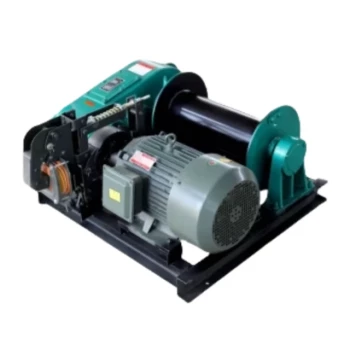
An electric winch is chosen over a manual one for its significant advantages in pulling power, operational speed, user safety, and overall ease of use. By replacing physical cranking with a motor connected to a 12-volt battery, it transforms heavy or frequent pulling tasks from strenuous labor into a simple, controlled process.
The decision to choose an electric winch hinges on a simple trade-off: you are investing in higher upfront cost and complexity in exchange for superior power, speed, and convenience that manual winches cannot match.
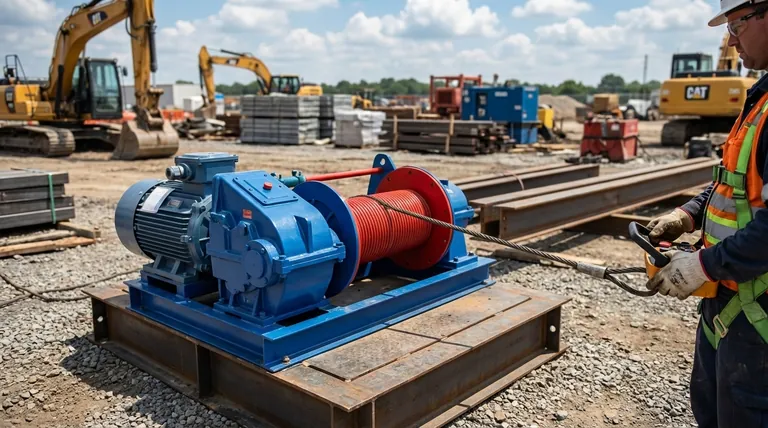
The Core Advantages of Electric Winches
The primary reason to upgrade is the dramatic improvement in performance and user experience. Electric winches are engineered to handle demanding situations with minimal operator input.
Effortless Power and Speed
An electric winch uses a motor and a high-ratio gear system to do the work for you. This means it can pull much heavier loads than a typical manual winch without any physical strain on the operator.
The operation is also significantly faster. What might take several minutes of continuous manual cranking can be accomplished in a fraction of the time with the push of a button.
Advanced Control and Features
Modern electric winches come with sophisticated control systems, often including both wired and wireless remotes. This allows you to operate the winch from a safe distance, with a clear view of the entire operation.
Many models include a clutch for free-spooling, which lets you pull out the cable by hand quickly. More advanced units offer power-out functionality, giving you precise control when releasing a load, such as launching a boat from a trailer.
Enhanced Operational Safety
The enclosed design of an electric winch's gearing and motor system provides an inherent layer of safety, reducing exposure to moving parts.
Furthermore, remote operation keeps you out of the direct line of a potentially loaded cable, which is the most critical safety practice in any winching scenario.
Understanding the Trade-offs
While powerful, electric winches introduce dependencies and complexities that are important to consider. Objectivity requires acknowledging where a manual winch can still be a viable choice.
Dependency on a Power Source
The most significant difference is the requirement for a reliable 12-volt power source, typically a vehicle battery. If the battery is dead or faulty, the electric winch is unusable.
A manual winch, by contrast, operates under any condition, relying solely on your physical effort. It is a completely self-contained and foolproof system.
Increased Complexity and Maintenance
An electric winch is a more complex machine. It includes a motor, solenoid (electrical switch), control systems, and other components that a manual winch lacks.
This added complexity means there are more potential points of failure and a greater need for regular maintenance to ensure all electrical connections and mechanical parts are in good working order.
Higher Initial Cost
Predictably, the addition of a motor, electronics, and more robust gearing makes electric winches significantly more expensive than their manual counterparts.
Making the Right Choice for Your Task
Your final decision should be based directly on the demands of your specific application and how you value convenience against simplicity.
- If your primary focus is heavy loads or frequent use: The power, speed, and effortless operation of an electric winch make it the only practical choice for tasks like vehicle recovery or loading large boats.
- If your primary focus is occasional, light-duty work: A manual winch is a reliable, simple, and highly cost-effective solution for small utility trailers or other infrequent pulling needs.
- If your primary focus is absolute reliability in any condition: The simplicity and independence from a power source make a manual winch a dependable tool that will always be ready to work.
Ultimately, choosing the right winch is about matching the tool's capability and complexity to the reality of your task.
Summary Table:
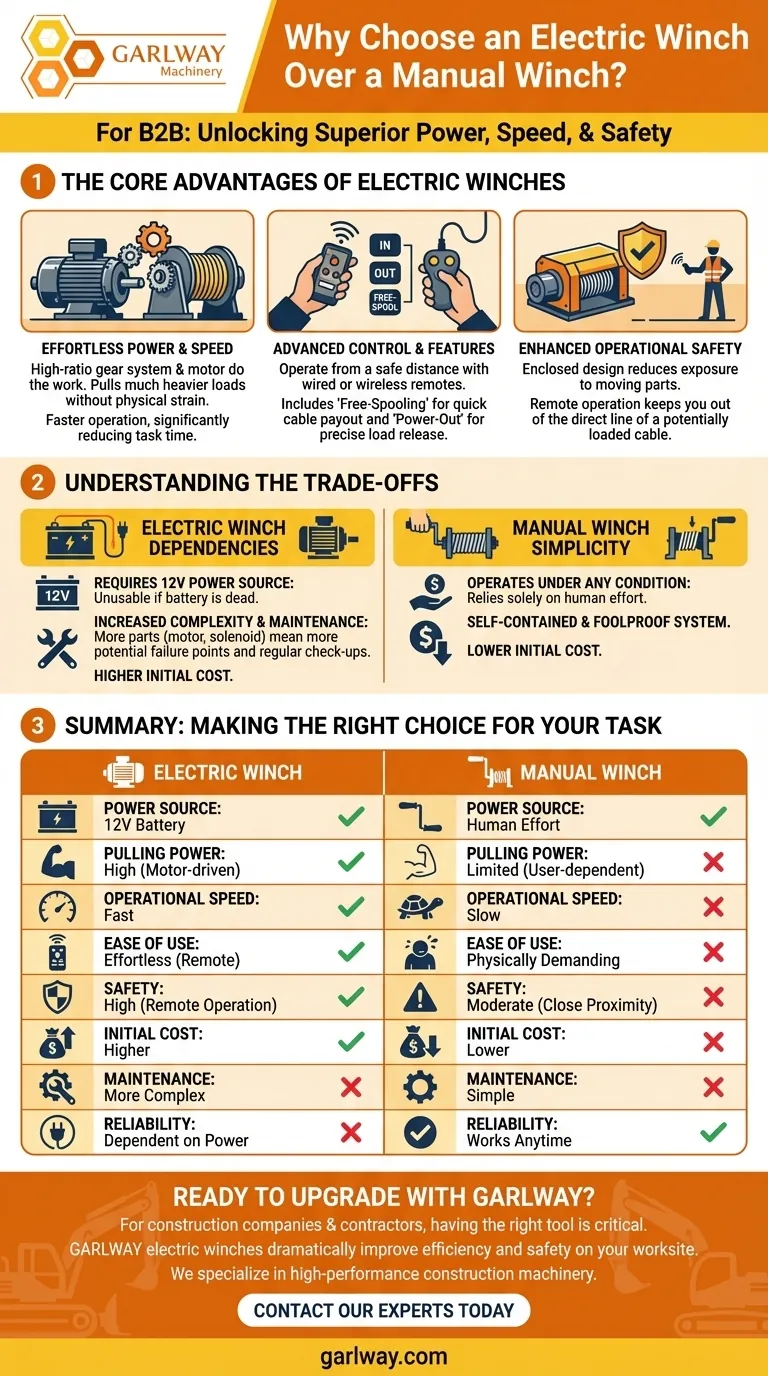
| Feature | Electric Winch | Manual Winch |
|---|---|---|
| Power Source | 12V Battery | Human Effort |
| Pulling Power | High (Motor-driven) | Limited (User-dependent) |
| Operational Speed | Fast | Slow |
| Ease of Use | Effortless (Remote Control) | Physically Demanding |
| Safety | High (Remote Operation) | Moderate (Close Proximity) |
| Initial Cost | Higher | Lower |
| Maintenance | More Complex | Simple |
| Reliability | Dependent on Power Source | Works Anytime |
Ready to upgrade your equipment with a powerful and reliable winch?
For construction companies and contractors, having the right tool for the job is critical. An electric winch from GARLWAY can dramatically improve efficiency and safety on your worksite, whether for vehicle recovery, material handling, or heavy lifting.
GARLWAY specializes in high-performance construction machinery, including winches, concrete mixers, and batching plants, designed to meet the rigorous demands of professionals like you.
Contact our experts today to discuss your specific needs and find the perfect GARLWAY winch to power your projects!
Visual Guide
Related Products
- Electric 120V Boat Winch by Badlands
- 12000 lb Electric Boat Trailer Winch with Windlass Anchor Warn
- Small Electric Winch 120V and 240V for Compact Applications
- Electric and Hydraulic Winch for Heavy Duty Applications
- Electric Hoist Winch Boat Anchor Windlass for Marine Applications
People Also Ask
- How do electric boat winches work? Unlock Effortless Launching & Retrieval
- How much current does an electric boat winch draw? Plan Your Electrical System for Peak Performance
- Can I run a winch straight from a battery? Essential Power Setup for Safe Operation
- What are the types of electric winches available? Choose the Right Winch for Your Job
- What are the uses of electric winches in mining and tunneling? Enhance Safety and Efficiency Underground