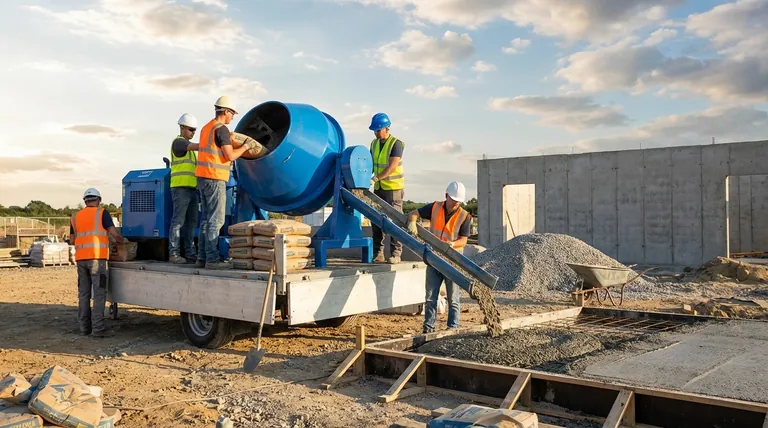
For any project requiring a significant volume of concrete, using a concrete mixer is highly beneficial. It is the right choice for jobs like pouring foundations, patios, driveways, or sidewalks where mix quality, speed, and reduced physical strain are critical. A mixer ensures you get a consistent, strong result far more efficiently than mixing by hand.
The decision to use a concrete mixer is a turning point in a project's scale. It shifts the work from a task of manual labor to a process of efficient production, directly impacting the quality and durability of the final structure.
The Core Benefits of Using a Mixer
Opting for a mixer over a wheelbarrow and shovel is about more than just convenience. It fundamentally changes the quality of your work and the efficiency of your process.
Ensuring Mix Consistency and Quality
A mechanical mixer guarantees a thoroughly and evenly blended concrete. This process eliminates lumps of dry cement and ensures all aggregates are uniformly coated, which is crucial for achieving the concrete's designed strength and durability.
Hand-mixing often results in inconsistent batches, with some being too wet and others too dry, creating weak spots in the final pour.
Dramatically Reducing Physical Labor
Manually mixing concrete is one of the most physically demanding construction tasks. It requires continuous, strenuous effort with a shovel or hoe.
A mixer automates this entire process. You simply add the materials and let the machine do the heavy work, saving your energy for placing and finishing the concrete.
Accelerating Project Timelines
A mixer produces usable concrete much faster than a person can by hand. This speed is vital for larger pours where you need a continuous supply to avoid "cold joints" between batches.
By boosting worker productivity, a mixer helps complete projects on schedule and more efficiently.
Ideal Projects for a Concrete Mixer
While not necessary for every task, a mixer becomes invaluable as project size and complexity increase.
Foundations and Slabs
Pouring a foundation for a shed, a small garage, or a substantial patio requires a large volume of high-quality concrete. A mixer is essential to maintain the pace and ensure the slab is strong and monolithic.
Driveways and Sidewalks
These projects demand a significant amount of concrete that must be durable enough to withstand traffic and weather. A mixer provides the necessary volume and consistent quality for a long-lasting surface.
Setting Multiple Posts
If you are building a long fence or a large deck, you will need to set numerous posts. A mixer allows you to create uniform batches of concrete quickly, making this repetitive task far more manageable.
Understanding the Trade-offs
A mixer is a powerful tool, but it's not always the right one. Understanding its limitations helps you make a practical decision.
When Hand-Mixing is Sufficient
For very small jobs, the setup and cleanup time for a mixer can outweigh its benefits. If you're mixing just one or two bags for a minor repair or setting a single post, mixing in a wheelbarrow is often faster.
The Overhead of a Mixer
Using a mixer involves more than just flipping a switch. You must consider the cost of renting or buying, transporting it to your site, and having a suitable power source.
Most importantly, thorough cleaning is non-negotiable. Hardened concrete will ruin a mixer, so you must allocate time to clean the drum completely immediately after use.
Safety and Proper Operation
Always wear appropriate safety gear, including eye protection and gloves. It's also crucial to follow the manufacturer's instructions, adding materials in the correct order—typically water first, then dry ingredients—to prevent clumping and ensure a good mix.
Making the Right Choice for Your Project
To decide, evaluate the scale of your work against the effort involved.
- If your primary focus is a small repair or setting a single post: Hand-mixing is more practical and efficient for this scale.
- If your primary focus is a patio, walkway, or setting several posts: A mixer is strongly recommended to ensure a quality result and save significant physical effort.
- If your primary focus is a foundation, driveway, or large structural pour: A mixer is absolutely essential for the project's success, speed, and integrity.
Choosing the right tool is the first step toward achieving a professional and durable result.
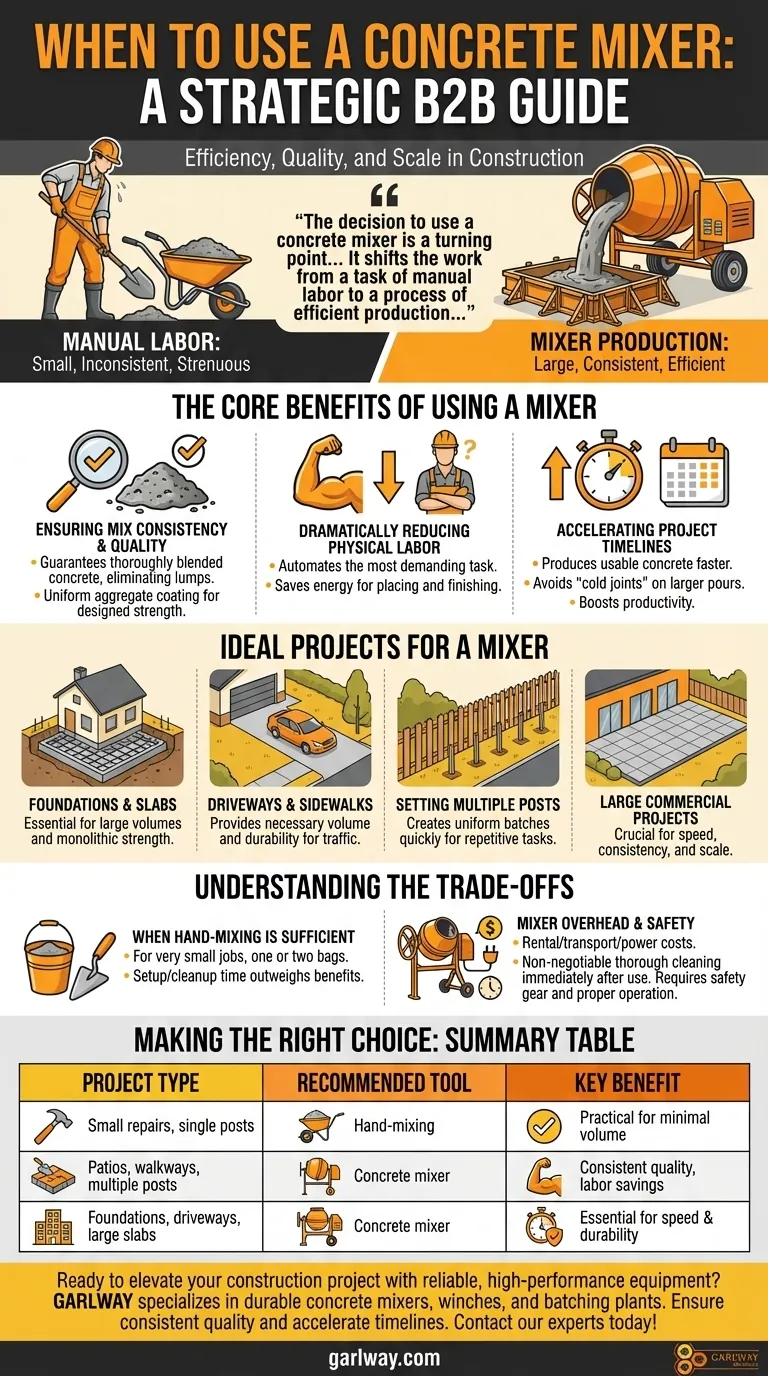
Summary Table:
| Project Type | Recommended Tool | Key Benefit |
|---|---|---|
| Small repairs, single posts | Hand-mixing | Practical for minimal volume |
| Patios, walkways, multiple posts | Concrete mixer | Consistent quality, labor savings |
| Foundations, driveways, large slabs | Concrete mixer | Essential for speed and durability |
Ready to elevate your construction project with reliable, high-performance equipment? GARLWAY specializes in providing durable concrete mixers, winches, and batching plants tailored for construction companies and contractors worldwide. Our machinery ensures consistent mix quality, reduces manual labor, and accelerates timelines—helping you deliver professional results efficiently. Contact our experts today to find the perfect solution for your needs!
Visual Guide
Related Products
- Portable Concrete Mixer Machine Equipment for Mixing Concrete
- Construction Products Concrete Plant Machine Mixing Concrete Mixer
- Portable Electric Concrete Mixer Machine for Cement Mixing
- JZC400 Mobile Small Concrete Mixer Cement Mixer Machine
- Hydraulic Concrete Mixer Machine Cement Mixing Equipment for Mixture Concrete
People Also Ask
- Why is it necessary to use a portable concrete mixer? Gain Total Control & Efficiency
- How much concrete can you pour with a portable mixer? Find the Perfect Fit for Your Project
- What types of projects are portable concrete mixers suitable for? Ideal for DIY & Small-Scale Construction
- How much does a portable concrete mixer hold? A Guide to Choosing the Right Capacity
- What types of portable concrete mixers exist? Find the Perfect Mixer for Your Project