
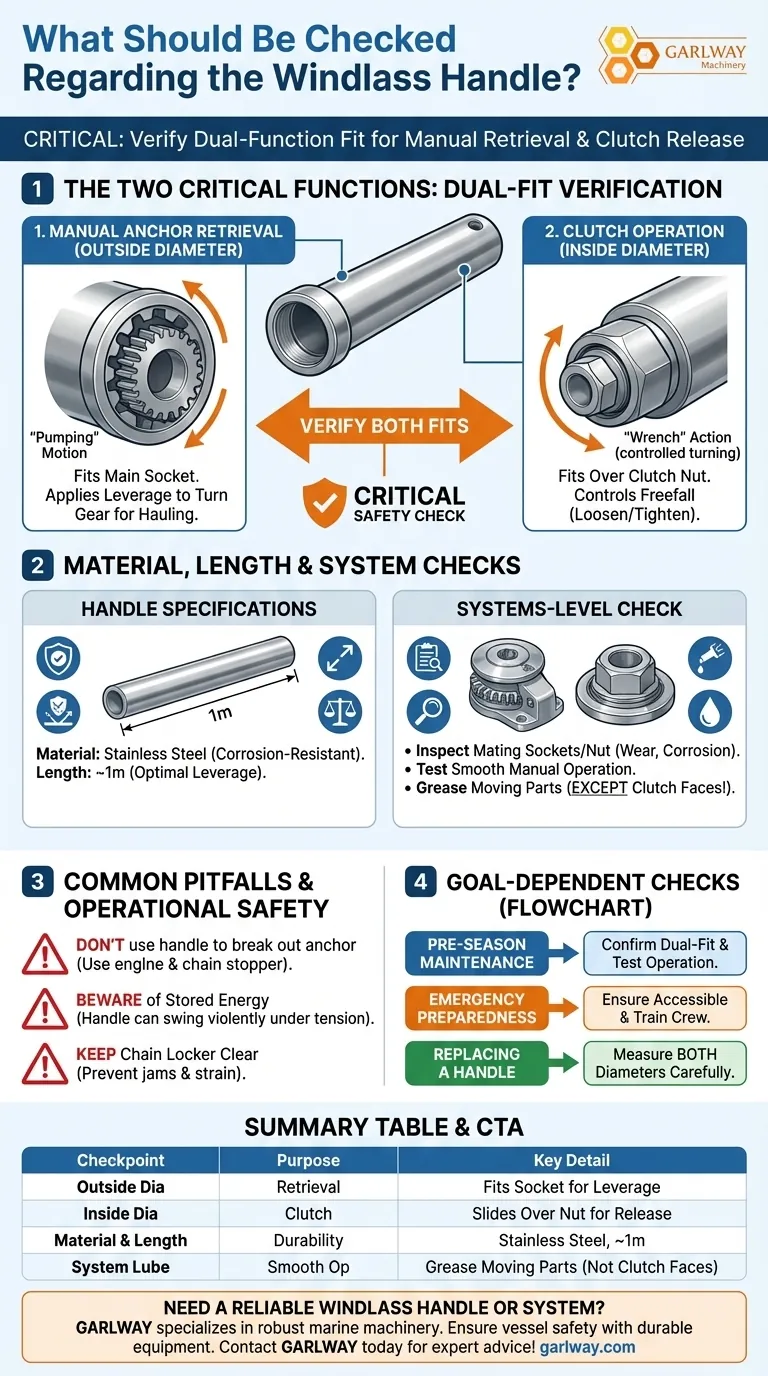
When inspecting a manual windlass handle, you must verify its dual-function fit. The handle is not just a simple lever; its outside diameter must fit the main socket for manually retrieving the anchor, and its inside diameter must fit over the clutch prong or nut to allow for releasing the chain.
The windlass handle is a critical piece of safety equipment, serving as the manual override for your entire anchoring system. Ensuring it is present, fits correctly for both retrieval and release functions, and that you know how to use it is non-negotiable for safe boating.
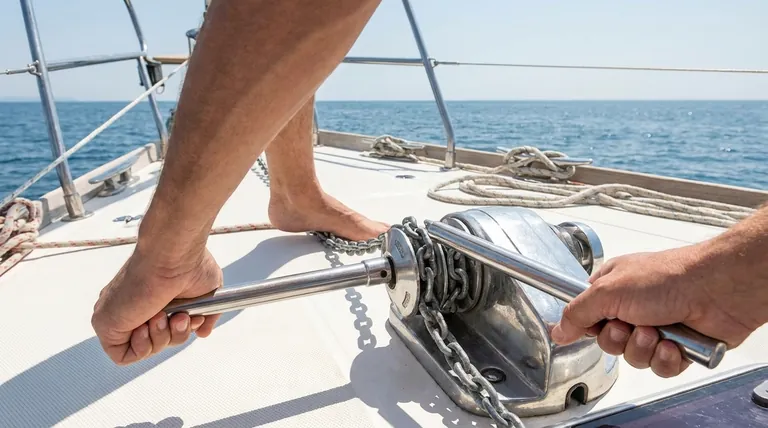
The Two Critical Functions of a Windlass Handle
A proper windlass handle is a purpose-built tool, typically a stainless steel tube around one meter long. Its design allows it to perform two very different tasks on the windlass mechanism.
Verifying the Fit for Manual Retrieval
The primary manual function is to haul in the anchor and chain. This is often a "pumping" or back-and-forth motion.
The outside diameter of the handle tube must fit snugly into the designated socket on the windlass, allowing you to apply leverage to turn the main gear.
Verifying the Fit for Clutch Operation
The second function is to loosen or tighten the clutch, which controls the freefall of the anchor chain.
The inside diameter of the handle tube must be able to slide over the clutch prong or nut. This allows you to use the handle's length as a wrench for controlled tightening or loosening.
Checking Material and Length
The handle should be strong and corrosion-resistant, which is why stainless steel is standard.
Its length (typically 1 meter) is engineered to provide sufficient leverage for manual operation without making it unwieldy to store or use.
Beyond the Handle: A Systems-Level Check
A perfectly fitting handle is useless if the windlass itself is seized or damaged. The handle check should be part of a broader inspection.
Inspect Mating Sockets and Components
Visually inspect the retrieval socket and the clutch nut. Look for signs of corrosion, distortion, or excessive wear that could prevent the handle from fitting properly.
Confirm Smooth Manual Operation
With the handle in place, test both functions. The winch mechanism should turn and click smoothly when you pump the handle.
When placed over the clutch nut, the handle should allow you to loosen it easily and tighten it securely. The internal threaded spindle must be well-greased to prevent seizing.
Ensure Proper Lubrication
All moving parts of the windlass should be lightly greased, with the crucial exception of the clutch faces themselves. Greased clutch faces will slip and fail to hold the load.
Common Pitfalls and Operational Safety
Understanding how to use the handle correctly—and what not to do—is just as important as ensuring it fits.
Do Not Use the Handle to Break Out an Anchor
The handle provides manual power, but it is not designed to overcome the immense force of a deeply dug-in or fouled anchor.
Instead, secure the chain with a chain stopper and use the boat's engine to maneuver forward and break the anchor free from the seabed. Using the windlass for this task can cause catastrophic damage.
Understand the Danger of Stored Energy
A windlass handle provides significant leverage. Never release a component that is under tension carelessly or suddenly, as the handle can swing with dangerous force.
Keep the System Free of Obstructions
Ensure the anchor chain can fall freely into the chain locker. If it piles up, it can jam the hawse pipe, putting immense strain on the windlass and preventing both manual and electric operation.
Making the Right Choice for Your Goal
Your approach to the windlass handle check depends on your immediate goal.
- If your primary focus is pre-season maintenance: Confirm the handle is aboard, check its dual-fit on the retrieval socket and clutch nut, and test both functions for smooth operation.
- If your primary focus is emergency preparedness: Ensure the handle is stored in a readily accessible location and that all crew members know how to use it for both manual retrieval and clutch release in case of power failure.
- If your primary focus is replacing a lost handle: Measure both the retrieval socket and the clutch nut carefully to ensure you purchase or fabricate a replacement with the correct outside and inside diameters.
This simple but critical check ensures you maintain manual control over one of your vessel's most important safety systems.
Summary Table:
| Checkpoint | Purpose | Key Detail |
|---|---|---|
| Outside Diameter | Manual Anchor Retrieval | Must fit snugly into the windlass socket for leverage. |
| Inside Diameter | Clutch Operation | Must slide over the clutch prong/nut for controlled release. |
| Material & Length | Durability & Leverage | Typically 1m stainless steel tube for strength and ease of use. |
| System Lubrication | Smooth Operation | Grease moving parts (except clutch faces) to prevent seizing. |
Need a Reliable Windlass Handle or Full Anchoring System?
GARLWAY specializes in robust construction and marine machinery, including winches and anchoring solutions trusted by contractors and boat operators worldwide. Ensure your vessel's safety with our durable, precision-engineered equipment.
Contact GARLWAY today for expert advice and custom solutions tailored to your needs!
Visual Guide
Related Products
- Quick Windlass Portable Winch for Truck and Boat Best Boat Winch
- Warn Winch Windlass Boat Trailer Winch
- Heavy Duty Electric Boat Winch Windlass Anchor
- Electric Hoist Winch Boat Anchor Windlass for Marine Applications
- 12000 lb Electric Boat Trailer Winch with Windlass Anchor Warn
People Also Ask
- What features were incorporated into the upgraded portable winch system? Boost Your Recovery Power & Safety
- What are some uses mentioned for portable winches beyond vehicle recovery? Essential Versatility for Property & Work
- How could the twisting issue with a portable winch be mitigated? Achieve Safe, Centered Pulls with Proper Rigging
- What are the primary uses of a portable winch for a truck? Boost Your Truck's Capability and Self-Reliance
- What is the single rope traction force of the quick winch without a pulley block? 0.5 to 40 Tons Explained


