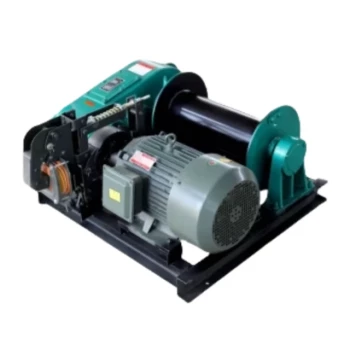
At its core, the primary performance feature of an electric winch's speed controller is efficiency. It allows the load hook to be moved up and down very quickly when the winch is not carrying a load. This capability dramatically reduces the setup and reset time required for a recovery operation.
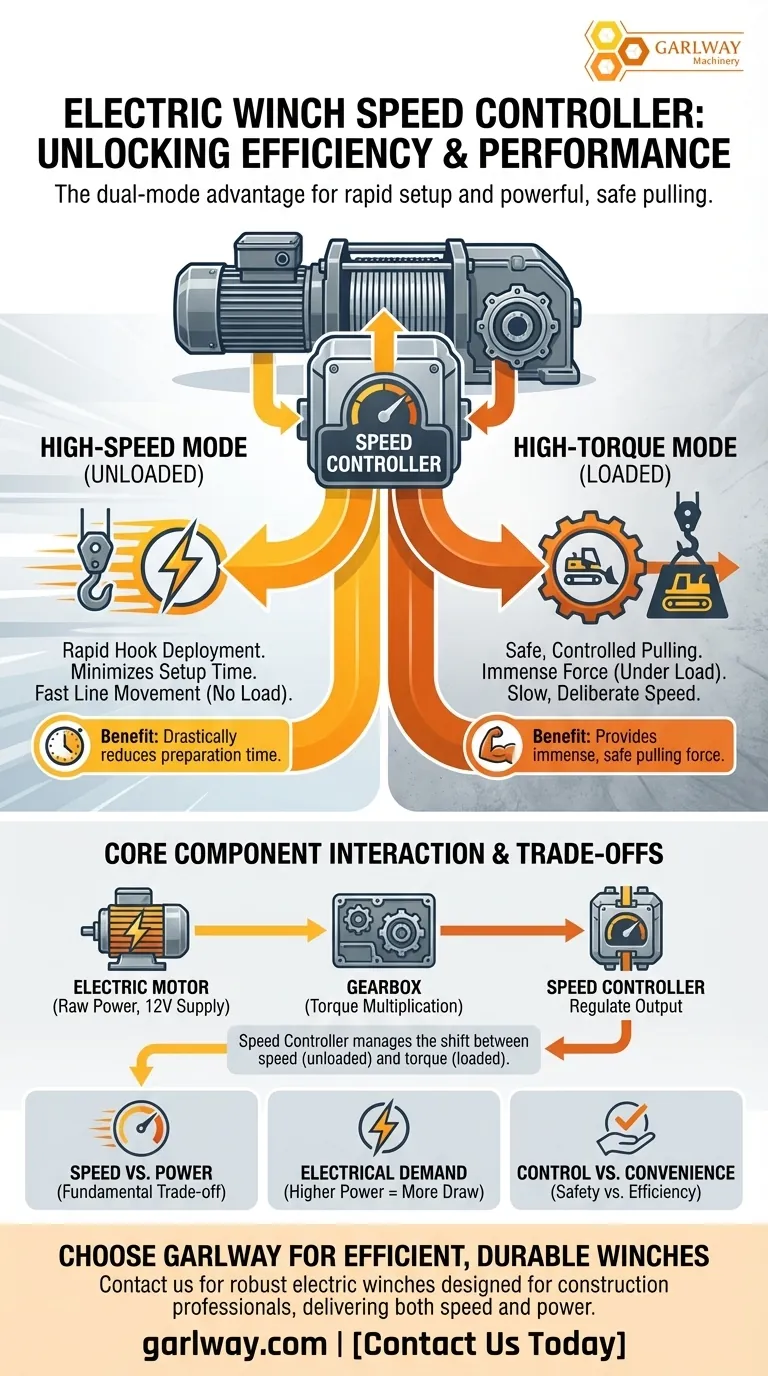
The speed controller's true value isn't just speed itself, but its ability to separate the winch's function into two distinct modes: a fast, low-torque mode for rapid setup and a slow, high-torque mode for safe and powerful pulling.
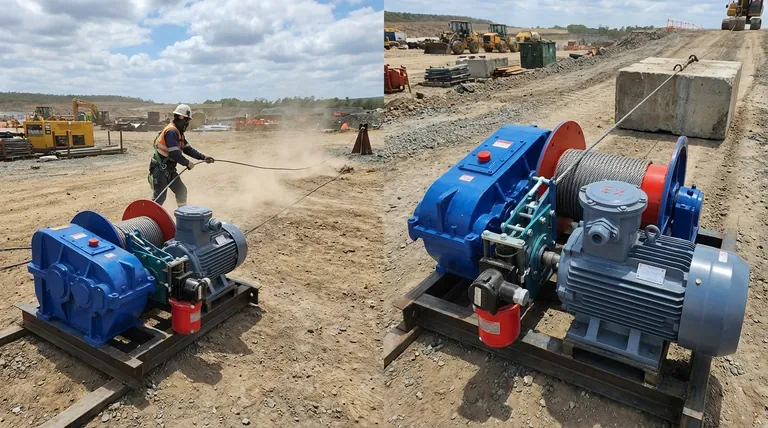
The Two Modes of Winch Operation
A winch's performance is not a single metric. It is a tale of two very different operational needs: speed when preparing and power when working. The speed controller is the component that manages this critical distinction.
High-Speed Mode: The Unloaded State
When you are preparing to attach the winch line to an anchor point, every second counts. The speed controller enables the motor to move the unloaded hook quickly, allowing you to deploy and position your gear with maximum efficiency.
This feature is purely about minimizing downtime before the actual work of pulling begins.
High-Torque Mode: The Loaded State
Once the hook is attached, the winch's priority shifts from speed to power. The electric motor and gearbox work together to provide immense, controlled pulling force.
This process is inherently slow. The high gear ratios required to multiply torque mean the line will reel in at a deliberate, measured pace. This is essential for safety and control.
How Core Components Dictate Performance
The speed controller is part of a system. Understanding how it interacts with the motor and gearbox is key to appreciating its role.
The Electric Motor
The motor is the heart of the winch, providing the raw power. It connects to a 12-volt power supply, typically the vehicle's battery.
A higher horsepower motor delivers more pulling power and does so with less strain on your vehicle's electrical system, making it more effective in challenging conditions.
The Gearbox
The gearbox is the winch's muscle. It takes the high-speed, low-torque output of the electric motor and converts it into the low-speed, high-torque force needed to move a vehicle.
This torque multiplication is why a small electric motor can pull thousands of pounds.
Power-In vs. Freewheel-Out
Most electric winches use the motor to "power in" the line under load. This is the slow, controlled pulling operation.
To extend the line, many models use a "freewheel out" setting. This disengages the drum, allowing you to pull the line out by hand quickly. A dedicated, motor-driven "power out" function is less common.
Understanding the Trade-offs
Choosing a winch involves balancing competing characteristics. There is no single "best" solution for every scenario.
Speed vs. Power
This is the fundamental trade-off in any winch system. The gearing required for immense pulling power makes high-speed operation impossible while under load.
The speed controller provides a clever workaround, giving you speed only when you need it—during the unloaded setup phase.
Electrical Demand
A more powerful, high-horsepower motor will perform better, but it will also draw more current from your vehicle's battery and alternator.
Ensuring your vehicle's electrical system is in good condition is critical for reliable winch performance, especially during prolonged pulls.
Control vs. Convenience
The core function of a winch is to provide safe, controlled pulling force for vehicle recovery. This is its primary purpose.
Features like a speed controller or a freewheel-out clutch are designed for convenience and efficiency, making the overall recovery process faster and less cumbersome.
Making the Right Choice for Your Goal
Selecting a winch means matching its features to your intended use.
- If your primary focus is rapid recovery setup: A winch with an effective speed controller for unloaded operation is critical to minimize time spent deploying the line.
- If your primary focus is raw pulling power for heavy vehicles: Prioritize a winch with a high-horsepower motor and a robust, high-ratio gearbox, as this determines performance under load.
- If your primary focus is peace of mind in remote locations: Look for a balanced system where a powerful motor is paired with efficient features like a speed controller to ensure dependable operation when it matters most.
Ultimately, understanding how these components work together empowers you to select a winch that delivers both power and efficiency for any situation.
Summary Table:
| Feature | High-Speed Mode (Unloaded) | High-Torque Mode (Loaded) |
|---|---|---|
| Purpose | Rapid hook deployment and setup | Safe, controlled pulling under load |
| Key Benefit | Drastically reduces preparation time | Provides immense, safe pulling force |
| Operation | Fast line movement with no load | Slow, deliberate line speed |
Ready to enhance your recovery operations with a winch that delivers both speed and power? GARLWAY specializes in construction machinery, offering robust electric winches designed for construction companies and contractors globally. Our winches feature intelligent speed controllers for rapid setup and high-torque motors for reliable performance. Contact us today to find the perfect winch for your specific needs and experience the GARLWAY difference in efficiency and durability.
Visual Guide
Related Products
- Electric 120V Boat Winch by Badlands
- Electric and Hydraulic Winch for Heavy Duty Applications
- Small Electric Winch 120V and 240V for Compact Applications
- 12000 lb Electric Boat Trailer Winch with Windlass Anchor Warn
- Electric Hoist Winch Boat Anchor Windlass for Marine Applications
People Also Ask
- How do electric boat winches work? Unlock Effortless Launching & Retrieval
- How much current does an electric boat winch draw? Plan Your Electrical System for Peak Performance
- Can I run a winch straight from a battery? Essential Power Setup for Safe Operation
- What are the types of electric winches available? Choose the Right Winch for Your Job
- What are the uses of electric winches in mining and tunneling? Enhance Safety and Efficiency Underground