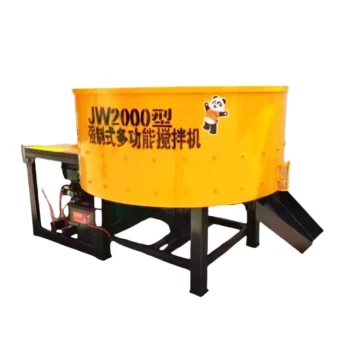
A typical mobile concrete mixer is rated between 5 and 6 horsepower (HP). This figure, however, is just a starting point, as the exact power rating depends heavily on the mixer's size, capacity, and its power source—which can be a diesel engine, gasoline engine, or an electric motor.
The most critical factor is not the specific horsepower rating but the type of power source. Choosing between diesel, gasoline, or electric power directly impacts the mixer's portability, convenience, and suitability for your specific job site environment.
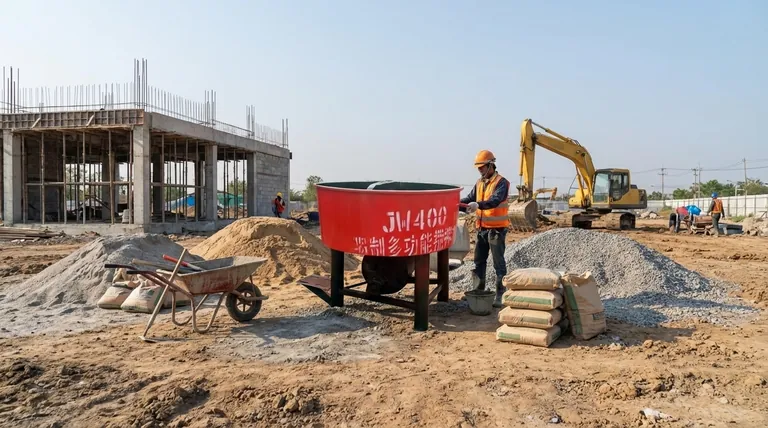
Why Power Source is the Decisive Factor
While horsepower indicates the raw strength of the motor or engine, the source of that power dictates where and how you can work. Each type is engineered for different scenarios.
Diesel Engines: The Standard for Mobility
Diesel-powered mixers are extremely popular for one key reason: they are self-contained. They do not require any external power supply to operate.
This makes them the most convenient and flexible option for construction sites, especially those in remote areas or where electrical infrastructure is not yet established. Common models often feature discharge capacities of 350 or 500 liters.
Electric Motors: For Predictable Environments
Electric mixers offer simplicity and lower maintenance but come with a significant constraint: they must be connected to a power source.
This makes them an excellent choice for workshops or long-term job sites where a reliable power grid is readily available. Their use is defined by the length of an extension cord.
Gasoline and Hydraulic Systems
Less common but still available, gasoline engines offer similar portability to diesel but may have different maintenance profiles. Hydraulic systems are often integrated into larger machinery, driving the mixing components as part of a more complex setup.
Key Factors That Determine Power Requirements
The power rating of a mixer is a direct reflection of the work it's designed to do. Several core factors influence how much power is needed.
Mixer Size and Capacity
This is the most straightforward relationship. A larger mixing drum, like a 10/7 cubic foot (CFT) model, holds more material, which means more weight and resistance.
Turning a heavy, wet mixture of sand, cement, and aggregate requires significant torque, so a larger capacity mixer will always demand a more powerful engine or motor.
Project and Site Demands
The primary benefit of a mobile mixer is its flexibility. The ability to bring the mixer directly to the pour site, even over rough terrain, is essential.
An engine-driven mixer (diesel or gasoline) provides the untethered mobility needed to navigate challenging job sites that would be inaccessible to a standard concrete truck.
Operational Components
Modern mobile mixers often have integrated systems that also draw power. Core components like the hydraulic system, loading arm, and water-filling system all rely on the central power source to function.
Understanding the Trade-offs
Choosing a power source is a matter of balancing convenience with constraints. There is no single "best" option, only the right one for the job.
Diesel & Gasoline: Ultimate Freedom
The clear advantage of an engine-driven mixer is its complete independence. You can operate anywhere you can transport the machine.
The trade-off is the need for fuel, along with the noise, emissions, and regular maintenance associated with internal combustion engines.
Electric: Quiet Simplicity
Electric motors are generally quieter, produce no direct emissions, and require significantly less maintenance than their fuel-burning counterparts.
The limitation is the power cord. Your work area is strictly limited by your access to a suitable electrical outlet, making it impractical for many open construction sites.
How to Choose the Right Mixer
Focus on the logistics of your project, not just the technical specifications. The ideal power source becomes clear when you define your primary need.
- If your primary focus is versatility across multiple job sites: A diesel engine is the superior choice, providing the freedom to operate anywhere without relying on local utilities.
- If your primary focus is a stationary, repetitive task with power access: An electric motor offers a simpler, quieter, and lower-maintenance solution for a predictable environment.
- If your primary focus is cost-effectiveness for smaller projects: Your decision will be guided by the site's power availability, as this is the most significant logistical factor.
Ultimately, selecting the right power source is about matching the mixer's capabilities to the realities of your worksite.
Summary Table:
| Power Source | Key Feature | Best For |
|---|---|---|
| Diesel Engine | Self-contained, no external power needed | Remote sites, maximum mobility |
| Electric Motor | Quiet, low maintenance, needs power outlet | Workshops, sites with grid access |
| Gasoline Engine | Portable, similar to diesel | Smaller projects, specific fuel preferences |
Need a mobile concrete mixer that perfectly matches your job site's power needs?
At GARLWAY, we specialize in providing robust construction machinery, including reliable mobile concrete mixers, winches, and batching plants for contractors and construction companies worldwide. Our experts can help you select the ideal diesel, electric, or gasoline-powered model for maximum efficiency and mobility on your project.
Contact our team today for a personalized recommendation and quote!
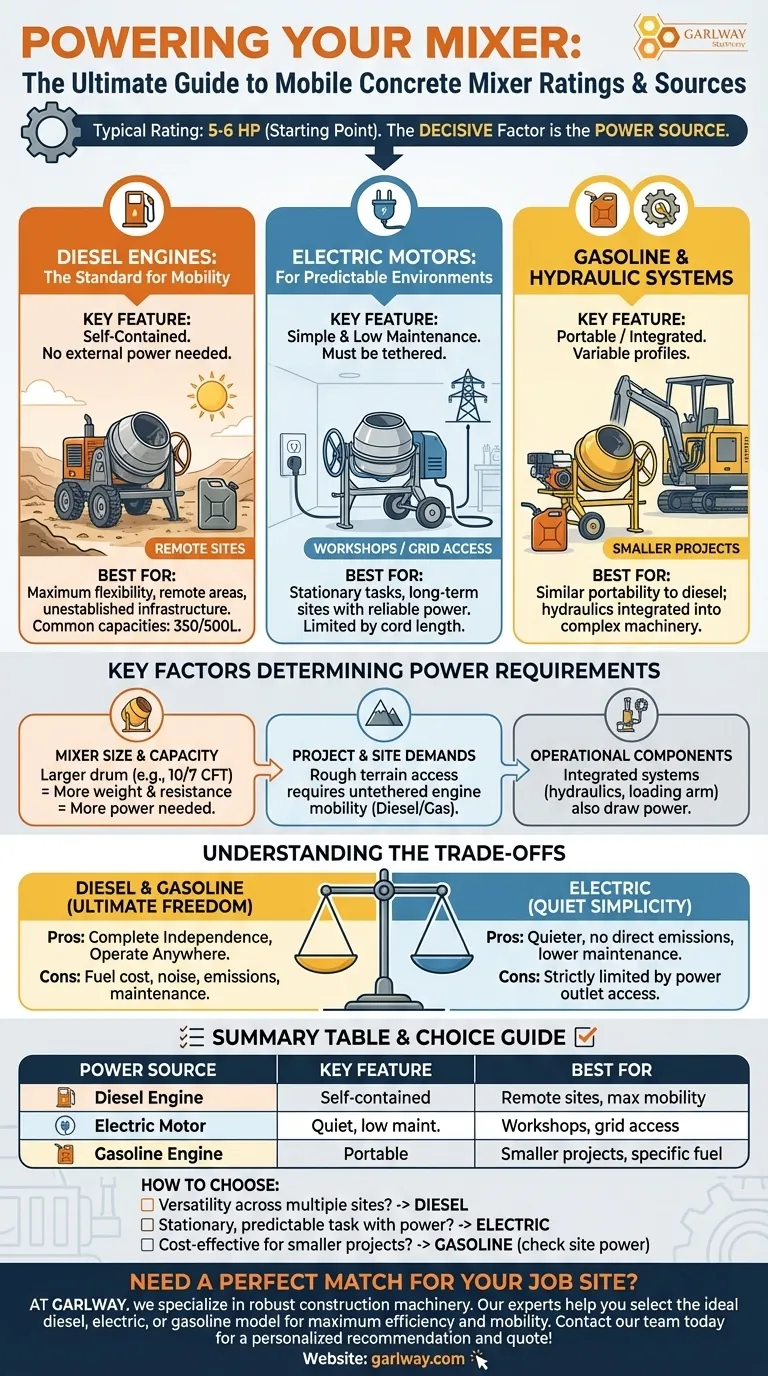
Visual Guide
Related Products
- JZC400 Mobile Small Concrete Mixer Cement Mixer Machine
- JW1000 Mobile Cement Mixer Concrete Mixer Truck and Batching Plant
- Portable Concrete Mixer Machine Equipment for Mixing Concrete
- Ready Mixer Machine for Construction Ready Mix Machinery
- Portable Ready Mix Concrete Mixer Equipment
People Also Ask
- What are the different names for mobile concrete mixing equipment? Understand Volumetric vs. On-Site Mixers
- In what way do mobile mixers enhance quality control? Achieve Superior Concrete Quality On-Site
- What is a mobile mixer? The Ultimate Guide to On-Site Concrete Production
- How do mobile mixers improve labor efficiency? Automate Concrete Production & Boost Productivity
- What flexibility do mobile mixers offer in terms of material mixing? Unlock On-Demand Concrete Production