
At their core, dry mortar mixing stations are important because they shift mortar production from an unpredictable, manual task on the job site to a precise, factory-controlled industrial process. This shift delivers a level of material quality, consistency, and performance that is simply unattainable with traditional site mixing.
The true value of a dry mortar mixing station is risk reduction. By centralizing production, it eliminates the guesswork and variability of on-site mixing, guaranteeing that the material specified is the material being applied.
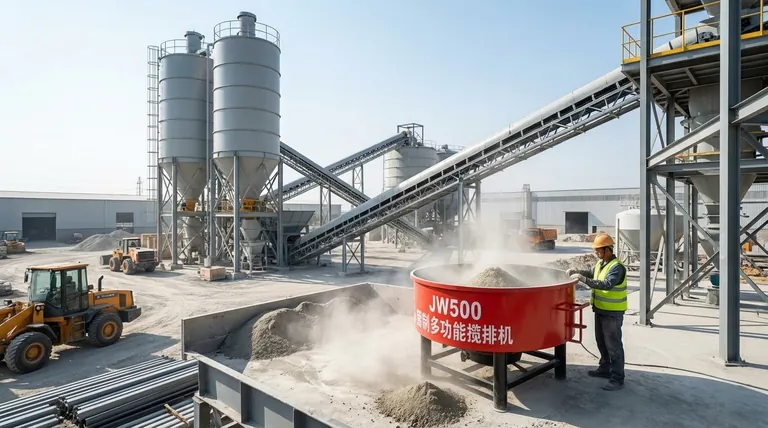
The Problem: The Unpredictability of Traditional Site Mixing
Before understanding the importance of dry mortar stations, we must first appreciate the inherent flaws of the method they replace. Traditional on-site mortar mixing is fraught with variables that compromise quality and performance.
Inconsistent Proportions
The most common failure point is inaccurate measurement. Shovels, buckets, and guesswork are poor substitutes for calibrated scales, leading to incorrect ratios of cement, sand, and lime.
This inconsistency directly impacts the mortar's final properties, such as compressive strength, bond strength, and durability. A batch that is too "rich" can crack, while one that is too "lean" will be weak.
Variable Raw Materials
Sand quality can vary dramatically depending on the source, with impurities like clay or silt affecting the mortar's bond. Similarly, moisture content in the sand can fluctuate daily, throwing off the critical water-to-cement ratio.
Environmental Factors
Weather plays a disruptive role. High heat can cause water to evaporate too quickly, while rain can introduce excess water, both compromising the curing process and final strength of the mortar.
How Dry Mortar Stations Provide the Solution
Dry mortar stations, or plants, are designed specifically to overcome these challenges by treating mortar as an engineered product.
Unwavering Quality Control
In a mixing station, every raw material is tested, dried, and stored in controlled conditions. Ingredients like sand and cement are weighed with precision digital scales, ensuring every bag or silo of product has the exact same formulation.
This process eliminates the human error and environmental variables common on a construction site.
Precise Formulation with Additives
Modern construction demands more than just sand and cement. Dry mortar plants can accurately incorporate a wide range of specialized additives into the mix.
These polymers and chemicals can enhance workability, water retention, adhesion, and flexibility. This level of customization is impossible to achieve reliably with manual on-site mixing.
Streamlined On-Site Logistics
The final product is delivered to the site in bags or silos, ready to be mixed with a specified amount of water. This simplifies site operations, reduces the space needed for storing separate raw materials, and minimizes waste from unused sand or cement piles.
Understanding the Trade-offs
While the benefits are significant, adopting factory-produced dry mortar involves acknowledging certain trade-offs.
Higher Initial Material Cost
On a per-unit basis, pre-mixed dry mortar often has a higher purchase price than the raw components of sand and cement. This cost must be weighed against the savings from reduced labor, faster application, and significantly less material waste.
Reduced On-Site Flexibility
The formulation is set at the factory. This means site workers cannot easily "tweak" the mix, which can be a disadvantage for very specific, non-standard repair work where adjustments are needed on the fly.
Reliance on a Supply Chain
Using dry mortar makes a project dependent on a manufacturer's production schedule and delivery logistics. Any disruption in this supply chain can potentially delay the project, unlike site mixing where raw materials might be sourced from multiple local suppliers.
Making the Right Choice for Your Project
The decision to use dry mix mortar depends entirely on the project's priorities.
- If your primary focus is large-scale construction and performance guarantees: The quality control and consistency of a dry mortar station are non-negotiable for meeting structural and architectural specifications.
- If your primary focus is specialized applications (e.g., tile adhesives, EIFS): The ability to incorporate precise additives makes factory-mixed products the only reliable choice.
- If your primary focus is a small-scale, low-budget repair: Traditional site mixing may be more cost-effective if absolute material consistency is not the highest priority.
Ultimately, embracing dry mortar mixing stations is a strategic move toward more predictable, efficient, and higher-quality construction.
Summary Table:
| Aspect | Traditional Site Mixing | Dry Mortar Station |
|---|---|---|
| Quality Control | Unpredictable, variable | Precise, factory-controlled |
| Material Consistency | Inconsistent proportions | Exact formulation every time |
| On-Site Logistics | Complex, space-intensive | Simplified, minimal waste |
| Key Benefit | Low initial material cost | Guaranteed performance & risk reduction |
Ready to eliminate the risk of inconsistent mortar on your projects? GARLWAY specializes in construction machinery, offering robust concrete batching plants and mixers that deliver the same precision and reliability as advanced dry mortar stations. Ensure your construction quality and efficiency—contact our experts today to find the perfect solution for your needs!
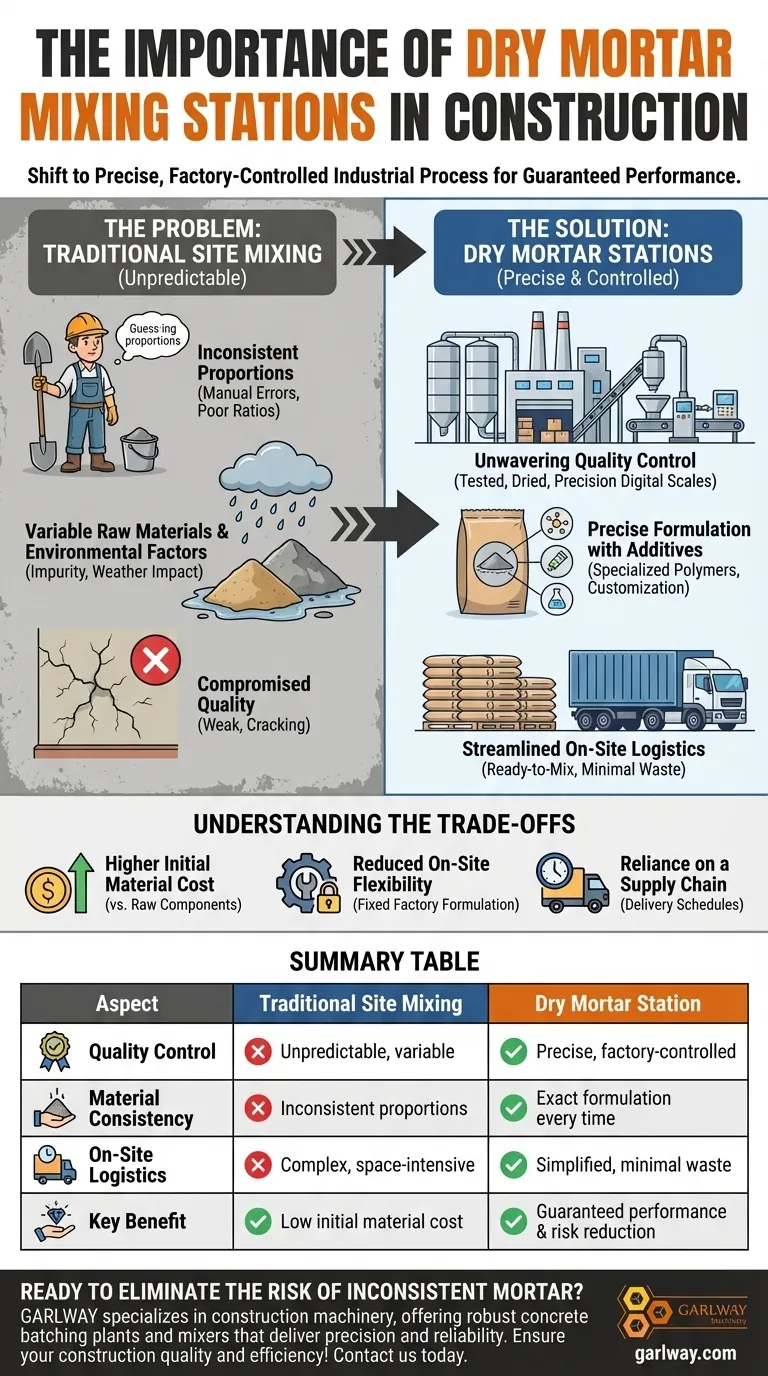
Visual Guide
Related Products
- JDC350 Small Cement Concrete Mortar Mixer
- HZS25 Best Cement Mixer for Quick Mix Concrete at Bunnings
- JDY350 Electric Hydraulic Mortar Mud Concrete Mixer
- Belle Mixer Drum Self Loading Mortar Mixers JS3000
- HZS120 Ready Mix Concrete Batching Plant Commercial Mud Cement Mixer
People Also Ask
- What are the primary uses of a small cement mixer? Boost Efficiency for Small to Medium Construction Jobs
- What are the physical benefits of using a small cement mixer? Reduce Strain and Prevent Injury
- What are the cost benefits of using a small cement mixer? Save on Labor, Materials & Time
- What makes small cement mixers easy and convenient to use? Boost Productivity on Any Job Site
- What factors should be considered before purchasing a small cement mixer? Find the Perfect Match for Your Project


