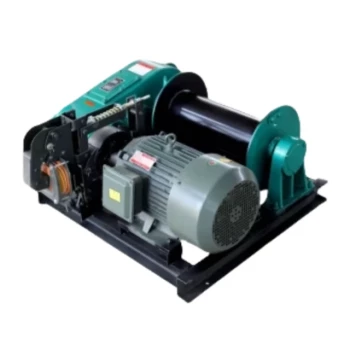
To be precise, the capacity of an electric hoist is its rated capacity, also known as the Safe Working Load (SWL). This is the absolute maximum weight the hoist has been manufactured and certified to lift safely and repeatedly without risking failure. This capacity is determined by the combined strength of its motor, lifting medium (chain or wire rope), and overall structural assembly.
Understanding a hoist's true capacity is not about finding a single maximum number, but about adhering strictly to the manufacturer's certified Safe Working Load (SWL). Confusing this with a theoretical breaking strength is a critical safety risk.
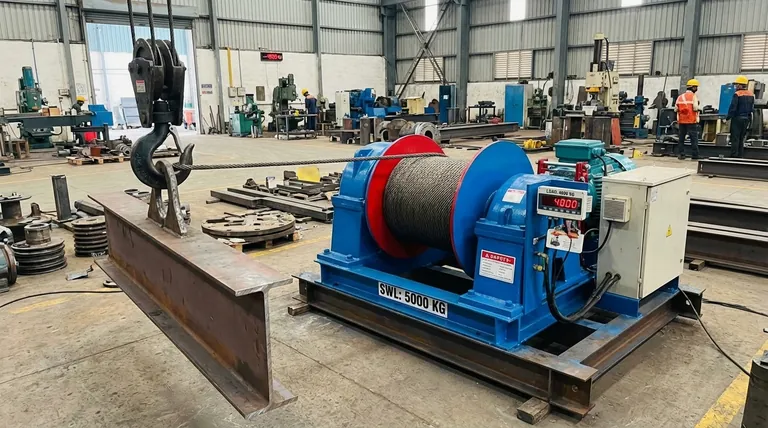
Deconstructing Hoist Capacity
To properly assess an electric hoist, you must understand what "capacity" truly means. It's not an arbitrary number but a carefully engineered specification based on the limitations of its core components.
### The Core Components of Strength
A hoist's rated capacity is a direct result of its design. The final number is dictated by the weakest link in its operational chain.
Key factors include the motor's power, the rigidity of the hoist assembly, and the tensile strength of the load chain or wire rope. Each part is engineered to work together to handle a specific maximum load.
### Rated Capacity vs. Safe Working Load (SWL)
While often used interchangeably, it's vital to focus on the Safe Working Load (SWL). This is the official, certified limit for routine use.
Some manufacturers may list a higher "maximum" or "loading" capacity, but the SWL is the only number that matters for operational safety and regulatory compliance.
### Features That Support Safe Lifting
Modern hoists include features designed to help you operate safely within their capacity.
Overload protection is a critical safety mechanism that prevents the hoist from lifting a weight exceeding its rated capacity. Features like variable speed control allow for precise, gentle handling of loads, reducing shock and stress on the equipment.
Common Pitfalls and Misconceptions
The most significant risk comes from misinterpreting capacity specifications. A lack of clarity from a manufacturer is a major red flag.
### The Danger of Ambiguous Ratings
You may encounter confusing specifications, such as a hoist listed with a "5 Ton Loading Capacity" but a "Safe Load of 1-2 Ton."
This is highly problematic. The "safe load" is the true capacity. The higher number could refer to a theoretical breaking point or a static load limit, neither of which is relevant for dynamic lifting operations. Always default to the lower, clearly defined safe load.
### Capacity Is Not Permanent
The rated capacity only applies to a hoist that is properly maintained. Wear and tear can compromise its strength.
Regular inspections and maintenance are essential to ensure the hoist continues to meet its original safety specifications. A worn chain or a malfunctioning brake invalidates the original capacity rating.
### Proper Use is Non-Negotiable
Even a hoist with the correct capacity can fail if used improperly. The SWL assumes correct operational procedures.
Conducting pre-operation checks and following all safe lifting practices are mandatory. The rated capacity is not a guarantee of safety if the operator is negligent.
Making the Right Choice for Your Application
Selecting a hoist isn't just about matching a number; it's about ensuring a margin of safety and operational efficiency for your specific task.
- If your primary focus is safety and compliance: Always select a hoist based on its certified Safe Working Load (SWL) and disregard any other ambiguous "maximum" capacity figures.
- If your loads are consistently heavy: Choose a hoist with a capacity rated at least 20-25% above your heaviest typical load to ensure a robust safety buffer and reduce strain.
- If your primary focus is control and precision: Prioritize hoists with features like variable speed control and overload protection, as these are just as crucial as raw lifting power for safely handling valuable or delicate loads.
Ultimately, choosing and operating an electric hoist correctly is a foundational element of a safe and efficient work environment.
Summary Table:
| Aspect | Key Consideration |
|---|---|
| True Capacity | The certified Safe Working Load (SWL), not ambiguous maximum ratings. |
| Safety Buffer | Choose a hoist with 20-25% more capacity than your heaviest typical load. |
| Critical Features | Overload protection and variable speed control for safe, precise handling. |
| Maintenance | Regular inspections are essential to maintain the original SWL rating. |
Ensure your lifting operations are safe and efficient.
Choosing the right hoist with the correct capacity is critical for safety and productivity. At GARLWAY, we specialize in providing robust and reliable construction machinery, including electric hoists, for construction companies and contractors globally.
Our experts can help you select a hoist with the appropriate Safe Working Load (SWL) for your specific needs, ensuring compliance and a vital safety margin.
Contact GARLWAY today to discuss your requirements and get a personalized recommendation!
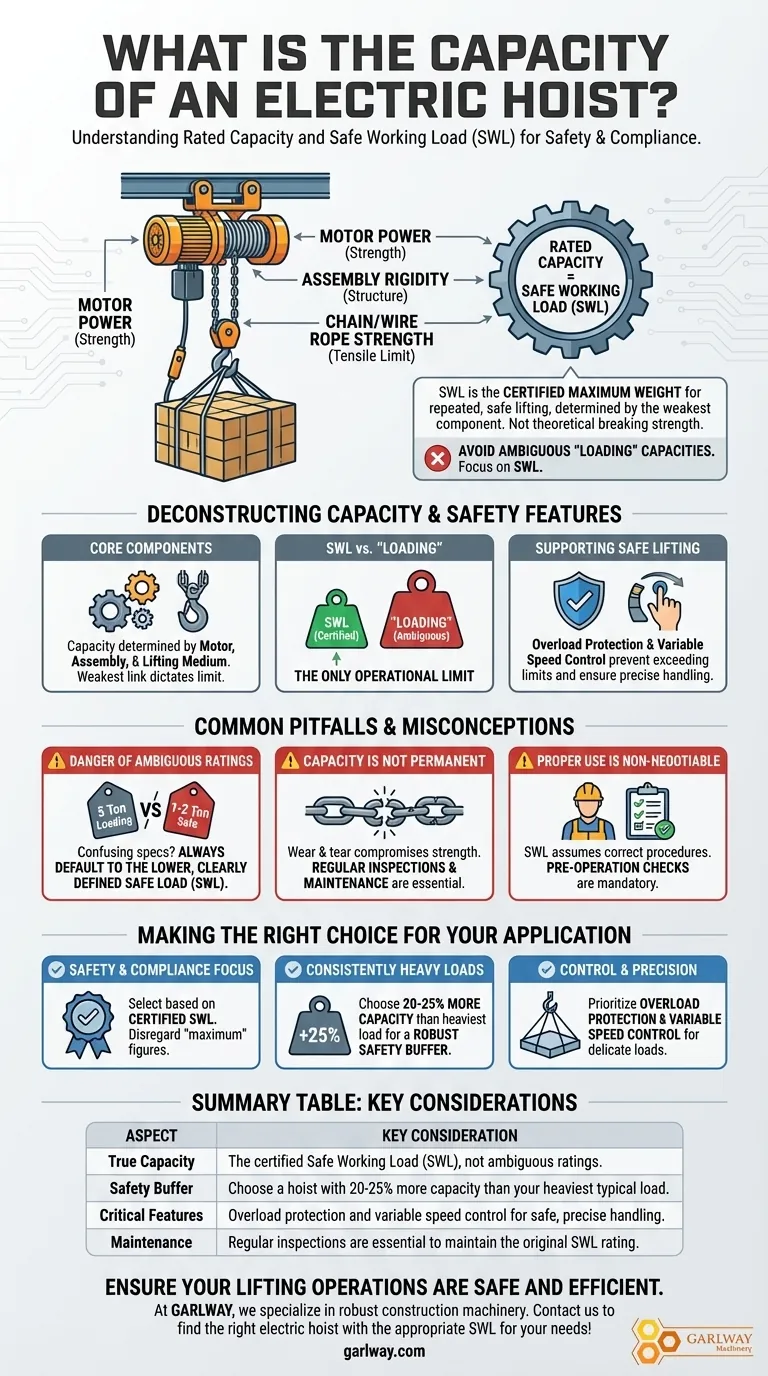
Visual Guide
Related Products
- Electric Hoist Winch Boat Anchor Windlass for Marine Applications
- Electric and Hydraulic Winch for Heavy Duty Applications
- Hydraulic Winding Engine Harbor Freight Winch
- Heavy Duty Electric Boat Winch Windlass Anchor
- 12000 lb Electric Boat Trailer Winch with Windlass Anchor Warn
People Also Ask
- How does an electric anchor winch work? Power, Safety, and Reliable Operation Explained
- What are the advantages of installing an electric anchor winch on a boat? Boost Safety & Ease for Boaters
- What are the operational differences between electric hoists and winches? A Guide to Safe Lifting vs. Pulling
- What are the main benefits of a boat anchor winch? Boost Safety & Efficiency for Your Vessel
- How does a boat anchor winch work? A Guide to Reliable Anchor Handling