The best cleaner for a cement mixer depends entirely on whether the concrete is wet or has already hardened. For fresh, wet concrete, the best method is immediate cleaning with water and coarse gravel. For hardened, built-up concrete, the most effective cleaner is a chemical concrete dissolver.
The most critical aspect of cleaning a cement mixer isn't the specific cleaner you use, but the timing. Proactive cleaning of wet concrete with water is vastly superior to the reactive, labor-intensive process of removing hardened material later.
The Two States of Cleaning: Wet vs. Hardened Concrete
Your approach to cleaning a mixer drum should be determined by the state of the material inside. Treating these two scenarios differently is the key to efficiency and a long lifespan for your equipment.
The Ideal Method: Cleaning Wet Concrete Immediately
The single most effective practice is to clean the mixer immediately after every use. When concrete is still in its plastic, wet state, it can be removed with minimal effort.
A common and highly effective technique is to add a few gallons of water and a shovel-full of coarse gravel or crushed rock into the drum. Let the mixer run for 5-10 minutes. The abrasive action of the gravel scours the interior surfaces, removing the residual cement paste.
After tumbling, simply pour out the slurry and give the drum a final rinse with a high-pressure hose to ensure it's completely clean.
The Realistic Challenge: Tackling Hardened Concrete
If concrete has been allowed to cure inside the drum, water alone will be ineffective. At this point, you must choose between chemical and mechanical removal methods.
Options for Removing Cured Concrete
When faced with hardened buildup, you need a more aggressive solution. The primary options are chemical dissolvers or physical force.
Using a Chemical Concrete Dissolver
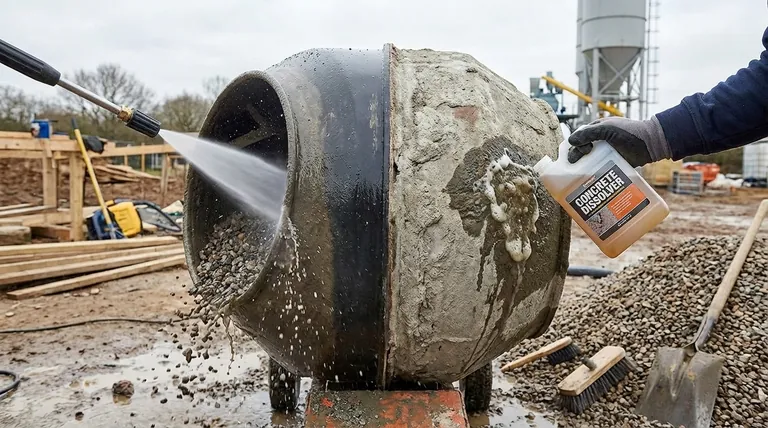
A concrete dissolver is an acidic solution specifically formulated to break down the chemical bonds in cured concrete. It works by attacking the portland cement, turning it into a soft, mushy substance that can be scraped or rinsed away.
These products are effective for significant buildup and can reach areas that are difficult to access with tools. They are the go-to solution when manual chipping is impractical.
Using Mechanical Force
The traditional method for removing heavy buildup is mechanical action. This involves using tools like a hammer and chisel, an air hammer with a chisel bit, or a needle scaler.
This approach requires significant physical effort and can be very loud. The primary risk is damaging the mixer's drum or fins if you are too aggressive. It is typically reserved for very thick, stubborn chunks of old concrete.
Understanding the Trade-offs: Chemical vs. Mechanical
Choosing between a dissolver and a hammer isn't just about preference; it's about weighing the pros and cons for your specific situation.
The Downsides of Concrete Dissolvers
While effective, chemical cleaners require caution. They are acidic and can be corrosive to paint, metal, and skin. Proper Personal Protective Equipment (PPE), including gloves and eye protection, is non-negotiable.
Furthermore, they may require multiple applications for very thick layers, and the process can be time-consuming as you must wait for the chemical to react.
The Risks of Mechanical Removal
The most obvious risk of using hammers and chisels is damaging your equipment. A misplaced or overly forceful blow can dent, puncture, or warp the drum, affecting its balance and performance.
This method also creates silica dust, which is hazardous if inhaled, and the process is extremely labor-intensive and noisy.
Making the Right Choice for Your Mixer
Your cleaning strategy should be based on the condition of your equipment and your commitment to maintenance.
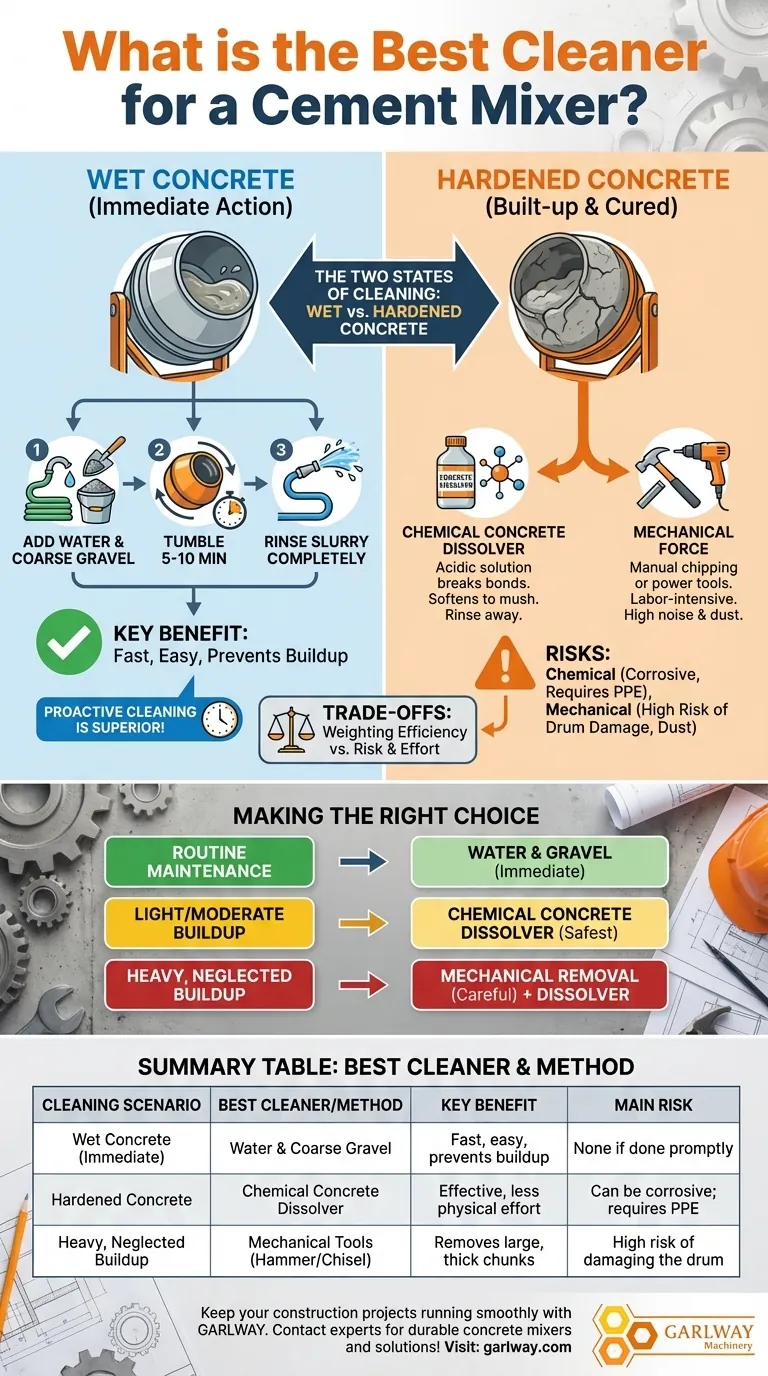
- If your primary focus is routine maintenance: Clean the mixer with water and gravel immediately after every single use.
- If you have light to moderate hardened buildup: A chemical concrete dissolver is your most efficient and safest option for the equipment.
- If you are restoring a neglected mixer with thick, old concrete: Begin with careful mechanical removal for the largest chunks, then use a concrete dissolver to finish the job.
Ultimately, preventing buildup is far more effective than any method of removing it.
Summary Table:
| Cleaning Scenario | Best Cleaner/Method | Key Benefit | Main Risk |
|---|---|---|---|
| Wet Concrete (Immediate) | Water & Coarse Gravel | Fast, easy, prevents buildup | None if done promptly |
| Hardened Concrete | Chemical Concrete Dissolver | Effective, less physical effort | Can be corrosive; requires PPE |
| Heavy, Neglected Buildup | Mechanical Tools (Hammer/Chisel) | Removes large, thick chunks | High risk of damaging the drum |
Keep your construction projects running smoothly with a clean, reliable cement mixer. GARLWAY specializes in high-performance construction machinery, including durable concrete mixers, winches, and batching plants designed for contractors and construction companies worldwide. Ensure your equipment's longevity and efficiency—contact our experts today for personalized advice and superior machinery solutions!
Visual Guide
Related Products
- JDC350 Small Cement Concrete Mortar Mixer
- HZS25 Best Cement Mixer for Quick Mix Concrete at Bunnings
- Portable Electric Small Cement Mixer Concrete Machine
- Portable Cement Mixer with Lift Concrete Machine
- Portable Electric Concrete Mixer Machine for Cement Mixing
People Also Ask
- What are the primary uses of a small cement mixer? Boost Efficiency for Small to Medium Construction Jobs
- What are the physical benefits of using a small cement mixer? Reduce Strain and Prevent Injury
- What are the cost benefits of using a small cement mixer? Save on Labor, Materials & Time
- What makes small cement mixers easy and convenient to use? Boost Productivity on Any Job Site
- What factors should be considered before purchasing a small cement mixer? Find the Perfect Match for Your Project