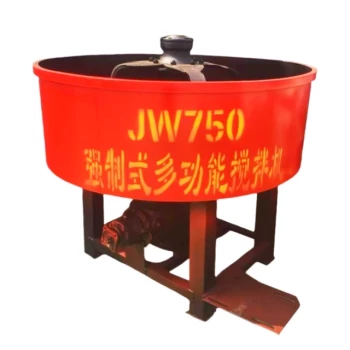
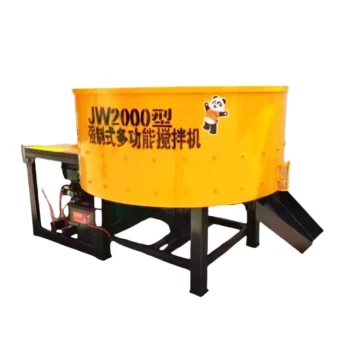
To prevent build-up and ensure proper operation, your core maintenance practices must revolve around consistent, disciplined cleaning and targeted monthly lubrication. This involves washing the drum's inlet before filling, rinsing it immediately after, and thoroughly cleaning the discharge tank after every unload, supplemented by a monthly greasing of the roller and raceway.
The central principle of effective drum maintenance is that prevention is exponentially cheaper and more effective than remediation. Consistent cleaning is not a chore; it is the primary mechanism for preserving the mechanical integrity and operational capacity of your equipment.
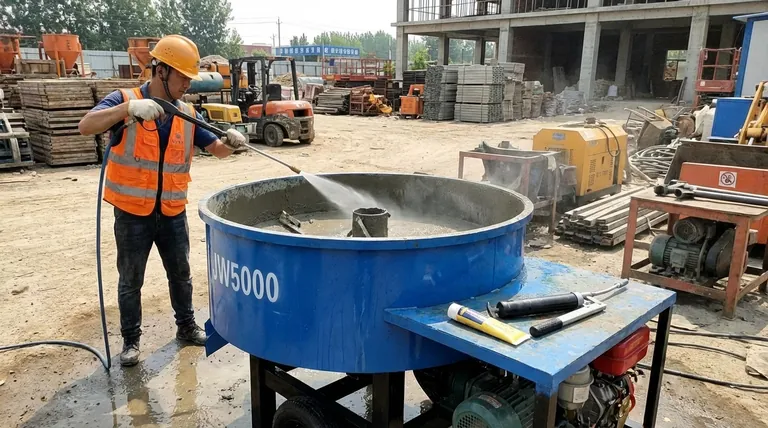
The Foundation: Daily Cleaning Protocols
A disciplined cleaning schedule is the most critical factor in preventing the gradual accumulation of hardened concrete, which can severely damage your mixer.
Cleaning Before Each Use
Before loading a new batch, always wash the drum's inlet. This simple step removes any residual dust or small aggregates from the previous job, ensuring batch purity and preventing old material from adhering to the new mix.
Rinsing After Each Use
Immediately after discharging a load, rinse the drum and clean the discharge tank. This is the most crucial moment to prevent build-up, as it removes wet concrete before it has any chance to set.
The End-of-Day Full Washout
At the end of the workday, a complete washout of the drum's interior is non-negotiable. This process removes the final film of cement paste that, if left overnight, will begin to harden and form the foundation for significant future build-up.
Essential Mechanical Upkeep
While cleaning prevents build-up inside the drum, proper lubrication ensures the external components that rotate it function correctly.
Monthly Roller and Raceway Lubrication
The roller and raceway bear the entire rotational load of the drum. These components must be lubricated with grease on a monthly basis to reduce friction, prevent premature wear, and ensure smooth, efficient operation.
The Importance of a Clean Raceway
Lubrication is only effective when applied to a clean surface. The act of clearing out the drum also helps keep the roller and raceway free from abrasive concrete dust and debris, which can contaminate grease and accelerate wear.
The Cost of Neglect: Understanding the Risks
Skipping these seemingly minor maintenance steps leads to compounding problems that are expensive and time-consuming to fix.
Reduced Capacity and Efficiency
As concrete hardens inside the drum (a process often called "chipping"), it systematically reduces the drum's internal volume. This means each batch is smaller than intended, destroying efficiency and profitability over time.
Mechanical Strain and Failure
Hardened concrete creates a significant weight imbalance. This imbalance puts immense strain on the rollers, bearings, and the entire drive system, leading to accelerated wear and catastrophic mechanical failure.
Safety Hazards
An unbalanced, straining drum can create unpredictable operational behavior. The excessive vibration and stress on components introduce a significant and unnecessary safety risk for operators and anyone near the equipment.
Making the Right Choice for Your Goal
Your maintenance frequency should match your operational intensity.
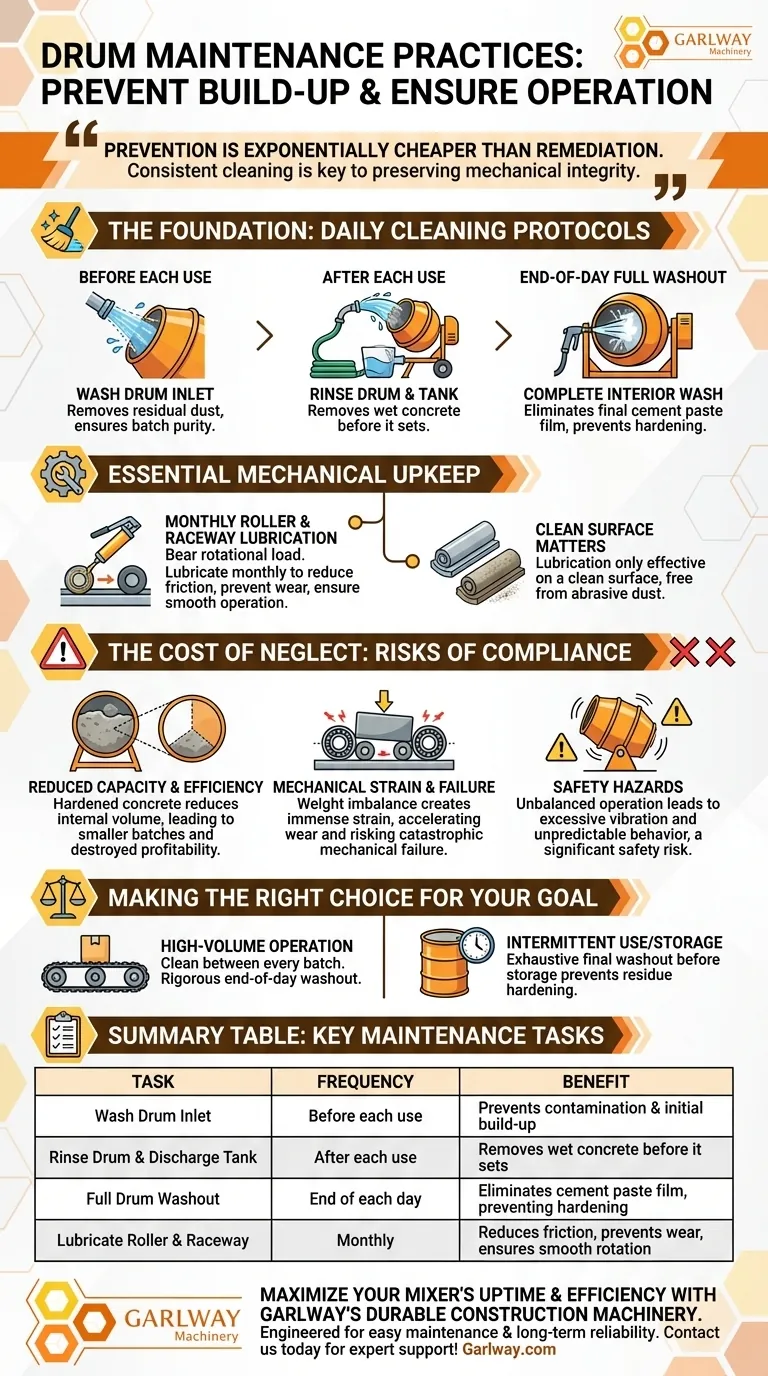
- If your primary focus is high-volume, continuous operation: You must clean the inlet, drum, and discharge chute between every single batch and perform a rigorous end-of-day washout.
- If your primary focus is intermittent use and long-term storage: Your most critical task is the exhaustive final washout before the equipment is stored to prevent any residue from hardening over time.
Consistent maintenance is the most effective investment you can make in the reliability and longevity of your equipment.
Summary Table:
| Maintenance Task | Frequency | Key Benefit |
|---|---|---|
| Wash Drum Inlet | Before each use | Prevents contamination & initial build-up |
| Rinse Drum & Discharge Tank | After each use | Removes wet concrete before it sets |
| Full Drum Washout | End of each day | Eliminates cement paste film, preventing hardening |
| Lubricate Roller & Raceway | Monthly | Reduces friction, prevents wear, ensures smooth rotation |
Maximize your mixer's uptime and efficiency with GARLWAY's durable construction machinery. Our concrete mixers are engineered for easy maintenance and long-term reliability, helping construction companies and contractors avoid costly downtime. Contact us today to find the right mixer for your project and get expert support on maintenance best practices!
Visual Guide
Related Products
- Concrete Cement Mixer Machine Drum Mixer for Construction
- Belle Mixer Drum Self Loading Mortar Mixers JS3000
- Portable Concrete Mixer Machine Equipment for Mixing Concrete
- Construction Products Concrete Plant Machine Mixing Concrete Mixer
- JZC400 Mobile Small Concrete Mixer Cement Mixer Machine
People Also Ask
- What are the key advantages of using drum mixers in concrete mixing? Boost Volume & Efficiency on Your Site
- What are the key components that maintain concrete mix consistency in the drum? Ensure Uniform Quality from Plant to Site
- How do cement mixers enhance safety on construction sites? Reduce Strain, Hazards, and Accidents
- When was the first concrete mixer developed and by whom? Discover the 1900 Breakthrough
- What is the average lifespan of a concrete mixer? Maximize Your Equipment's Lifespan & ROI