At its core, a cement mixer is a surprisingly simple system. Its primary components are the rotating drum where materials are held, internal mixing paddles or blades that integrate them, a motor to provide power, a frame for structural support, and a tilting mechanism to pour the finished concrete.
A cement mixer is more than just a spinning container; it is a purpose-built machine where each component—from the shape of the drum to the angle of the blades—is engineered to work in concert to achieve a consistent, homogenous mixture of cement, aggregate, and water.
The Core System: How a Mixer Works
To understand a cement mixer, it's best to view it as two interacting systems: the core mixing components and the operator's interface for control and mobility.
The Mixing Drum (The Vessel)
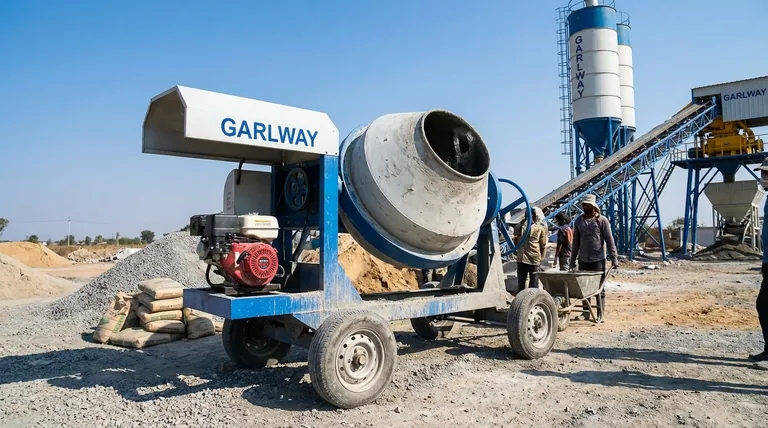
The most visible component is the rotating drum, often called the mixer bowl. Its primary job is to contain all the raw ingredients.
The conical shape is intentional. It helps guide the materials to tumble and fold over themselves as the drum rotates, beginning the integration process.
Internal Paddles (The Integrators)
Inside the drum are fixed paddles or blades. These are the most critical components for mix quality.
They don't just stir the contents. Their specific angle and placement are designed to lift material from the bottom of the drum and drop it back into the center, ensuring every particle is evenly coated and hydrated.
The Power Source (The Engine)
The rotation is driven by a motor or engine. This is the heart of the machine, providing the consistent torque needed to turn a heavy, wet mixture.
Power sources vary by model and application, ranging from electric motors for smaller, indoor-friendly jobs to more powerful gasoline engines for professional job sites where portability is key.
The Operator's Interface: Control and Mobility
The second system consists of the components that allow an operator to manage the machine and the concrete.
The Tilting Mechanism (The Pouring Control)
A handle or wheel allows the operator to change the angle of the drum. This mechanism serves two purposes.
First, it allows for easy loading of materials at a slight upward angle. More importantly, it gives the operator precise control when pouring the finished, heavy concrete into a wheelbarrow or formwork.
The Frame (The Skeleton)
The frame is the structural backbone of the mixer. It holds the motor, supports the drum assembly, and provides the stability needed to operate safely without tipping over.
Wheels (The Mobility)
Most portable cement mixers are equipped with wheels. This simple component is essential for maneuverability, allowing a single person to position the machine precisely where it's needed on a job site.
Understanding the Trade-offs
Choosing or operating a mixer involves understanding the compromises inherent in its design.
Electric vs. Gas Power
An electric motor is quieter, produces no fumes, and is ideal for residential or indoor work. However, it requires a constant connection to a power source, limiting its range.
A gasoline engine offers superior power and complete portability, making it the standard for professional sites. The trade-offs are significant noise, exhaust fumes, and more complex maintenance.
Drum Capacity vs. Portability
The size of the drum dictates the batch size. A larger drum increases efficiency for big jobs but makes the mixer heavier, more expensive, and harder to transport and store.
A smaller drum is perfect for DIY repairs or small projects, prioritizing portability and ease of use over sheer volume.
Making the Right Choice for Your Task
Your specific goal will determine which components you should prioritize.
- If your primary focus is small DIY projects: A lightweight, electric-powered mixer with a simple tilting handle offers the best balance of usability and cost.
- If your primary focus is professional job site efficiency: A larger-capacity, gas-powered mixer with a robust frame and durable wheels is non-negotiable for power and reliability.
- If your primary focus is achieving a perfect, consistent mix: Pay the most attention to the design of the internal mixing paddles, as this feature has the greatest impact on the final quality of the concrete.
By understanding how these components function as a system, you can ensure you use the right tool for the job and achieve reliable results every time.
Summary Table:
| Component | Primary Function | Key Considerations |
|---|---|---|
| Mixing Drum | Contains and tumbles materials for mixing. | Conical shape aids in material folding. |
| Internal Paddles | Lifts and integrates materials for a homogenous mix. | Blade angle is critical for mix quality. |
| Power Source (Motor/Engine) | Provides torque to rotate the drum. | Electric (quiet, indoor) vs. Gas (powerful, portable). |
| Tilting Mechanism | Controls the angle for loading and pouring. | Allows precise discharge of heavy concrete. |
| Frame & Wheels | Provides structural support and site mobility. | Ensures stability and easy positioning. |
Achieve Perfect Concrete Mixes with GARLWAY Machinery
Understanding the components is the first step; using the right equipment is what ensures project success. GARLWAY specializes in high-performance construction machinery designed for durability and efficiency.
We offer a range of robust cement mixers, along with winches and concrete batching plants, tailored to the needs of construction companies and contractors worldwide.
Let us help you build better:
- For DIY & Small Projects: Our electric mixers offer quiet, reliable performance.
- For Professional Job Sites: Our gas-powered models deliver the power and portability you need.
Ready to mix with confidence? Contact our experts today to find the perfect cement mixer for your specific requirements and keep your projects on schedule and on budget.
Visual Guide

Related Products
- HZS25 Best Cement Mixer for Quick Mix Concrete at Bunnings
- JDC350 Small Cement Concrete Mortar Mixer
- JW1000 Mobile Cement Mixer Concrete Mixer Truck and Batching Plant
- JZC400 Mobile Small Concrete Mixer Cement Mixer Machine
- Concrete Cement Mixer Machine Drum Mixer for Construction
People Also Ask
- How do cement mixers enhance safety on construction sites? Reduce Strain, Hazards, and Accidents
- What are the main components of a cement mixer? A Guide to Core Parts & Functions
- What are some tips for using a cement mixer effectively? Maximize Your Mixer's Performance & Concrete Quality
- How does cleaning a cement mixer after use benefit its performance? Maximize Lifespan and Mix Quality
- Why is it important to clean the cement mixer after use? Prevent Costly Damage and Ensure Quality Concrete