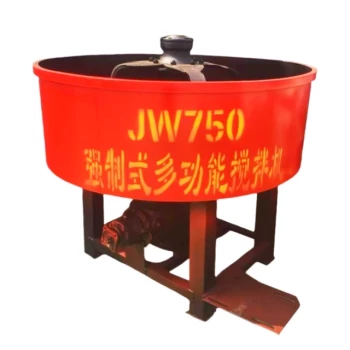
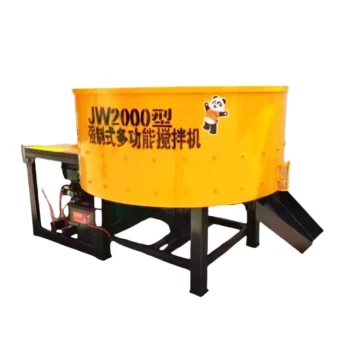
At their core, volumetric mixers offer a significant maintenance advantage over traditional drum mixers. They are designed with separate material compartments, meaning concrete is mixed on-demand at the job site. This fundamental difference eliminates the most common and costly maintenance issues associated with drum trucks, such as hardened concrete and extensive daily cleaning, leading to reduced downtime and lower repair costs.
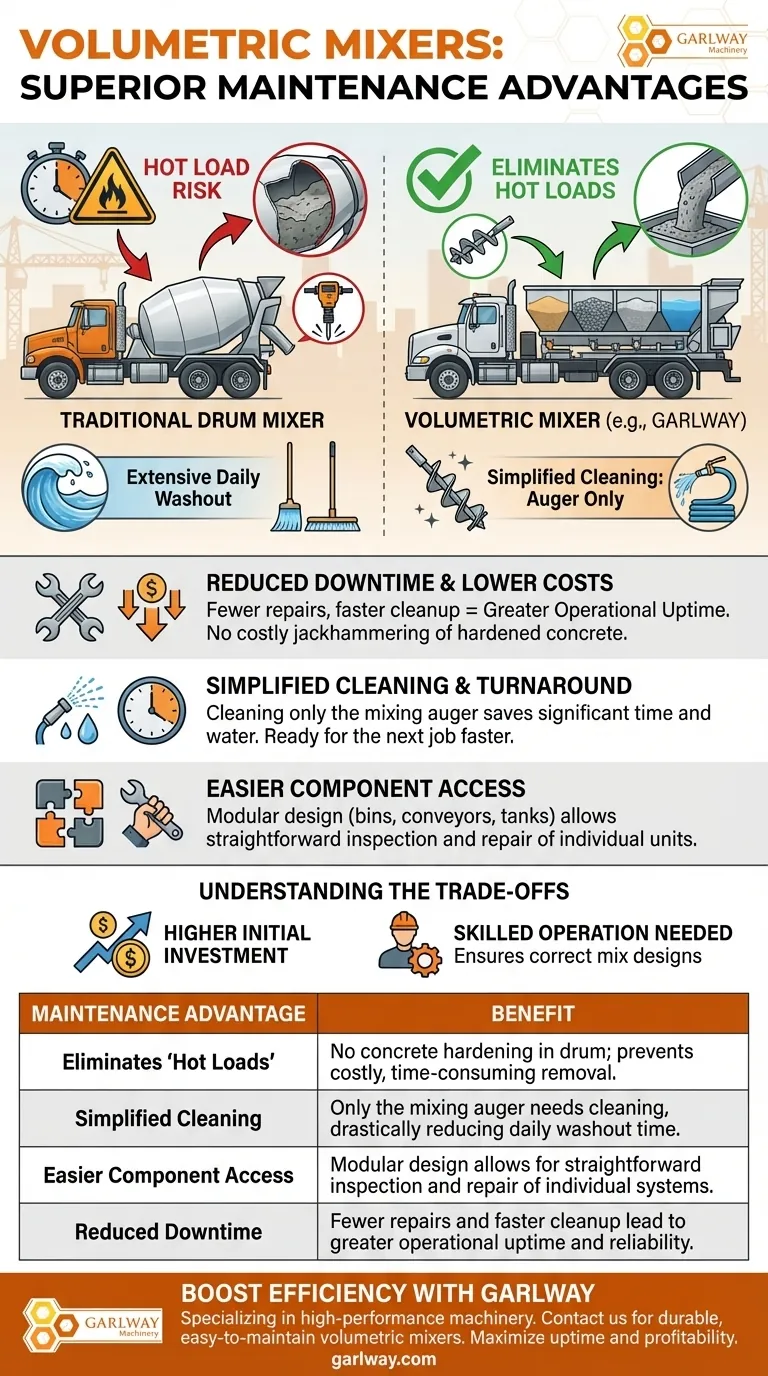
The primary maintenance benefit isn't just about fewer repairs; it's about maximizing operational uptime. By mixing fresh concrete as needed, volumetric mixers entirely avoid the risk of "hot loads" (concrete hardening in the drum), which is the single most disruptive and expensive maintenance problem for traditional mixers.
Why Volumetric Mixers Mean Less Downtime
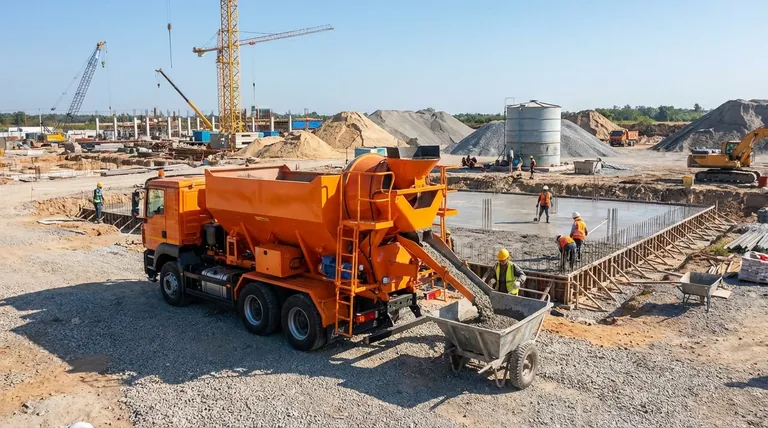
The design philosophy behind volumetric mixers directly translates into greater reliability and easier upkeep. Instead of a single, large, rotating drum, they use a system of bins, conveyors, and a mixing auger.
Eliminating Drum-Related Failures
Traditional drum mixers are in a constant race against time. If the drum stops rotating or the concrete isn't discharged quickly enough, it begins to set.
This can lead to a "hot load," where concrete hardens inside the drum, requiring costly and time-consuming jackhammering to remove. Volumetric mixers completely prevent this because sand, stone, water, and cement are kept separate until the moment of pouring.
Simplified Cleaning and Turnaround
A major part of daily maintenance for a drum truck is the extensive washout required to prevent concrete buildup. This process uses significant time and water.
In contrast, a volumetric mixer only requires cleaning the mixing auger, a component that is much smaller and more accessible than a barrel drum. This dramatically shortens end-of-day cleanup, getting the equipment ready for the next job faster.
Easier Component Access
The modular nature of a volumetric mixer makes maintenance more straightforward. Each key system—the stone conveyor, the cement bin, the water tank—is a distinct, accessible unit.
This design allows for easier inspection and repair of individual components without having to deal with the complexities of a large, enclosed drum system.
Understanding the Trade-offs
While the maintenance advantages are clear, it's important to consider the complete operational picture. The benefits of the volumetric model come with their own unique requirements.
Higher Initial Investment
Volumetric mixers are sophisticated pieces of equipment and often represent a higher upfront capital cost compared to some traditional ready-mix solutions. This investment is balanced against long-term savings from reduced waste and lower maintenance downtime.
The Need for Skilled Operation
The quality of the concrete produced is directly dependent on the operator's skill. Unlike a batch plant where mixes are computer-controlled, the operator of a volumetric mixer is responsible for ensuring the correct mix designs and material calibrations.
Proper training is not a suggestion; it is essential to guaranteeing the quality and consistency of the final product. This shifts some of the burden from mechanical maintenance to human operational skill.
Making the Right Choice for Your Operation
Choosing the right equipment depends entirely on your project needs and business model.
- If your primary focus is maximizing uptime and reducing daily labor: A volumetric mixer is superior due to its rapid cleanup and the complete elimination of costly "hot load" risks.
- If your primary focus is project flexibility and eliminating waste: The ability to mix exact quantities on-site and easily switch between different mix designs makes the volumetric mixer ideal for varied or remote jobs.
- If your primary focus is long-term operational cost: The higher initial investment can be offset by significant savings on wasted materials, fuel from fewer trips, and reduced maintenance downtime.
Ultimately, the maintenance advantages of a volumetric mixer are a direct result of its intelligent design, which produces fresh concrete exactly when and where you need it.
Summary Table:
| Maintenance Advantage | Benefit |
|---|---|
| Eliminates 'Hot Loads' | No concrete hardening in drum; prevents costly, time-consuming removal. |
| Simplified Cleaning | Only the mixing auger needs cleaning, drastically reducing daily washout time. |
| Easier Component Access | Modular design allows for straightforward inspection and repair of individual systems. |
| Reduced Downtime | Fewer repairs and faster cleanup lead to greater operational uptime and reliability. |
Ready to boost your project's efficiency and slash maintenance costs?
At GARLWAY, we specialize in high-performance construction machinery, including advanced volumetric mixers designed for durability and ease of maintenance. Our solutions help construction companies and contractors globally maximize uptime and reduce operational expenses.
Contact our experts today to find the perfect volumetric mixer for your business needs and discover how we can help you achieve greater profitability.
Visual Guide
Related Products
- Belle Cement Mixer JS2000 Volumetric Concrete Mixer for Harbor Freight
- JS1000 Volumetric Concrete Mortar Mixer for Sale Skid Steer Cement Mixer
- Harbor Freight JS1500 On Site Concrete Mixing Volumetric Cement Mixer
- Portable Concrete Mixer Machine Equipment for Mixing Concrete
- HZS90 Large Multiquip Concrete Mixers for Construction
People Also Ask
- What is a volumetric concrete mixer? A Mobile Concrete Batch Plant for On-Demand Mixing
- What is the predicted future for volumetric concrete mixers? Growth Driven by On-Demand Efficiency
- How does a volumetric concrete mixer contribute to sustainability? Reduce Waste, Water, and Emissions On-Site
- How does volumetric concrete compare to ready-mix concrete? Choose the Right Method for Your Project
- What types of concrete can be produced with volumetric mixers? Achieve On-Demand Mixing for Any Project