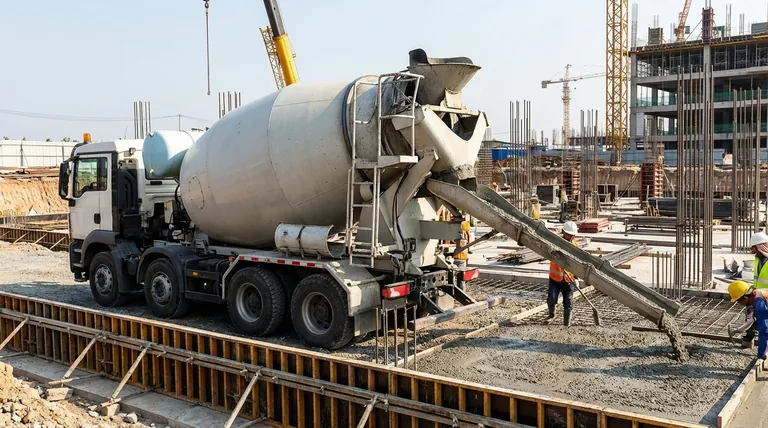
At its core, a concrete mixer truck is a sophisticated mobile plant designed for a single purpose: to mix raw materials into concrete and deliver it in a workable state. The key components that make this possible are the mixing drum, internal blades, a water tank, and a powerful hydraulic system that drives the entire operation.
A concrete mixer truck is not merely a transport vehicle; it is an active mixing system where each component works in concert to ensure the concrete remains perfectly blended and viable from the plant to the job site.
The Core Mixing System
The primary function of the truck is to mix and agitate the concrete. This is handled by a robust, purpose-built system powered by the truck's engine.
The Mixing Drum
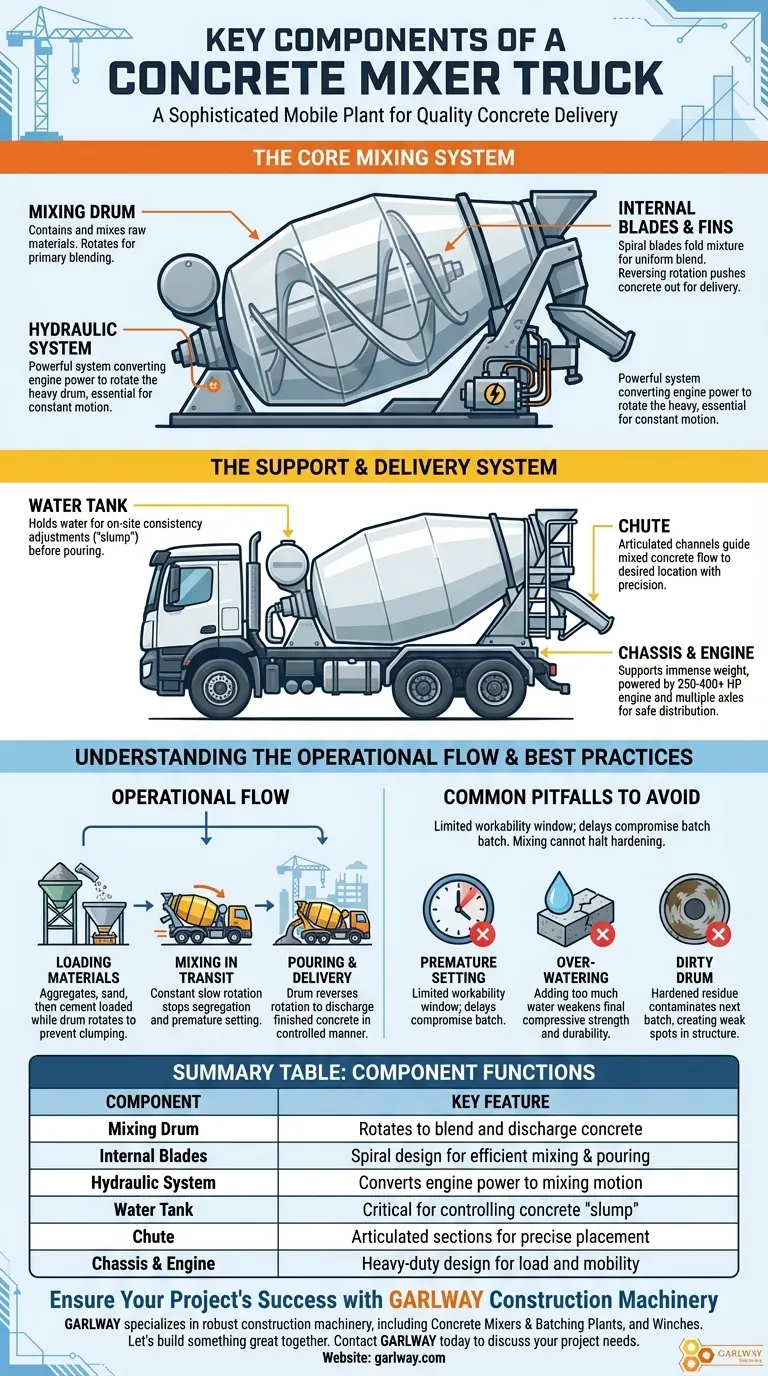
The most recognizable feature is the large, rotating drum. It serves a dual purpose: it contains the raw materials and acts as the primary mixing vessel.
Internal Blades and Fins
Inside the drum are spiral blades, sometimes called turbines or fins. When the drum rotates in one direction, these blades continuously fold the concrete mixture over itself, ensuring a thorough and uniform blend.
Reversing the drum's rotation causes these same spiral blades to push the concrete out of the drum and down the chute for delivery.
The Hydraulic System
This is the muscle behind the machine. The hydraulic system converts power from the truck's engine to rotate the heavy, material-filled drum, providing the constant motion necessary for proper mixing.
The Support and Delivery System
Beyond mixing, the truck must support the immense weight of the concrete and deliver it with precision.
The Water Tank
A water tank is mounted on the truck to allow for the addition of water to the mix on-site. This is critical for making small adjustments to the concrete's consistency, or "slump," just before it is poured.
The Chute
The chute is a series of articulated channels at the rear of the truck. It is used to guide the flow of mixed concrete from the drum directly to the desired location on the construction site.
The Chassis and Engine
The entire system is mounted on a heavy-duty truck chassis. These trucks require powerful engines, often ranging from 250 to over 400 horsepower, and multiple axles to legally and safely distribute the significant weight of a full load of concrete.
Understanding the Operational Flow
The components work together in a precise sequence to produce quality concrete.
Loading the Materials
At the plant, materials are loaded in a specific order. Typically, aggregates and sand are added as the drum rotates, followed by cement. This sequence is crucial for preventing clumping and ensuring a consistent mix.
Mixing in Transit
During the journey to the job site, the drum rotates slowly. This constant agitation prevents the ingredients from segregating and stops the concrete from beginning to set prematurely.
Pouring and Delivery
Upon arrival, the operator positions the chute and reverses the drum's rotation. This action pushes the finished concrete out of the drum in a controlled manner for the pour.
Common Pitfalls to Avoid
Understanding the components reveals the critical balance required for a successful pour. The primary trade-off is between workability and structural integrity.
The Risk of Premature Setting
Concrete has a limited window of time before it becomes unworkable. Delays in transit or at the job site can compromise the entire batch, as the mixing process cannot halt the chemical hardening process indefinitely.
The Danger of Over-watering
While the onboard water tank is useful for minor adjustments, adding too much water is a common mistake. Excess water makes the concrete easier to pour but severely weakens its final compressive strength and durability.
The Impact of a Dirty Drum
Failing to thoroughly clean the drum after each delivery is a critical error. Hardened residue from a previous mix can break off and contaminate the next batch, creating weak spots in the final structure.
Making the Right Choice for Your Goal
Understanding how the truck's components function allows for better management and quality control on site.
- If your primary focus is structural quality: Insist on verifying the concrete's consistency before the pour and strictly limit the amount of water added on-site.
- If your primary focus is operational efficiency: Ensure the job site is fully prepared for the truck's arrival to enable an immediate and continuous pour, minimizing costly waiting time.
- If your primary focus is material consistency: Communicate clearly with the batch plant about the required mix specifications to avoid the need for last-minute adjustments on site.
By viewing the mixer truck as a complete system, you can ensure the concrete it delivers meets the precise standards your project demands.
Summary Table:
| Component | Function | Key Feature |
|---|---|---|
| Mixing Drum | Contains and mixes raw materials | Rotates to blend and discharge concrete |
| Internal Blades | Folds and agitates the concrete mix | Spiral design for efficient mixing and pouring |
| Hydraulic System | Powers the drum's rotation | Converts engine power to mixing motion |
| Water Tank | Holds water for on-site consistency adjustments | Critical for controlling concrete 'slump' |
| Chute | Guides concrete flow to the pour location | Articulated sections for precise placement |
| Chassis & Engine | Supports the heavy load and provides mobility | Heavy-duty design with 250-400+ horsepower |
Ensure Your Project's Success with GARLWAY Construction Machinery
Understanding the intricate components of a concrete mixer truck is the first step toward achieving flawless concrete delivery. For construction companies and contractors who demand reliability, efficiency, and superior quality on every job site, partnering with the right equipment supplier is crucial.
GARLWAY specializes in providing robust construction machinery, including:
- Concrete Mixers & Batching Plants: For consistent, high-quality concrete production.
- Winches: For powerful and reliable lifting solutions.
We equip your team with durable machinery that enhances operational efficiency and ensures your concrete is delivered perfectly mixed and ready to pour. Let's build something great together.
Contact GARLWAY today to discuss your project needs and discover how our machinery can deliver value for your business.
Visual Guide
Related Products
- Ready Mixer Machine for Construction Ready Mix Machinery
- JW1000 Mobile Cement Mixer Concrete Mixer Truck and Batching Plant
- Mini Cement Mortar Mixer Truck for Construction
- Harbor Freight JS1500 On Site Concrete Mixing Volumetric Cement Mixer
- Portable Concrete Mixer Machine Equipment for Mixing Concrete
People Also Ask
- What are the purposes of low-speed agitation in truck mixers? Preserve Concrete Quality During Transit
- How is ready-mixed concrete transported from a commercial concrete batching plant? Ensuring Quality & Timely Delivery
- What are the main ingredients mixed in a concrete mixer truck? Master the Formula for Strong Concrete
- In what ways does a mobile concrete mixer improve quality control and consistency? Achieve Superior On-Site Concrete Quality
- What types of construction projects typically use concrete mixer trucks? From Highways to Home Foundations