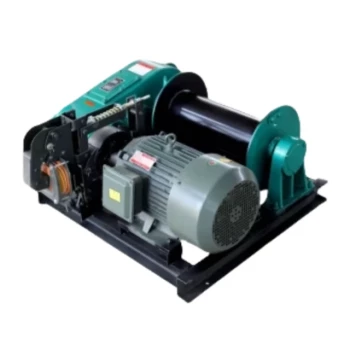
While undeniably powerful, hydraulic winches come with significant operational dependencies and complexities. Their primary disadvantages are their total reliance on a running engine, a more complex and costly installation process, the ongoing risk of hydraulic fluid leaks, and more demanding maintenance requirements compared to their electric counterparts.
The core trade-off with a hydraulic winch is accepting higher upfront cost, installation complexity, and total engine dependency in exchange for immense power, durability, and the ability to run continuously without overheating.
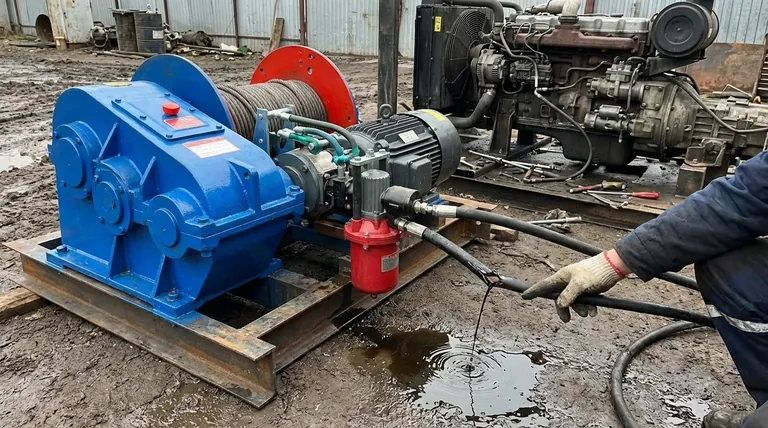
The Critical Dependency on Your Engine
The single greatest disadvantage of a hydraulic winch is that its existence is tied directly to your vehicle's running engine. This creates several points of failure.
Why a Running Engine is Mandatory
A hydraulic winch has no internal motor. It derives its power from a hydraulic pump, which is driven by the vehicle's engine.
If the engine cannot run for any reason, the pump cannot create pressure, and the winch is completely inoperable.
The "Rollover" Limitation
This engine dependency is a critical liability in off-road recovery situations. If your vehicle is on its side or in a position where it's unsafe to run the engine, you cannot use your hydraulic winch.
An electric winch, by contrast, can still operate off the battery's stored power, even with the engine off.
No Power with a Stalled Engine
Similarly, if your vehicle has stalled in water or has an engine issue that prevents it from starting, the hydraulic winch offers no self-recovery solution.
Installation and Maintenance Complexity
Unlike an electric winch that primarily requires wiring, a hydraulic system is a more involved mechanical installation.
A System, Not a Single Component
Installing a hydraulic winch involves more than just bolting it to the bumper. You must also install a hydraulic pump, a fluid reservoir, and a network of high-pressure hoses.
This adds multiple potential points of failure to the system.
Higher Upfront and Installation Costs
The additional components and labor required make the total cost of a hydraulic winch setup significantly higher than an electric one.
The price tag on the winch itself is only the beginning of the financial commitment.
Ongoing Maintenance Demands
Hydraulic systems require regular inspection. You must constantly check fluid levels, inspect hoses for cracks or leaks, and change filters.
Neglecting this maintenance can lead to system failure and costly repairs.
Understanding the Practical Trade-offs
While known for their power, the day-to-day realities of owning a hydraulic winch involve compromises that are crucial to understand.
The Inevitable Risk of Fluid Leaks
Every hydraulic hose connection is a potential leak point. A damaged line can not only disable your winch but also spray hydraulic fluid, which is messy, harmful to the environment, and can create a fire hazard.
This risk is a constant consideration, especially in rugged off-road environments where lines can be snagged or abraded.
Operational Noise
Due to the hydraulic pump and fluid movement, these winches are often noisier during operation than electric models.
Efficiency and Heat Loss
Hydraulic systems generate heat as a byproduct of their operation. While they are celebrated for not overheating like an electric motor, this heat represents a loss of energy and efficiency within the system itself.
Is a Hydraulic Winch Right for You?
The right choice depends entirely on your specific application and your tolerance for its inherent complexities.
- If your primary focus is occasional recovery for a standard 4x4: An electric winch is almost always the more practical, cost-effective, and user-friendly solution.
- If your primary focus is continuous, heavy-duty industrial work: The hydraulic winch's raw power and non-stop duty cycle likely justify its installation complexity and cost.
- If your primary focus is extreme off-roading where rollovers are a possibility: The hydraulic winch's dependency on a level, running engine presents a significant operational risk you must consider.
Understanding these core disadvantages empowers you to choose a winch that truly serves your mission, not one that complicates it.
Summary Table:
| Disadvantage | Key Impact |
|---|---|
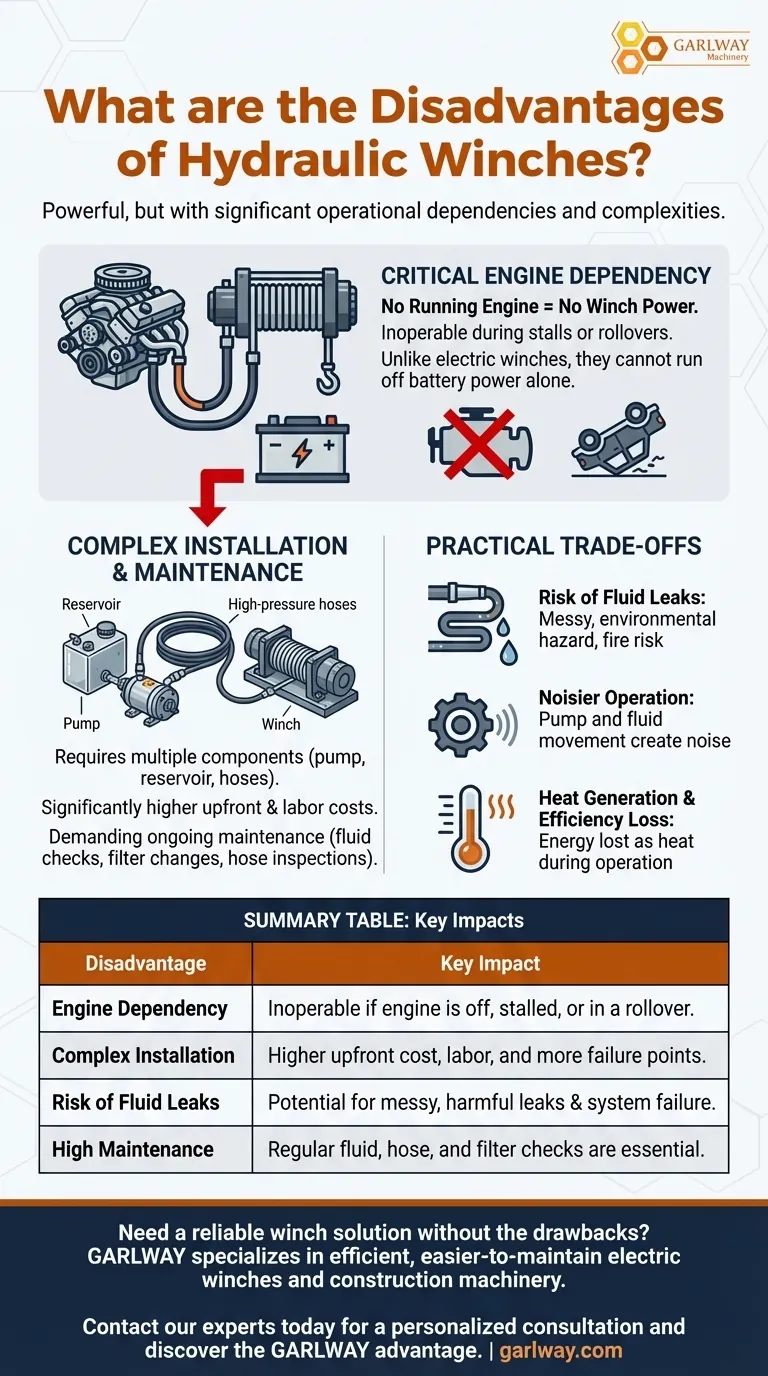
| Engine Dependency | Inoperable if engine is off, stalled, or in a rollover situation. |
| Complex Installation | Requires pump, reservoir, and hoses; higher upfront cost and labor. |
| Risk of Fluid Leaks | Potential for messy, environmentally harmful leaks and system failure. |
| High Maintenance | Regular checks of fluid levels, hoses, and filters are essential. |
Need a reliable winch solution without the drawbacks?
At GARLWAY, we specialize in providing robust and practical construction machinery for companies and contractors worldwide. While hydraulic winches have their place, our range of electric winches, concrete mixers, and batching plants are designed for efficiency, easier installation, and lower maintenance.
Let us help you select the right equipment for your project's demands. Contact our experts today for a personalized consultation and discover the GARLWAY advantage.
Visual Guide
Related Products
- Hydraulic Winding Engine Harbor Freight Winch
- Electric and Hydraulic Winch for Heavy Duty Applications
- Small Electric Winch 120V and 240V for Compact Applications
- Electric 120V Boat Winch by Badlands
- 12000 lb Electric Boat Trailer Winch with Windlass Anchor Warn
People Also Ask
- What role does hydraulic fluid play in hydraulic winches? It's the Lifeblood of Your Heavy-Duty Pulling Power
- What vehicles commonly use hydraulic winches? For Industrial Trucks Needing Unmatched Power
- What are the features of hydraulic winches? Unmatched Power and Continuous Duty for Heavy Loads
- What preventive measures can be taken to avoid oil leakage in hydraulic winches? Ensure Long-Term Reliability
- What does 'power out' mean in a hydraulic winch? Achieve Absolute Control When Lowering Heavy Loads