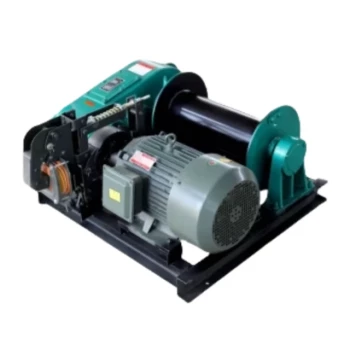
For a hydraulic winch, the fundamental requirement is to size the hydraulic reservoir to be at least equal to the pump's flow rate in gallons per minute (GPM). This rule is not arbitrary; it is a direct solution to the fact that powerful hydraulic winches generate significant heat and often lack adequate self-cooling capacity.
The hydraulic reservoir is more than just a fluid tank; it is the system's primary defense against heat buildup. Sizing it correctly based on pump GPM is the most critical step in ensuring the winch's reliability and preventing premature component failure.
Why Heat Management is Critical
Hydraulic systems are designed for heavy-duty tasks, but this power comes at a cost: heat. Understanding the source and impact of this heat is essential for building a reliable winch system.
Power Creates Heat
Every component in the hydraulic circuit, from the pump to the winch motor and planetary gearbox, generates heat. This is a natural byproduct of converting hydraulic flow and pressure into mechanical force. No system is 100% efficient, and that lost energy becomes heat.
The Dual Role of Hydraulic Fluid
The hydraulic fluid serves two purposes. Its primary job is to transmit power, but its secondary, equally critical job is to absorb and carry heat away from working components like the motor and the internal brake assembly.
The Limitation of Winch Design
A winch is a compact machine. Its key components, like the brake and gearbox, are often housed inside the drum. This leaves very little surface area for heat to dissipate into the air, making the system almost entirely dependent on the hydraulic fluid for cooling.
Sizing Your Hydraulic Reservoir Correctly
Because the winch itself cannot effectively cool down, the burden shifts to the rest of the hydraulic system, primarily the reservoir.
The "One-to-One" Rule
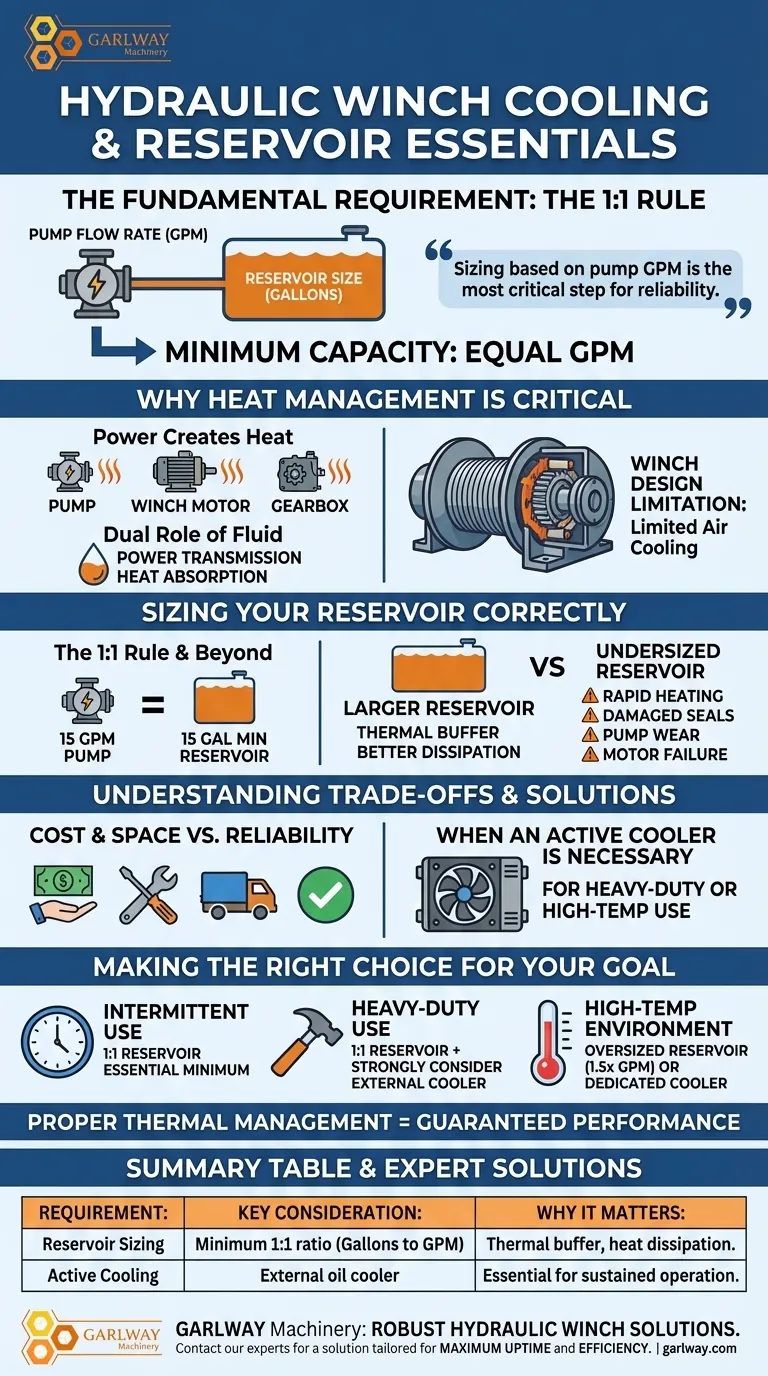
The industry standard is a one-to-one ratio: a pump with a 15 GPM flow rate requires a reservoir with a minimum capacity of 15 gallons. This is the baseline for any installation.
How a Larger Reservoir Cools
A larger volume of fluid takes longer to heat up, providing a thermal buffer during heavy pulls. More importantly, a larger reservoir has more external surface area, allowing it to act like a radiator, dissipating heat into the ambient air more effectively.
The Dangers of Undersizing
An undersized reservoir is the most common cause of system failure. The fluid heats up rapidly, loses viscosity (its ability to lubricate), and can lead to damaged seals, accelerated pump wear, and eventual motor failure.
Understanding the Trade-offs
While the engineering principles are clear, real-world installations involve balancing ideal solutions with practical constraints.
Cost vs. Reliability
A larger reservoir or the addition of an external oil cooler increases the initial cost and complexity of the installation. However, this upfront investment pays dividends in system longevity and reliability, preventing costly downtime and repairs.
Space and Weight
On mobile equipment like trucks or tractors, space is always at a premium. Fitting a large reservoir can be a significant challenge, sometimes forcing a compromise. Be aware that this compromise directly impacts the winch's duty cycle.
When an Active Cooler is Necessary
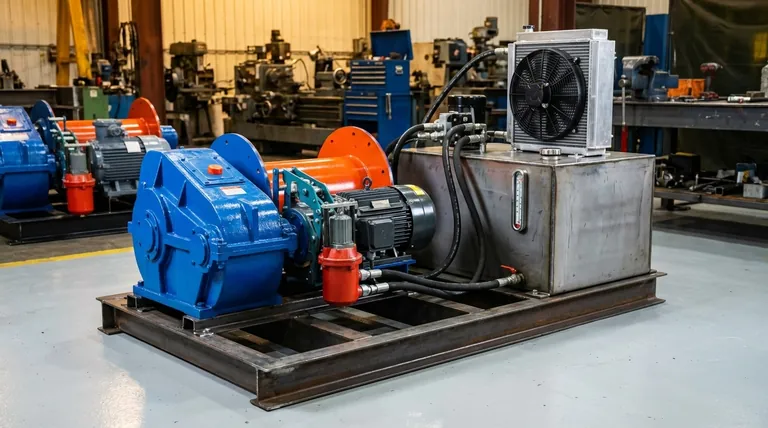
For applications involving frequent, sustained heavy pulls or operation in high-temperature environments, a reservoir alone may be insufficient. In these cases, a dedicated hydraulic oil cooler—a small radiator for the hydraulic fluid—is the only way to guarantee stable operating temperatures.
Making the Right Choice for Your Goal
Use your winch's intended application to determine the correct level of cooling your system requires.
- If your primary focus is intermittent, short-duration use: A reservoir sized one-to-one with your pump's GPM is the essential minimum for system health.
- If your primary focus is heavy-duty or continuous operation: Start with the one-to-one rule and strongly consider adding an external hydraulic oil cooler to the circuit.
- If your system operates in a high-temperature environment: An oversized reservoir (e.g., 1.5x GPM) or a dedicated oil cooler is necessary to prevent thermal breakdown of the fluid.
Properly managing your hydraulic system's thermal load is the single most important factor in guaranteeing your winch performs when you need it most.
Summary Table:
| Requirement | Key Consideration | Why It Matters |
|---|---|---|
| Reservoir Sizing | Minimum 1:1 ratio (Gallons to Pump GPM) | Provides a thermal buffer and increases surface area for heat dissipation. |
| Heat Generation | Power conversion in pump, motor, and gearbox creates heat. | Inefficiencies generate heat that must be managed to prevent failure. |
| Winch Design Limitation | Compact design with internal brakes/gears offers little air cooling. | Makes the system heavily reliant on fluid and reservoir for cooling. |
| Active Cooling | External oil cooler for heavy-duty or high-temperature use. | Essential for sustained operation to maintain stable fluid temperatures. |
Need a reliable hydraulic winch system designed for your specific application?
GARLWAY specializes in providing robust construction machinery, including hydraulic winches, concrete mixers, and batching plants for construction companies and contractors globally. Our expertise ensures your equipment is built for performance and durability.
Contact our experts today to discuss your project requirements and get a solution tailored for maximum uptime and efficiency.
Visual Guide
Related Products
- Hydraulic Winding Engine Harbor Freight Winch
- Electric and Hydraulic Winch for Heavy Duty Applications
- Small Electric Winch 120V and 240V for Compact Applications
- Electric 120V Boat Winch by Badlands
- 12000 lb Electric Boat Trailer Winch with Windlass Anchor Warn
People Also Ask
- What role does hydraulic fluid play in hydraulic winches? It's the Lifeblood of Your Heavy-Duty Pulling Power
- What vehicles commonly use hydraulic winches? For Industrial Trucks Needing Unmatched Power
- What are the features of hydraulic winches? Unmatched Power and Continuous Duty for Heavy Loads
- What preventive measures can be taken to avoid oil leakage in hydraulic winches? Ensure Long-Term Reliability
- What does 'power out' mean in a hydraulic winch? Achieve Absolute Control When Lowering Heavy Loads