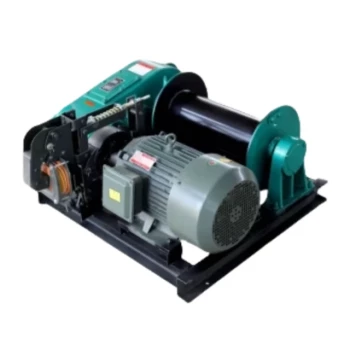
At its core, an electric winch is a mechanical device designed to pull or lift heavy loads using an electric motor. The common types are generally categorized by their complexity and power source, primarily including basic electric winches, advanced electric winches, and electro-hydraulic winches, each tailored for different applications and performance requirements.
The critical distinction between electric winch types lies not in raw strength, but in their control systems and power delivery. Choosing the right one means matching the winch's operational complexity—from a simple AC motor to a sophisticated hydraulic system—to the specific demands of your task.
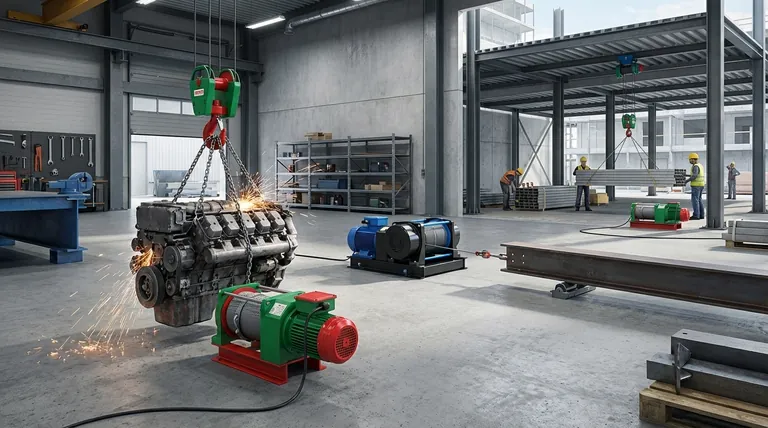
The Foundational Mechanics of an Electric Winch
Before comparing types, it's essential to understand the core components that all electric winches share. This shared architecture is what allows them to exert substantial force.
The Electric Motor and Drivetrain
The process begins with an electric motor. This motor's power is transferred through a series of gears in a reducer, which multiplies the torque to generate the necessary pulling force.
The Drum and Cable
This amplified force turns a central drum. A steel cable or synthetic rope is wound around this drum, and it's this cable that attaches to the load you intend to move.
The Braking System
A crucial safety feature is the braking system, often an electromagnetic brake. This mechanism automatically engages when the motor stops, securely holding the load in place and preventing accidental slippage.
The Primary Categories of Electric Winches
While the core mechanics are similar, the control systems and power sources create distinct categories suited for different scales of work.
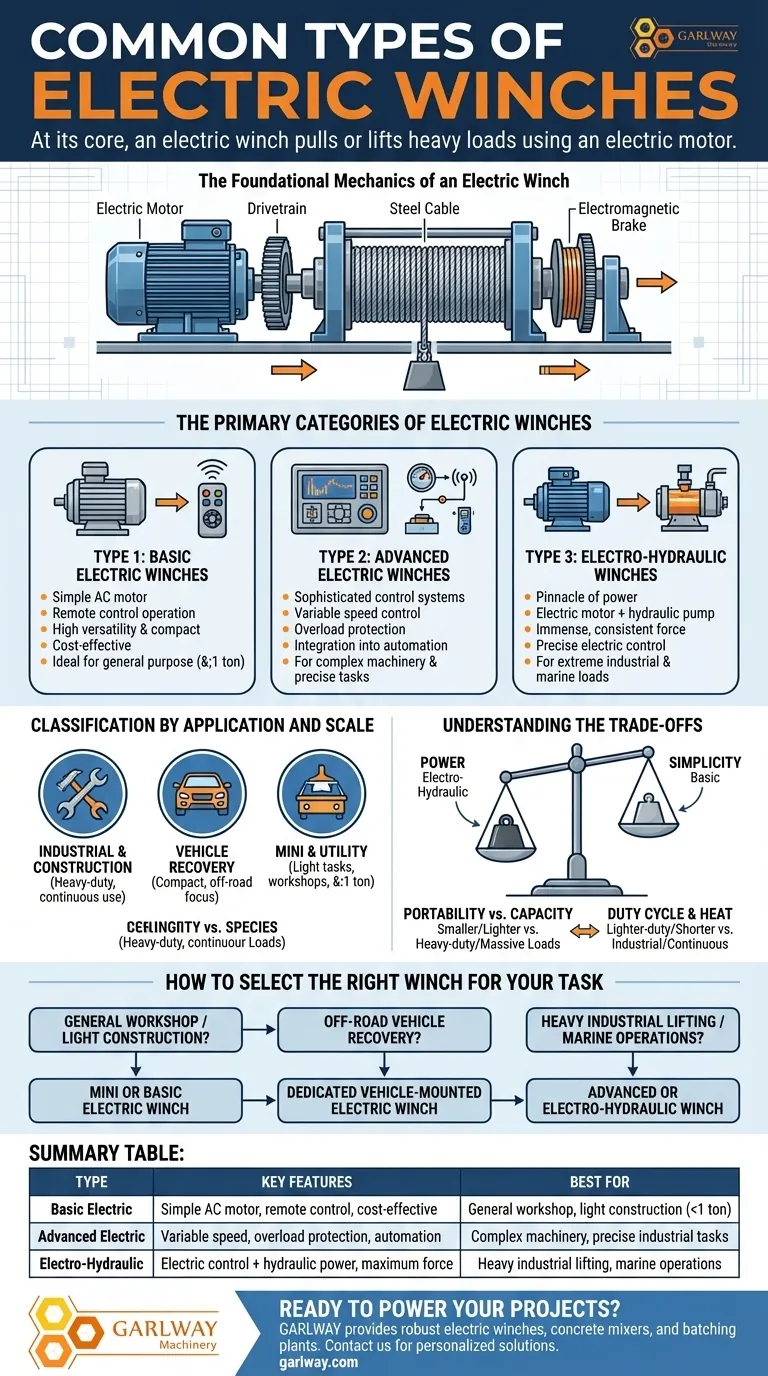
Type 1: Basic Electric Winches
These are the most common and straightforward type. They typically use a standard AC electric motor and a simple control system, often operated via a remote.
They are known for their high versatility, compact structure, and power efficiency. This simplicity makes them ideal for a wide range of general-purpose pulling and lifting tasks.
Type 2: Advanced Electric Winches
This category represents a step up in sophistication. While still electrically driven, these winches incorporate more complex control systems.
Features might include variable speed control, overload protection sensors, and the ability to integrate into a modern, automated production line or complex machinery.
Type 3: Electro-Hydraulic Winches
Electro-hydraulic systems represent the pinnacle of power. They use an electric motor to power a hydraulic pump, which in turn drives the winch.
This hybrid approach combines the precision of electric control with the immense, consistent force of hydraulics, making it the choice for the most demanding industrial and marine applications where massive loads are common.
Classification by Application and Scale
Beyond their technical category, winches are often described by their intended use case, which provides another practical way to understand them.
Industrial and Construction Winches
These are heavy-duty units used for material lifting on construction sites, in mines, or as components within larger machines like cranes. They are built for durability and continuous operation.
Vehicle Recovery and Off-Road Winches
Commonly found on off-road vehicles, these winches are designed for vehicle recovery and pulling heavy objects. They emphasize a compact, lightweight structure for easy mounting and transfer.
Mini and Utility Winches
As the name implies, these are smaller units designed for lighter tasks, typically for loads under one ton. They are frequently used in machine repair workshops and for light material handling in construction.
Understanding the Trade-offs
Selecting the right winch involves balancing competing factors. Understanding these trade-offs is key to avoiding common pitfalls.
Power vs. Simplicity
Basic electric winches are reliable and easy to maintain. In contrast, more powerful electro-hydraulic systems offer superior performance but come with increased mechanical and electrical complexity.
Portability vs. Capacity
Smaller, lighter winches are easy to move and install but are limited in their load capacity. Heavy-duty industrial winches can move massive loads but are typically permanent or semi-permanent installations.
Duty Cycle and Heat
Electric motors generate heat under load. A winch's duty cycle defines how long it can operate before needing to cool down. Lighter-duty winches may have shorter duty cycles than industrial models designed for continuous use.
How to Select the Right Winch for Your Task
Your final choice should be guided by the specific goal you need to accomplish.
- If your primary focus is general workshop use or light construction: A mini or basic electric winch provides the best balance of simplicity, cost, and capability for loads under one ton.
- If your primary focus is off-road vehicle recovery: A dedicated, vehicle-mounted electric winch is non-negotiable for its compact design and high versatility in unpredictable situations.
- If your primary focus is heavy industrial lifting or marine operations: An advanced or electro-hydraulic winch is necessary for its superior power, precise control, and ability to handle extreme loads safely.
Understanding these classifications ensures you invest in a tool that is not just powerful, but perfectly suited to the work at hand.
Summary Table:
| Type | Key Features | Best For |
|---|---|---|
| Basic Electric | Simple AC motor, remote control, cost-effective | General workshop, light construction (<1 ton) |
| Advanced Electric | Variable speed, overload protection, automation | Complex machinery, precise industrial tasks |
| Electro-Hydraulic | Electric control + hydraulic power, maximum force | Heavy industrial lifting, marine operations |
Ready to power your projects with the right winch? As GARLWAY, a specialist in construction machinery, we provide robust electric winches, concrete mixers, and batching plants tailored for construction companies and contractors worldwide. Our experts will help you select the ideal winch for your specific load, duty cycle, and application requirements. Contact GARLWAY today for a personalized solution that boosts your efficiency and safety on site!
Visual Guide
Related Products
- Electric 120V Boat Winch by Badlands
- Electric and Hydraulic Winch for Heavy Duty Applications
- Small Electric Winch 120V and 240V for Compact Applications
- 12000 lb Electric Boat Trailer Winch with Windlass Anchor Warn
- Electric Hoist Winch Boat Anchor Windlass for Marine Applications
People Also Ask
- How do electric boat winches work? Unlock Effortless Launching & Retrieval
- How much current does an electric boat winch draw? Plan Your Electrical System for Peak Performance
- Can I run a winch straight from a battery? Essential Power Setup for Safe Operation
- What are the types of electric winches available? Choose the Right Winch for Your Job
- What are the uses of electric winches in mining and tunneling? Enhance Safety and Efficiency Underground