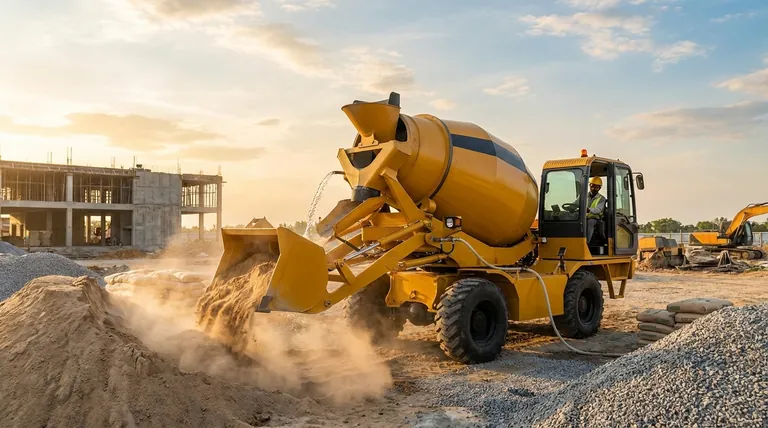
To initiate mixing in a self-loading concrete mixer, you must first load all the constituent materials—aggregates, sand, cement, and water—into the mixing drum. The process officially begins when the operator, using the electronic control system, engages the drive system (often hydraulic or electric) to start the drum's rotation. The internal spiral blades then begin to lift, fold, and shear the materials, forcing them to blend into a homogenous mixture.
The key is understanding that mixing is not an isolated step but the culmination of a precise, automated sequence. The process is initiated by the electronic control system only after the integrated weighing and water systems have ensured the correct proportions of all materials are inside the drum.
The Pre-Mixing Sequence: Loading and Measuring
Before the drum ever begins to turn, a series of critical steps must occur to guarantee the quality and consistency of the final concrete. This automated loading sequence is what defines the efficiency of a self-loading mixer.
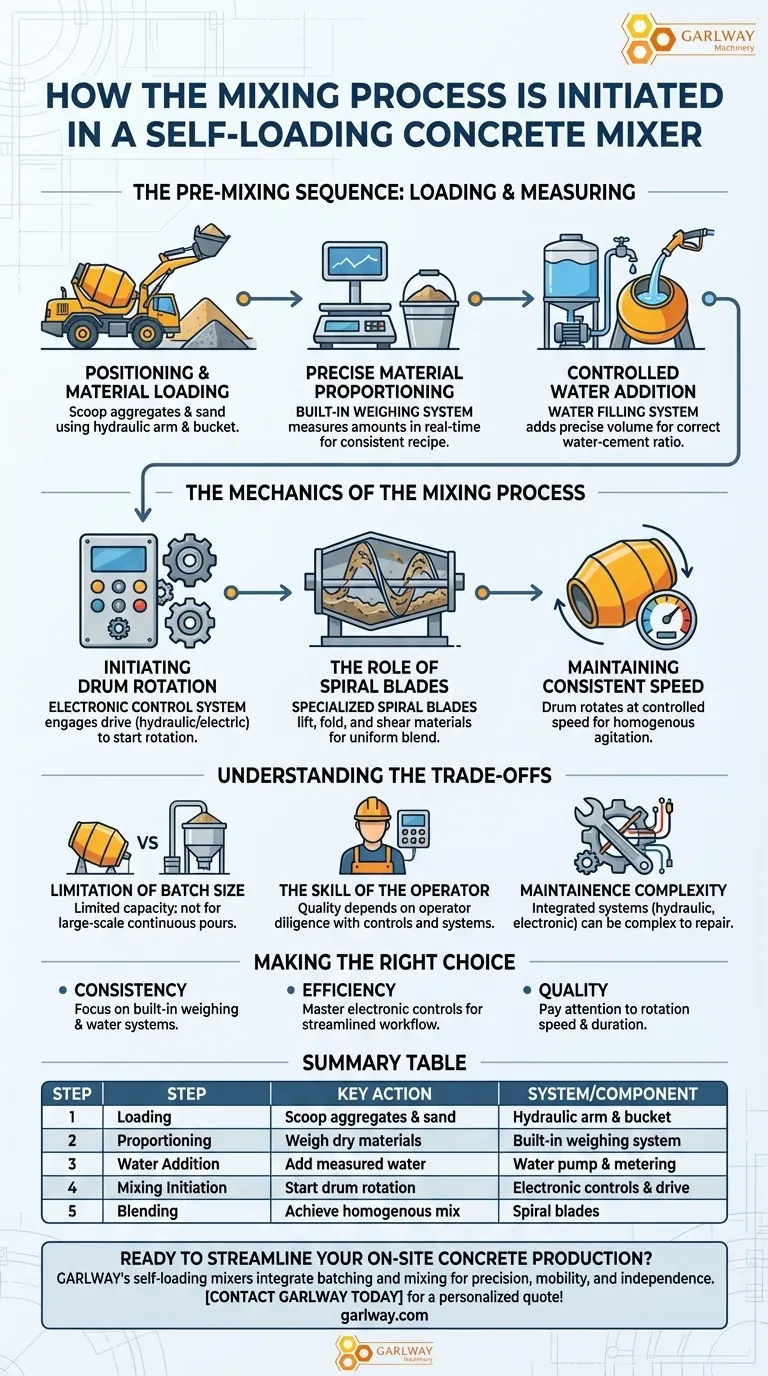
Positioning and Material Loading
The operator first positions the machine on stable ground near the piles of raw materials. Using the hydraulically powered loading arm and bucket, they scoop the required aggregates and sand.
Precise Material Proportioning
As materials are loaded into the bucket, a built-in weighing system measures the contents in real-time. This system ensures that the exact, pre-determined amounts of cement and aggregates are added, removing guesswork and ensuring a consistent recipe for every batch.
Controlled Water Addition
Once the dry materials are inside the drum, the operator activates the water filling system. A water pump adds a precise volume of water, also measured by the system, to achieve the desired water-cement ratio, which is critical for the concrete's strength.
The Mechanics of the Mixing Process
With all ingredients correctly proportioned and loaded, the core mixing action can begin. This is a highly engineered process designed for maximum efficiency and uniformity.
Initiating Drum Rotation
The operator uses the electronic control system to start the mixing cycle. This signal engages the vehicle's power system, which in turn drives a hydraulic or electric motor connected to the drum. The drum then begins to rotate at a specific, controlled speed.
The Role of Spiral Blades
The interior of the drum is not empty; it is fitted with specialized spiral blades. As the drum turns, these blades continuously lift materials from the bottom and push them deep into the center of the drum. This action ensures a thorough, uniform blend, preventing any segregation of the aggregates, cement, and water.
Maintaining Consistent Speed
The drum rotates at a high but controlled speed optimized for mixing. This consistency is crucial for ensuring that every part of the batch receives the same amount of agitation, resulting in homogenous concrete from start to finish.
Understanding the Trade-offs
While highly efficient, the integrated nature of a self-loading mixer introduces specific considerations that differ from traditional batching plants.
The Limitation of Batch Size
Self-loading mixers are designed for mobility and on-site production, not mass volume. Their batch size is inherently limited by the drum's capacity, making them unsuitable for large-scale continuous pours where a central plant would be more effective.
The Skill of the Operator
The final quality of the concrete is heavily dependent on the operator's diligence. While the systems are automated, the operator is still responsible for ensuring the correct materials are selected, the weighing system is calibrated, and the mixing time is adequate. A lack of attention can still lead to a poor-quality mix.
Maintenance Complexity
The integration of hydraulic, electronic, and mechanical systems into a single mobile unit means maintenance can be more complex. A failure in one system, such as the electronic controller or hydraulic pump, can render the entire machine inoperable until repaired.
Making the Right Choice for Your Goal
Understanding this process allows you to leverage the machine's capabilities effectively based on your project's specific needs.
- If your primary focus is consistency: Rely on the precision of the built-in weighing and water systems to ensure every batch meets exact specifications.
- If your primary focus is efficiency: Master the electronic controls to streamline the workflow from scooping materials to discharging the final mix with minimal downtime.
- If your primary focus is quality: Pay close attention to the drum's rotation speed and mixing duration to achieve the thorough, homogenous blend the machine is designed to produce.
Ultimately, the self-loading mixer transforms concrete production from a multi-step, multi-machine process into a single, integrated workflow controlled from a single cabin.
Summary Table:
| Step | Key Action | System/Component Involved |
|---|---|---|
| 1. Loading | Scoop aggregates and sand | Hydraulic loading arm & bucket |
| 2. Proportioning | Weigh dry materials precisely | Built-in weighing system |
| 3. Water Addition | Add measured water | Water pump & metering system |
| 4. Mixing Initiation | Start drum rotation | Electronic controls & hydraulic/electric drive |
| 5. Blending | Achieve a homogenous mix | Spiral blades inside the drum |
Ready to streamline your on-site concrete production?
GARLWAY's self-loading concrete mixers integrate the entire batching and mixing process into one efficient, mobile machine. This eliminates the need for separate loaders and stationary batching plants, saving you significant time and costs on your projects.
Our mixers are engineered for construction companies and contractors who value precision, mobility, and independence. With GARLWAY, you gain complete control over your concrete quality and schedule, directly on your job site.
Contact GARLWAY today to find the perfect self-loading mixer for your business and get a personalized quote!
Visual Guide
Related Products
- Skid Steer Self Loading Concrete Mixers for Construction
- Belle Mixer Drum Self Loading Mortar Mixers JS3000
- Portable Cement Mixer with Lift Concrete Machine
- Portable Concrete Mixer Machine Equipment for Mixing Concrete
- JW1000 Mobile Cement Mixer Concrete Mixer Truck and Batching Plant
People Also Ask
- How does the control system improve production efficiency in a self loading concrete mixer? Automate Mixing for Speed & Quality
- What is the purpose of keeping the drum rotating during transportation in a self loading concrete mixer? Ensure Quality & Consistency
- How does the weighing process work in a self loading concrete mixer? Achieve Precise, On-Site Concrete Batching
- What components are involved in the loading process of a self loading concrete mixer? A Guide to the Key Systems
- How should materials be loaded into a self-loading concrete mixer? Master the Step-by-Step Process