At its core, the automatic weighing system in a self-loading mixer functions by using high-precision sensors to measure the exact weight of raw materials like sand, gravel, and cement before they enter the mixing drum. This process is managed by a central computer, which ensures each component is added according to a pre-programmed recipe, guaranteeing a precise and consistent concrete mix every time.
The system's primary purpose is to eliminate guesswork and human error. By integrating electronic weighing directly into the loading process, it transforms the mixer into a mobile, computer-controlled batching plant, ensuring the final concrete meets exact engineering specifications.
How the System Works: Key Components
The accuracy and reliability of the automatic weighing system depend on a few critical components working in unison. Understanding their roles clarifies the entire process.
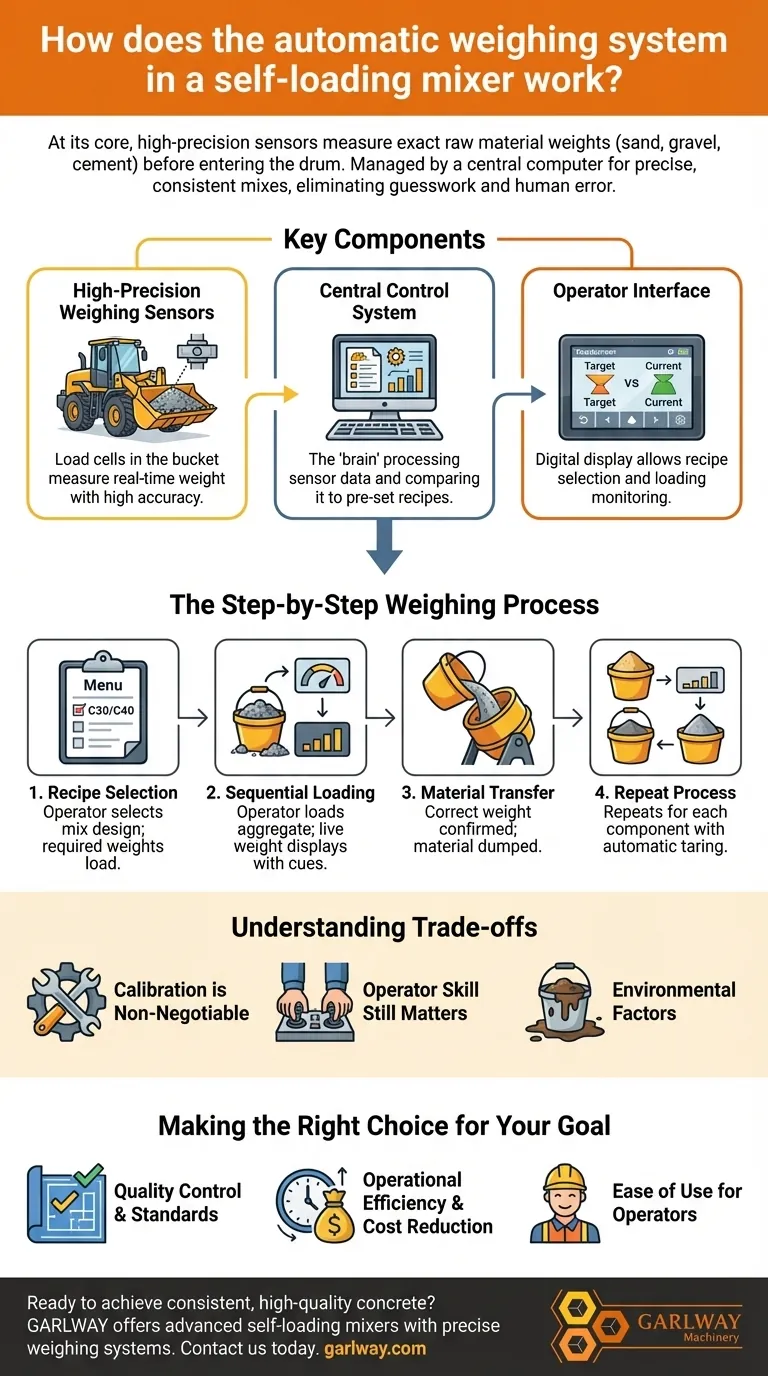
High-Precision Weighing Sensors
These sensors, often called load cells, are the system's foundation. They are strategically placed in the loader arm or bucket mechanism.
As the operator scoops a material like gravel, these sensors measure the real-time weight in the bucket, detecting even small changes with high accuracy.
The Central Control System
This is the "brain" of the operation. It's an onboard computer that houses the pre-set concrete mix designs and processes the data from the weighing sensors.
The control system compares the live weight in the bucket to the target weight required by the selected recipe, providing instant feedback to the operator.
The Operator Interface
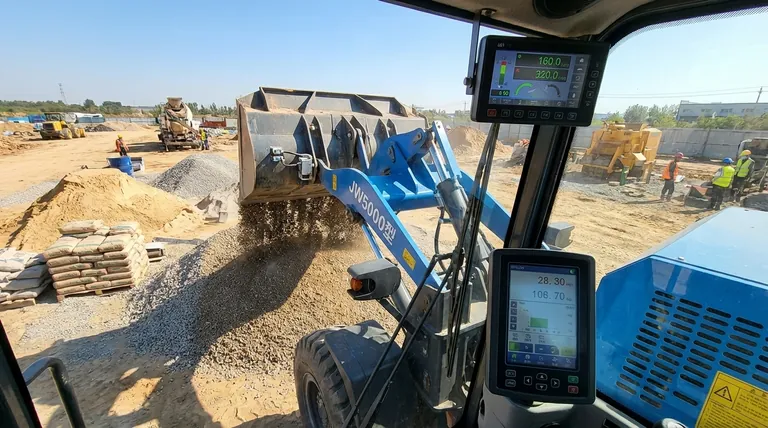
Located in the cab, this is typically a digital display or touchscreen. It allows the operator to select the desired concrete recipe and monitor the loading process.
The interface clearly shows the target weight and the current weight of the material being loaded, signaling the operator precisely when to stop.
The Step-by-Step Weighing Process
The automatic weighing process is seamlessly integrated into the machine's normal workflow, making it both efficient and accurate.
1. Recipe Selection
The operator begins by selecting the specific concrete mix design (e.g., C30, C40) from the control system's menu. This loads the required weights for cement, sand, gravel, and water.
2. Sequential Loading and Measuring
The operator loads the first aggregate, such as gravel. As the bucket is filled and lifted, the sensors transmit the live weight to the control unit.
The display in the cab shows the weight increasing, and an alarm or visual cue alerts the operator as they approach and reach the target weight.
3. Material Transfer
Once the correct weight is confirmed on the display, the operator dumps the material from the bucket into the mixing drum.
4. Repeating for Each Component
This exact process is repeated for each subsequent material—sand, then cement. The system automatically tares (zeros out the weight) after each addition, ensuring it only measures the new material being added. Water is also measured and added according to the recipe.
Understanding the Trade-offs
While highly effective, the system's accuracy is not absolute and depends on proper maintenance and operation.
Calibration is Non-Negotiable
The entire system's precision relies on regular calibration. If the sensors are not calibrated correctly, every batch of concrete produced will be based on inaccurate measurements, compromising quality.
Operator Skill Still Matters
The system is not fully autonomous. The operator must skillfully manage the loader to avoid overloading and must pay close attention to the display to stop precisely at the target weight. Smooth operation prevents shocks to the sensors that could affect readings.
Environmental Factors
Accumulated mud, debris, or moisture on the bucket can slightly affect the weight readings if not accounted for. Regular cleaning of the loading mechanism is essential for maintaining peak accuracy.
Making the Right Choice for Your Goal
The automatic weighing system is a critical feature that directly impacts project outcomes.
- If your primary focus is quality control and meeting engineering standards: This system is your guarantee of consistency, ensuring every batch adheres strictly to the specified mix design.
- If your primary focus is operational efficiency and cost reduction: The system minimizes material waste from incorrect batching and eliminates the need for a separate weighbridge, speeding up the entire construction cycle.
- If your primary focus is ease of use for operators: This technology simplifies one of the most complex parts of producing concrete, empowering operators to create high-quality mixes with confidence and minimal specialized training.
Ultimately, the automatic weighing system elevates the self-loading mixer from a simple transport vehicle to a precise and reliable production tool.
Summary Table:
| Component | Function |
|---|---|
| High-Precision Weighing Sensors | Measure the real-time weight of raw materials (sand, gravel, cement) in the bucket. |
| Central Control System | The 'brain' that stores mix recipes and compares live weight data to target weights. |
| Operator Interface | Digital display in the cab for selecting recipes and monitoring the weighing process. |
Ready to achieve consistent, high-quality concrete on your projects?
GARLWAY specializes in construction machinery, offering advanced self-loading mixers with precise automatic weighing systems for construction companies and contractors globally. Our technology ensures you meet exact engineering specifications, reduce material waste, and improve on-site efficiency.
Contact us today to learn how a GARLWAY self-loading mixer can be your mobile, computer-controlled batching plant!
Visual Guide
Related Products
- Belle Mixer Drum Self Loading Mortar Mixers JS3000
- Skid Steer Self Loading Concrete Mixers for Construction
- Portable Cement Mixer with Lift Concrete Machine
- Portable Concrete Mixer Machine Equipment for Mixing Concrete
- Portable Ready Mix Concrete Mixer Equipment
People Also Ask
- What are the features of mobile transporting in a self loading mixer? Boost On-Site Efficiency
- Why is timely cleaning important for a self loading mixer? Prevent Costly Downtime and Mix Failure
- How is discharging accomplished in a self loading mixer? Master Precise Concrete Placement
- What is the purpose of keeping the drum rotating during transportation in a self loading concrete mixer? Ensure Quality & Consistency
- What components are involved in the loading process of a self loading concrete mixer? A Guide to the Key Systems