The aggregate weigh hopper's primary contribution is precision. It is the critical component in a concrete batching plant responsible for accurately measuring the weight of different aggregates, such as sand and gravel, for each specific batch. This ensures every mix adheres strictly to the engineered recipe before the materials are transferred to the mixer.
In concrete production, the final product's strength and consistency are determined by the accuracy of its inputs. The aggregate weigh hopper is the control point that translates a theoretical mix design into a physical, precisely measured reality, batch after batch.
The Weigh Hopper's Role in the Production Sequence
The weigh hopper is a central link in a carefully orchestrated chain of events. Its function is to pause the flow of materials for the sole purpose of measurement.
From Storage Bins to Measurement
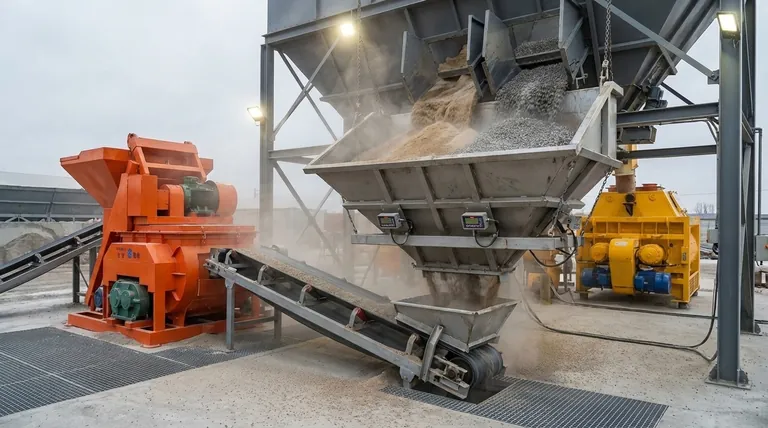
Aggregates are first stored in large feeder bins, typically separated by size and type. On a command from the plant's control system, gates on these bins open to release materials.
The Core Function: Precise Weighing
These aggregates fall directly into the aggregate weigh hopper. Its sole job is to weigh the materials—often individually—until the exact target weight specified by the concrete recipe is reached. This process is governed by the central control system to ensure unerring accuracy.
The Transfer to Mixing
Once the correct weight is confirmed, the weigh hopper's discharge gate opens. Pneumatic cylinders typically provide the force to quickly and completely empty the weighed aggregates onto a transfer conveyor or directly into the plant's main mixer.
Why Accurate Weighing is Mission-Critical
A minor error at the weighing stage can lead to a major failure in the final product. The weigh hopper's precision is therefore fundamental to the entire operation.
Guaranteeing Mix Consistency
Precise weighing is the only way to guarantee that every batch of concrete has the same properties. This consistency is crucial for the structural integrity, durability, and performance of the final construction.
Adhering to Engineering Specifications
Concrete isn't just a simple mixture; it's an engineered material with specific performance requirements. The weigh hopper ensures that the carefully calculated proportions of the mix design are followed perfectly, meeting all stipulations.
Minimizing Material Waste
By measuring the exact amount of each aggregate needed, the weigh hopper prevents overuse of materials. This tight control minimizes waste and directly reduces operational costs over time.
Common Pitfalls and Operational Realities
While essential, the weigh hopper's effectiveness depends on the system around it and proper maintenance.
The Need for Calibration
An uncalibrated or poorly maintained weigh hopper provides a false sense of accuracy. Regular calibration is non-negotiable to prevent creating batches that are out of specification, which can be costly to reject or replace.
The Impact of the Control System
The weigh hopper is only as smart as the control system directing it. The accuracy of the load cells and the responsiveness of the software that closes the feed gates are just as important as the hopper itself.
The Importance of Discharge Speed
The efficiency of the discharge mechanism, such as the pneumatic cylinders, impacts the plant's overall cycle time. A slow or incomplete discharge can create a bottleneck, slowing down the entire production process.
Making the Right Choice for Your Goal
To optimize your batching process, focus on how the weigh hopper supports your primary operational objective.
- If your primary focus is consistent product quality: Your weigh hopper's calibration and its integration with the control system must be flawless to guarantee every batch meets engineering specifications.
- If your primary focus is production efficiency: Ensure the hopper's discharge mechanism is fast and reliable to maintain a smooth, uninterrupted batching cycle.
- If your primary focus is cost control: View meticulous weighing as your most effective tool for minimizing material waste and avoiding the high cost of rejected concrete.
Ultimately, understanding the function of the weigh hopper is fundamental to controlling the quality and efficiency of your entire concrete production.
Summary Table:
| Key Contribution | Benefit |
|---|---|
| Precise Weighing | Guarantees every batch adheres to the engineered recipe for consistent strength and durability. |
| Material Control | Minimizes waste by measuring exact aggregate amounts, directly reducing operational costs. |
| Process Efficiency | Fast discharge mechanisms prevent bottlenecks, supporting a smooth, high-volume production cycle. |
Ready to enhance the precision and efficiency of your concrete production?
GARLWAY specializes in high-performance construction machinery, including reliable concrete batching plants with precision aggregate weigh hoppers. Our solutions are designed for construction companies and contractors who demand consistent quality and operational efficiency.
Contact our experts today to discuss how our equipment can meet your specific batching goals and deliver superior value to your projects.
Visual Guide

Related Products
- HZS120 Ready Mix Concrete Batching Plant Commercial Mud Cement Mixer
- HZS90 Large Multiquip Concrete Mixers for Construction
- HZS25 Best Cement Mixer for Quick Mix Concrete at Bunnings
- HZS180 Ready Mix Concrete Plant for Foundations with Sand and Cement
- Commercial Electric Concrete Mixer Machine HZS 50 Small Batch Plant for Sale
People Also Ask
- What is a ready mix concrete batching plant? The Engine of Modern Construction
- What is the name of the machine used in ready mix? Unpacking the Complete Concrete System
- What is the core component of a concrete batching plant? The Mixer Unit Defines Your Concrete Quality
- What are the types of concrete mixers used in batching plants? Choose the Right Mixer for Your Project
- What are the advantages and disadvantages of concrete batching plants? Maximize Quality & Efficiency