
The fundamental difference lies in where and when the concrete is mixed. A traditional batch plant mixes concrete at a central, fixed location before transport, while a volumetric mixer is a mobile unit that combines materials and mixes fresh concrete on-demand at the job site.
The core choice is between the centralized, high-volume consistency of a batch plant and the on-demand flexibility and waste reduction of a volumetric mixer. Your project's specific needs for quality control, logistics, and volume will determine the superior option.
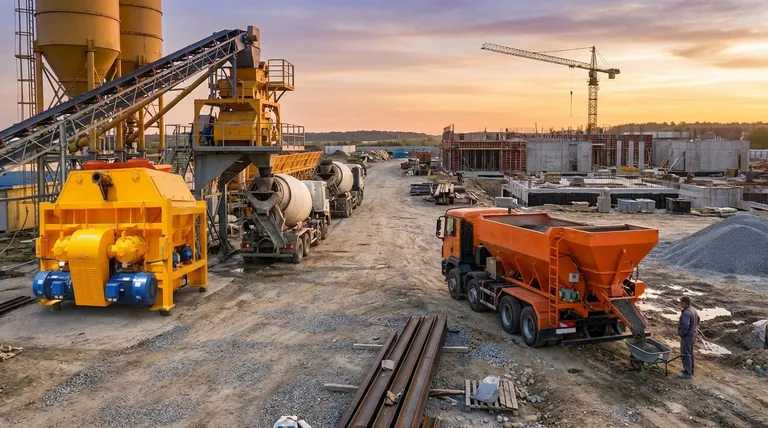
How Each System Fundamentally Works
To understand the trade-offs, you must first grasp the distinct operational models of each system. They represent two entirely different philosophies for producing concrete.
The Traditional Batch Plant Model
A traditional batch plant operates as a centralized manufacturing hub. All raw materials—cement, sand, aggregate, and water—are precisely weighed and mixed in large batches according to a specific design.
This finished, wet concrete is then discharged into a rotating drum mixer truck. The clock starts ticking immediately, as the concrete must be delivered and placed before it begins to set.
The Volumetric Mixer Model
A volumetric mixer functions as a mobile, self-contained batch plant. It carries all the necessary raw materials in separate compartments on a single truck chassis.
Mixing does not occur until the unit arrives at the job site. The operator then uses calibrated controls to mix the exact amount of fresh concrete needed, right at the point of delivery. Production can be started, paused, and stopped at will.
Key Differentiators for Project Success
The operational differences create significant downstream impacts on quality, logistics, and cost-efficiency.
Quality and Freshness
With a traditional drum mixer, the concrete's quality can degrade during transit due to factors like traffic, heat, or job site delays. This can lead to reduced workability by the time of the pour.
Volumetric mixers eliminate this risk by producing concrete seconds before it is placed. The mix is always fresh, ensuring maximum workability and strength potential.
Waste and Cost Efficiency
Batch plants require you to order a specific quantity in advance. Over-ordering results in wasted material and disposal costs, while under-ordering causes costly project delays.
A volumetric mixer solves this problem by mixing only what is needed. This "pay for what you use" model eliminates waste from overages and prevents shortages, providing significant cost control.
Logistical Flexibility
Traditional concrete delivery is rigid. A "hot load"—a batch that is about to set in the truck—can disrupt an entire project schedule.
Volumetric mixers offer unparalleled flexibility. They can navigate remote or tight job sites, produce concrete exactly when the crew is ready, and stop a pour instantly if an issue arises without wasting any material.
Versatility in Mix Design
Once a drum mixer is loaded at the batch plant, its mix design is locked in. It cannot be altered.
Modern volumetric mixers often feature sophisticated control systems that allow the operator to change the mix design on the fly. This is invaluable for projects requiring different concrete specifications, such as a foundation and a flowable fill, from the same delivery.
Understanding the Trade-offs
Neither system is universally superior. The optimal choice depends entirely on the project's scale and requirements.
Where Batch Plants Excel
Batch plants are the standard for large-scale, continuous pours where a single, certified mix design is required. Think of highway paving, large building foundations, or high-rise construction.
Their centralized, computer-controlled environment can produce enormous volumes of highly consistent, lab-verified concrete that meets the strictest specifications.
The Challenge of Calibration
The primary advantage of volumetric mixers—on-site control—is also its greatest responsibility. The quality of the final product is heavily dependent on the precision of the machine's calibration and the skill of the operator.
In contrast, a certified batch plant centralizes this quality control process, offering a different kind of reliability that many large-scale projects depend on.
Making the Right Choice for Your Project
Your decision should be guided by your project's primary constraints and goals.
- If your primary focus is high-volume, continuous pouring with a single certified mix: A traditional batch plant is the most reliable and efficient choice.
- If your primary focus is eliminating waste and managing uncertain quantities: A volumetric mixer provides unmatched cost control by producing the exact amount needed.
- If your primary focus is logistical flexibility, remote site access, or multiple mix designs: A volumetric mixer offers superior on-demand versatility.
- If your primary focus is ensuring the freshest possible concrete at the moment of placement: A volumetric mixer is the only system that mixes material on-site.
Ultimately, understanding these core differences empowers you to select the right tool for the job.
Summary Table:
| Feature | Traditional Batch Plant | Volumetric Mixer |
|---|---|---|
| Mixing Location | Centralized, fixed plant | On-site, mobile unit |
| Concrete Freshness | Mixed before transport | Mixed seconds before placement |
| Waste Control | Risk of over/under-ordering | "Pay for what you use" model |
| Logistical Flexibility | Rigid delivery schedule | On-demand production at job site |
| Ideal For | Large-scale, continuous pours | Projects with uncertain quantities, remote sites |
Optimize Your Concrete Operations with GARLWAY
Struggling to choose between a batch plant and a volumetric mixer for your construction project? GARLWAY specializes in providing the right construction machinery—including robust concrete batching plants and versatile volumetric mixers—to meet your specific needs. We help construction companies and contractors globally achieve superior efficiency, reduce waste, and enhance on-site flexibility.
Let our experts guide you to the perfect solution. Contact GARLWAY today for a personalized consultation and discover how our equipment can drive your project's success.
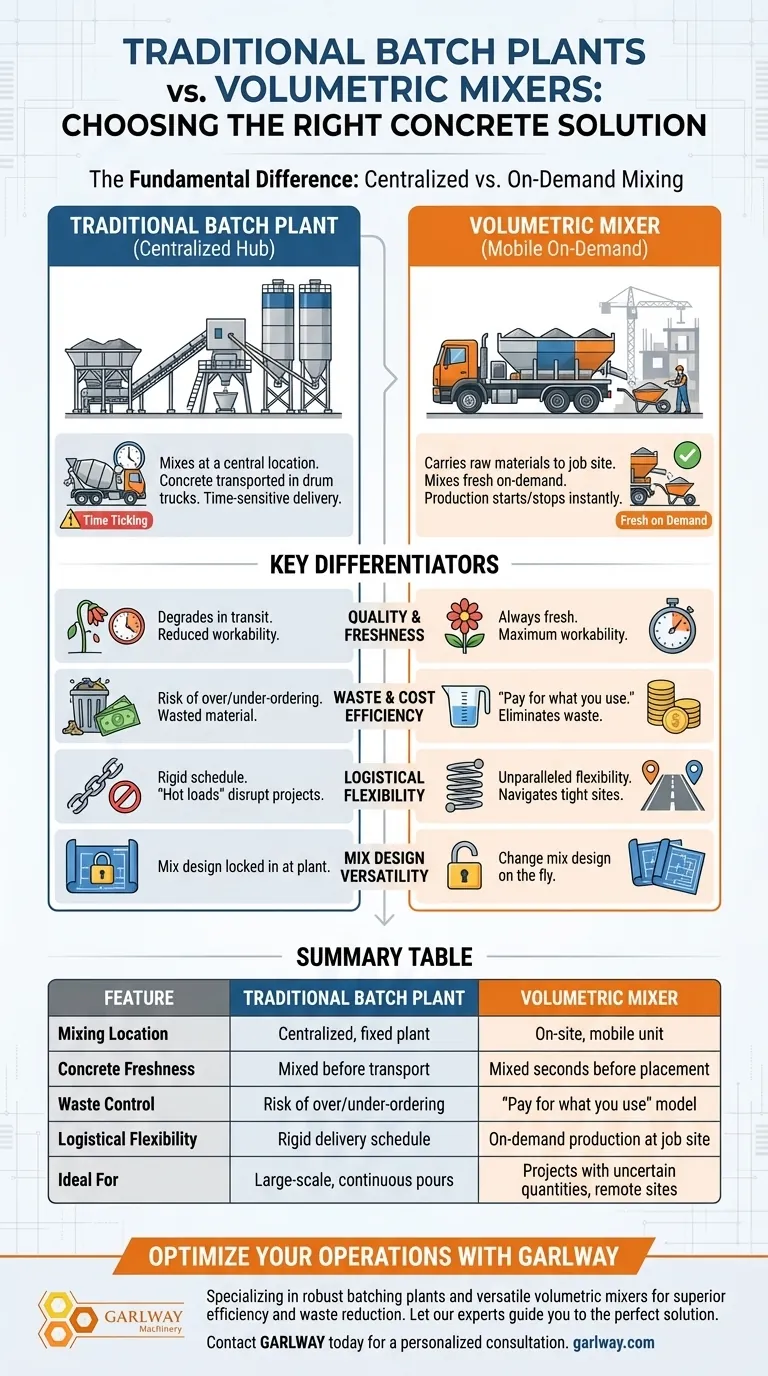
Visual Guide
Related Products
- HZS120 Ready Mix Concrete Batching Plant Commercial Mud Cement Mixer
- HZS35 Small Cement Concrete Mixing Batch Plant
- HZS75 Concrete Batching Plant Cement Mixer Price Concrete Mixer Bunnings Mixing Plant
- Commercial Electric Concrete Mixer Machine HZS 50 Small Batch Plant for Sale
- HZS180 Ready Mix Concrete Plant for Foundations with Sand and Cement
People Also Ask
- What is a ready mix concrete batching plant? The Engine of Modern Construction
- What is the name of the machine used in ready mix? Unpacking the Complete Concrete System
- What is the core component of a concrete batching plant? The Mixer Unit Defines Your Concrete Quality
- What are the types of concrete mixers used in batching plants? Choose the Right Mixer for Your Project
- What are the advantages and disadvantages of concrete batching plants? Maximize Quality & Efficiency





