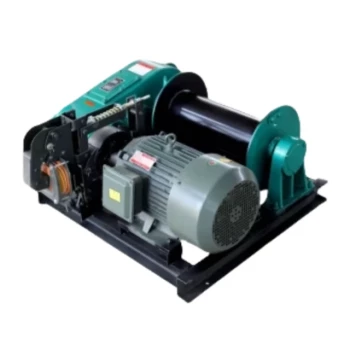
The primary difference between advanced and basic electric winches lies in their control systems and motor technology. While basic winches provide simple pulling power, advanced models incorporate sophisticated electronics, superior motor designs, and enhanced safety features for greater precision and performance under demanding conditions.
Choosing an electric winch isn't just about pulling capacity. The real distinction is moving from brute force (basic winches) to intelligent, controlled power (advanced winches), which directly impacts safety, reliability, and the types of tasks you can perform.
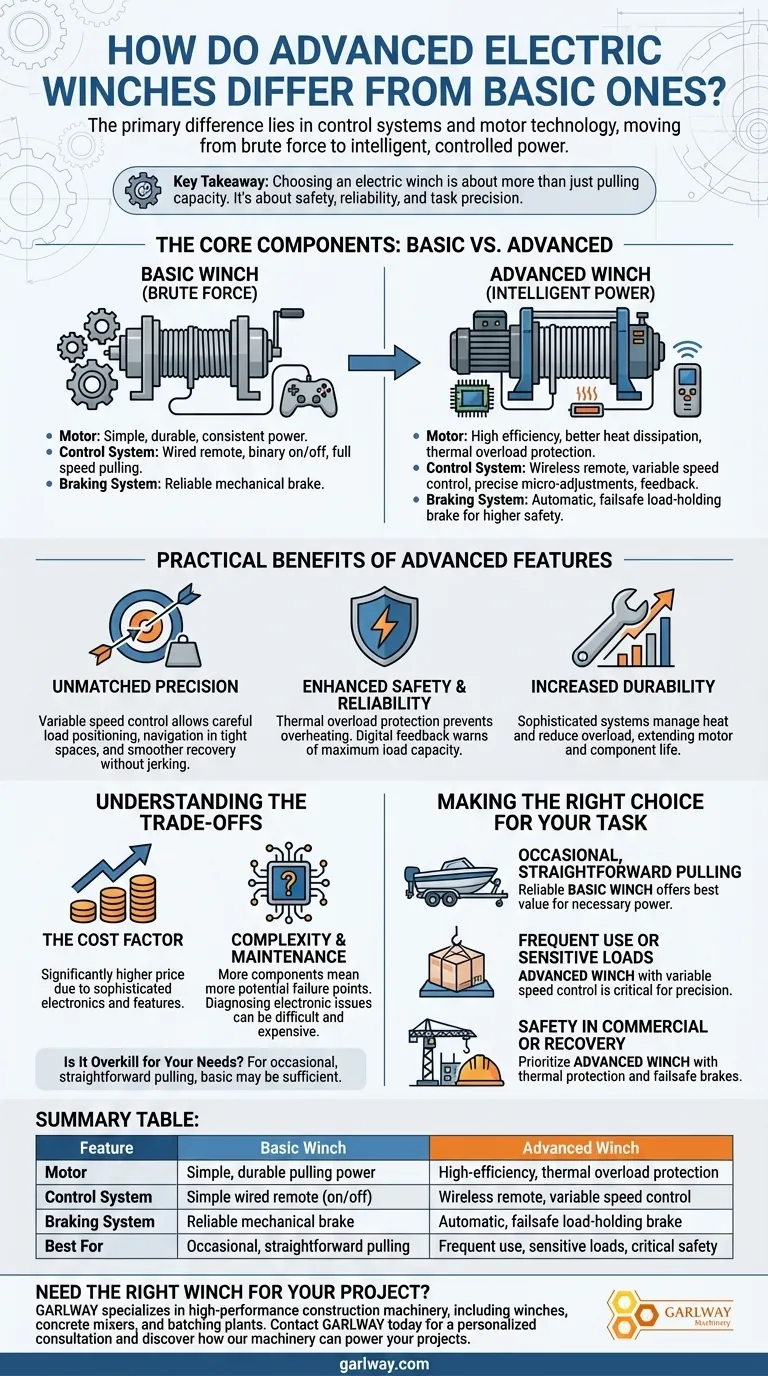
The Core Components: Basic vs. Advanced
Every electric winch, regardless of its sophistication, is built around a core set of components: a motor, a gearbox, a braking system, and a drum to hold the cable. The difference between a basic and an advanced model is how these components are engineered and controlled.
The Motor: From Brute Force to Finesse
A basic winch motor is designed for one job: to pull. It's typically a simple, durable unit that provides consistent power when activated.
An advanced winch motor, however, features more sophisticated specifications. It may be designed for higher efficiency, better heat dissipation, and may include thermal overload sensors to prevent burnout during heavy, prolonged use.
The Control System: The Brains of the Operation
This is the most significant differentiator. A basic winch often uses a simple wired remote with a straightforward in/out switch. The control is binary—it's either pulling at full speed or it's off.
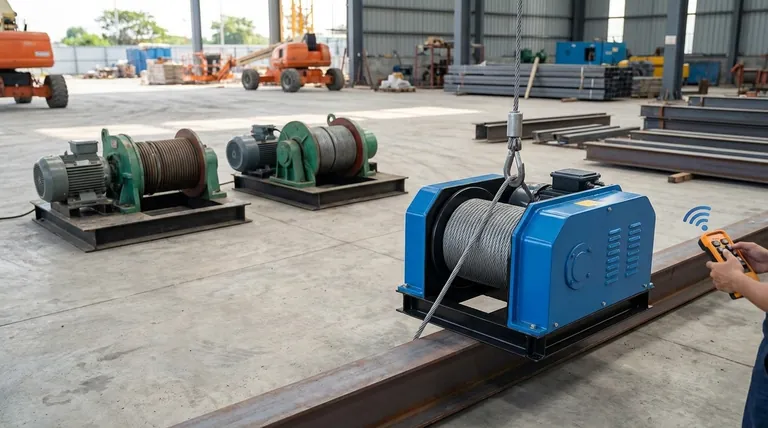
Advanced winches leverage electronic control systems. This often includes wireless remotes that provide feedback and, most importantly, variable speed control. This allows the operator to start pulls slowly, make micro-adjustments, and handle delicate loads without jerking. These systems may also monitor motor temperature and load weight.
The Braking System: From Simple Stops to Failsafe Security
The brake prevents the drum from unwinding when the motor is stopped, holding the load in place. Basic winches use reliable, often mechanical, braking systems that get the job done.
Advanced models often feature more robust, automatic load-holding brakes. These systems are engineered for a higher degree of safety and reliability, which is especially critical for any task that involves lifting rather than just pulling.
The Practical Benefits of Advanced Features
These technological enhancements translate directly into tangible performance advantages that justify the "advanced" label.
Unmatched Precision
The ability to vary the winching speed is a game-changer. It allows an operator to carefully position a load, navigate tight spaces, or recover a vehicle without the sudden, jerking movements that can cause damage.
Enhanced Safety and Reliability
Advanced electronics provide a crucial safety net. Thermal overload protection shuts the motor down before it can destroy itself from overheating. Digital feedback can warn an operator if they are approaching the winch's maximum load capacity.
Increased Durability
By managing heat and preventing overload, sophisticated control systems help preserve the life of the winch's motor and mechanical components. This smart operation leads to a longer, more reliable service life.
Understanding the Trade-offs
As a technical advisor, I must emphasize that "advanced" does not always mean "better" for every user. Objectivity requires acknowledging the downsides.
The Cost Factor
The most obvious trade-off is price. Sophisticated motors, advanced electronics, and wireless feedback systems carry a significantly higher cost than their basic counterparts.
Complexity and Maintenance
With more advanced electronic components, there are more potential points of failure. Diagnosing and repairing a complex control module can be more difficult and expensive than servicing a simple, mechanical winch.
Is It Overkill for Your Needs?
If your primary use is occasional, straightforward pulling—like loading a boat onto a trailer or a non-critical recovery—a basic winch is often perfectly sufficient. The advanced features may be an unnecessary expense.
Making the Right Choice for Your Task
Your decision should be driven by your application, not by a desire for the most features.
- If your primary focus is occasional, straightforward pulling: A reliable basic winch offers the best value, providing the necessary power without unnecessary complexity.
- If your primary focus is frequent use or handling sensitive loads: An advanced winch with variable speed control is a critical investment for precision and protection.
- If your primary focus is safety in commercial or recovery situations: Prioritize an advanced winch with features like thermal overload protection and a superior load-holding brake system.
Ultimately, understanding these differences empowers you to invest in the right level of control for your specific needs.
Summary Table:
| Feature | Basic Winch | Advanced Winch |
|---|---|---|
| Motor | Simple, durable pulling power | High-efficiency, thermal overload protection |
| Control System | Simple wired remote (on/off) | Wireless remote, variable speed control |
| Braking System | Reliable mechanical brake | Automatic, failsafe load-holding brake |
| Best For | Occasional, straightforward pulling | Frequent use, sensitive loads, critical safety |
Need the Right Winch for Your Project?
Choosing between a basic and an advanced electric winch is critical for the safety, efficiency, and success of your operations. GARLWAY specializes in high-performance construction machinery, offering a range of winches, concrete mixers, and batching plants designed for the demanding needs of construction companies and contractors globally.
Our experts can help you select the perfect winch with the intelligent control and reliability your work requires.
Contact GARLWAY today for a personalized consultation and discover how our machinery can power your projects.
Visual Guide
Related Products
- Electric 120V Boat Winch by Badlands
- Electric and Hydraulic Winch for Heavy Duty Applications
- Small Electric Winch 120V and 240V for Compact Applications
- 12000 lb Electric Boat Trailer Winch with Windlass Anchor Warn
- Electric Hoist Winch Boat Anchor Windlass for Marine Applications
People Also Ask
- How do electric boat winches work? Unlock Effortless Launching & Retrieval
- How much current does an electric boat winch draw? Plan Your Electrical System for Peak Performance
- Can I run a winch straight from a battery? Essential Power Setup for Safe Operation
- What are the types of electric winches available? Choose the Right Winch for Your Job
- What are the uses of electric winches in mining and tunneling? Enhance Safety and Efficiency Underground