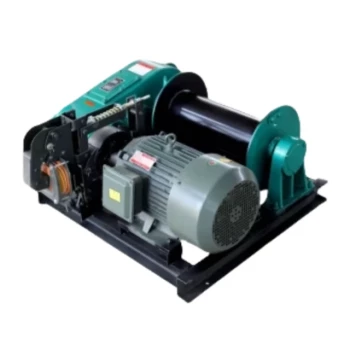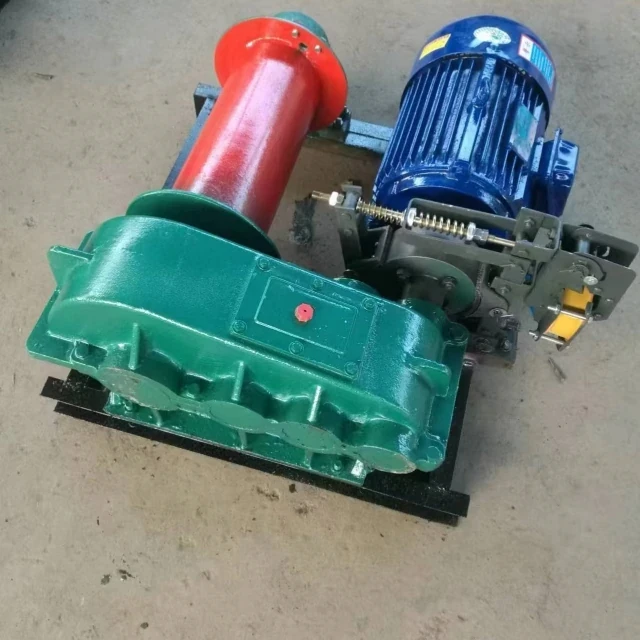
When heavy lifting meets limited power access, manual winches emerge as indispensable tools. This guide explores their strategic advantages in off-grid industrial settings, recreational scenarios, and safety-critical operations—helping you make informed decisions that balance control, cost, and reliability.
Manual Winch Fundamentals
Key Components and Load Capacity Limitations
Manual winches convert human effort into mechanical advantage through three core components:
- Drum: Spools cable/rope, with capacity dictated by diameter and material (e.g., galvanized steel resists corrosion).
- Gear Train: Multiplies input force; higher gear ratios enable heavier lifts but reduce speed.
- Brake System: Prevents uncontrolled release, often via ratchet mechanisms.
Load Limits: Most industrial-grade manual winches handle 1–10 tons. Exceeding capacity risks gear slippage or cable failure—always verify weight against the winch’s rated Working Load Limit (WLL).
Did You Know?
A sailor’s winch uses the same principle: turning a handle tightens sails, but uncontrolled release could snap ropes. Industrial winches apply this concept at scale.
Labor Requirements vs. Operational Control
While electric winches automate lifting, manual versions offer unmatched precision in power-scarce environments:
- Control: Operators adjust tension incrementally—critical for positioning fragile loads like glass panels.
- Portability: No need for generators or hydraulic lines, ideal for remote construction sites.
Trade-off: Manual operation demands physical effort. For frequent heavy lifts, consider team rotation to prevent fatigue.
Strategic Applications in Power-Scarce Environments
Off-Grid Industrial and Recreational Use Cases
-
Construction Sites:
- Hoisting beams in temporary structures where power isn’t yet available.
- Rescue operations to extract workers from confined spaces (e.g., collapsed trenches).
-
Recreational Recovery:
- Pulling vehicles from mud/snow during off-roading—manual winches won’t drain your battery.
- Boat trailer loading where electrical outlets are absent.
Cost-Benefit Analysis Against Powered Alternatives
| Factor | Manual Winches | Electric Winches |
|---|---|---|
| Upfront Cost | $200–$2,000 | $500–$5,000+ |
| Power Dependency | None | Requires battery/generator |
| Maintenance | Low (greasing gears) | High (motor servicing) |
Best Fit: Manual models excel in intermittent-use scenarios with budgets under $1,500.
Interactive Checkpoint
Ever struggled with a stuck ATV miles from the nearest power source? A manual winch could be your failsafe.
Enhancing Safety and Efficiency
Ergonomic Techniques for Reduced Fatigue
- Stance: Plant feet shoulder-width apart; use leg muscles, not just arms, to crank.
- Pacing: Take breaks every 15 minutes during sustained use.
- Tool Aids: Extend handles for better leverage (reduces force needed by 30–50%).
Maintenance Protocols for Long-Term Reliability
-
Monthly Checks:
- Inspect cables for fraying; replace if >10% of strands are damaged.
- Apply marine-grade grease to ungalvanized gears.
-
Annual Overhaul:
- Disassemble the winch to clean internal parts.
- Remove rust with a wire brush; reapply anti-corrosion coatings.
-
Post-Use Care:
- Dry wet straps fully to prevent mildew.
- Store in a dry, shaded area to UV degradation.
Pro Tip: Pair manual winches with Garlway’s synthetic ropes for lighter weight and higher abrasion resistance.
Conclusion: Matching the Tool to the Task
Manual winches thrive where control, portability, and cost-efficiency outweigh the need for speed. By selecting the right capacity, implementing ergonomic practices, and adhering to maintenance schedules, you ensure decades of reliable service—whether hauling timber on a remote job site or recovering adventure vehicles off-grid.
Next Steps:
- Audit your current lifting needs: How often do you operate without power?
- Explore Garlway’s range of manual winches designed for industrial durability.
Related Products
- Quick Windlass Portable Winch for Truck and Boat Best Boat Winch
- Portable Small Trailer Winch
- Electric and Hydraulic Winch for Heavy Duty Applications
- Small Electric Winch 120V and 240V for Compact Applications
- Hydraulic Winding Engine Harbor Freight Winch
Related Articles
- How the JK Quick Winch’s Portability Transforms Work in Tight Spaces
- How JK Quick Winches Solve 3 Critical Industrial Automation Challenges
- How to Choose a Quick Winch with the Right Traction Force for Your Job
- More Than a Number: The Engineering Psychology of Choosing a Boat Winch
- Force vs. Mass: The Critical Difference in Sizing a Boat Winch