At its core, the upgraded large-screen display on a self-loading mixer serves as the central command interface for the machine's integrated batching and weighing system. It provides the operator with real-time data on material weights and mix ratios, transforming the process from approximation to precision engineering.
The display's primary function is to eliminate guesswork in concrete production. It provides clear, actionable data that allows an operator to create a consistent, high-quality concrete mix with every single batch, directly on the job site.
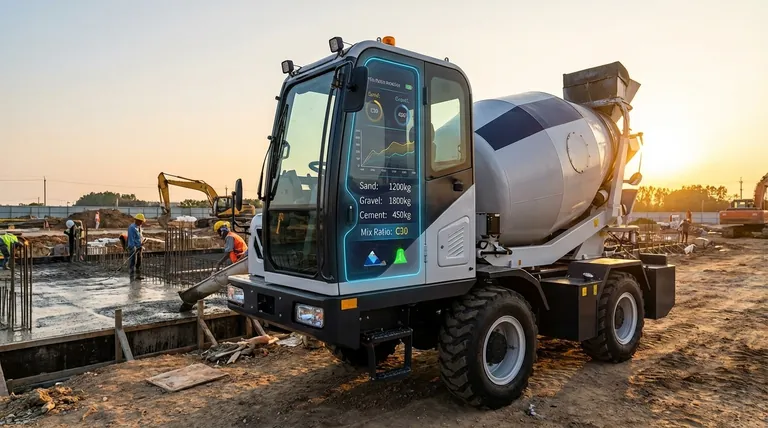
From Guesswork to Precision: The Role of the Central Display
The integration of a large-screen display represents a significant evolution in self-loading mixer technology. It moves the machine from being a simple transportation and mixing tool to a mobile, data-driven concrete batching plant.
Real-Time Weighing Data
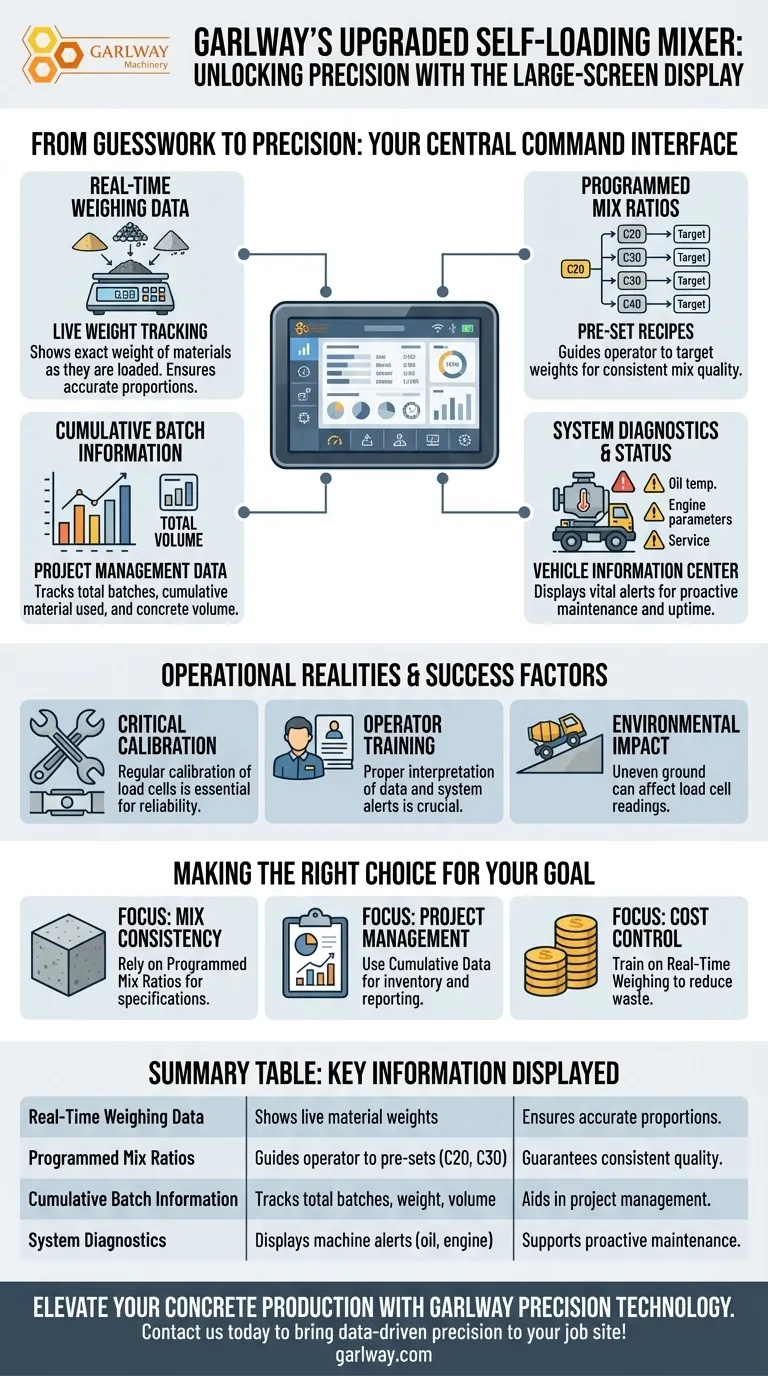
The most fundamental information shown is the live weight of materials being loaded into the bucket. As the operator scoops sand, gravel, or cement, the display shows the exact weight, ensuring the correct amount of each component is added.
Programmed Mix Ratios
Advanced systems allow operators to pre-program specific concrete mix designs (e.g., for C20, C30, or C40 grade concrete). The display guides the operator, showing the target weight for each material and tracking progress as it's loaded to meet the precise, pre-defined ratio.
Cumulative Batch Information
Beyond a single mix, the display provides critical project management data. It tracks the total number of batches produced, the cumulative weight of materials used, and the total volume of concrete mixed over a shift or an entire project.
System Diagnostics and Status
The screen also functions as a vehicle information center. It can display vital machine alerts, such as hydraulic oil temperature, engine parameters, and service reminders, helping to ensure uptime and proactive maintenance.
Understanding the Operational Realities
While this technology is a powerful asset, its effectiveness depends on proper use and maintenance. Relying on the display without understanding its operational context can lead to inaccuracies.
The Critical Need for Calibration
The weighing system is only as accurate as its last calibration. The load cells that measure weight must be regularly checked and calibrated to ensure the data on the screen is reliable. Job site vibrations and heavy use can cause drift over time.
Operator Training is Essential
An operator must be trained to properly use and interpret the information on the display. Knowing how to select the right mix recipe, tare the bucket weight, and understand system alerts is crucial for leveraging the technology effectively.
Impact of Environmental Factors
The accuracy of the onboard weighing system can be affected by the machine's position. Operating on a steep incline or uneven ground can throw off the load cell readings, leading to incorrect data on the display and, consequently, an improper mix.
Making the Right Choice for Your Goal
Effectively using the display's information depends entirely on your primary objective for the project.
- If your primary focus is mix consistency: Rely on the programmed mix ratio feature to ensure every single batch meets the required engineering specifications.
- If your primary focus is project management: Use the cumulative data and batch counters for accurate material inventory, consumption reports, and daily production tracking.
- If your primary focus is cost control: Train operators to use the real-time weighing data to eliminate material over-use and reduce the waste associated with incorrect batches.
This digital interface transforms the self-loading mixer from a machine of convenience into a tool of precision.
Summary Table:
| Key Information Displayed | Function | Benefit |
|---|---|---|
| Real-Time Weighing Data | Shows live weight of materials (sand, gravel, cement) | Ensures accurate material proportions |
| Programmed Mix Ratios | Guides operator to pre-set concrete grades (e.g., C20, C30) | Guarantees consistent mix quality |
| Cumulative Batch Information | Tracks total batches, material weight, and concrete volume | Aids in project management and reporting |
| System Diagnostics | Displays machine alerts (oil temperature, engine status) | Supports proactive maintenance and uptime |
Ready to elevate your on-site concrete production with precision technology? GARLWAY specializes in advanced construction machinery, including self-loading mixers with intuitive large-screen displays. Our solutions help construction companies and contractors globally achieve accurate batching, reduce material waste, and improve project efficiency. Contact us today to learn how our mixers can bring data-driven precision to your job site!
Visual Guide
Related Products
- Belle Mixer Drum Self Loading Mortar Mixers JS3000
- Skid Steer Self Loading Concrete Mixers for Construction
- Portable Cement Mixer with Lift Concrete Machine
- Portable Concrete Mixer Machine Equipment for Mixing Concrete
- Portable Ready Mix Concrete Mixer Equipment
People Also Ask
- What are the features of mobile transporting in a self loading mixer? Boost On-Site Efficiency
- Why is timely cleaning important for a self loading mixer? Prevent Costly Downtime and Mix Failure
- How is discharging accomplished in a self loading mixer? Master Precise Concrete Placement
- What is the purpose of keeping the drum rotating during transportation in a self loading concrete mixer? Ensure Quality & Consistency
- What components are involved in the loading process of a self loading concrete mixer? A Guide to the Key Systems