At its core, maintaining a self-loading mixer involves a disciplined schedule of checks and replacements focused on three key areas: filters, fluids, and operational systems. Regular service of the engine, hydraulic system, and precision components like the weighing system is non-negotiable for reliable performance and longevity.
The goal of maintenance is not merely to prevent breakdowns, but to ensure the consistent, accurate, and efficient operation of the machine. Proactive care directly translates to higher quality concrete, increased uptime, and a longer equipment lifespan.
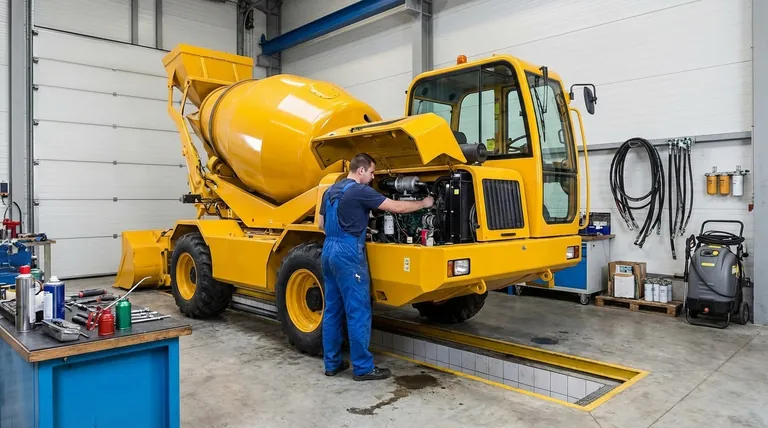
The Core Systems Requiring Regular Attention
A self-loading mixer is a complex piece of equipment with several integrated systems. A proper maintenance plan addresses each one systematically.
Engine and Drivetrain: The Powerhouse
The engine is the heart of the machine, powering both its movement and its mixing functions. Its health is paramount.
This involves the regular replacement of the engine's three primary filters (oil, fuel, and air) as well as other system filters.
You must also check and replace various oils, including engine oil, transmission fluid, and axle lubricants, according to the manufacturer's specified intervals.
Hydraulic and Mixing Systems: The Functional Core
These systems perform the heavy lifting and mixing. They are subject to constant stress and wear.
The mixing tank, with its spiral blades and rotational mechanism, must be kept clean of hardened concrete to ensure balanced rotation and efficient mixing.
The hydraulic system that powers the loading bucket, lifting device, and drum rotation requires routine checks for leaks, hose condition, and hydraulic fluid levels.
Weighing and Control Systems: The Brains of the Operation
The accuracy of your concrete mix depends entirely on the precision of the weighing and batching system.
The electronic weighing system must be regularly calibrated to ensure the accuracy of mix formulations, which is critical for concrete quality.
The electrical control system requires daily inspection for any faults, with a more thorough monthly functional test of all related components to guarantee correct operation.
Structural and Safety Components: The Foundation
The machine's frame, chassis, and safety features protect both the operator and the investment.
The brake system and steering components must be inspected daily to ensure safe operation on the job site.
Visually inspect the rounded bucket, welds, and chassis for any signs of stress fractures or damage that could compromise structural integrity.
Common Pitfalls and Operational Best Practices
Effective maintenance goes beyond scheduled service; it includes daily operational discipline. Ignoring these practices leads to premature wear and costly repairs.
Ignoring Daily Pre-Operation Checks
A quick walk-around inspection is your first line of defense. Before starting work, check fluid levels, tire pressure, and look for any visible leaks or damage. This simple habit can catch small issues before they become major failures.
Neglecting Post-Operation Cleanup
Hardened concrete is the enemy of a mixer. At the end of each day, the mixing drum, blades, and discharge chute must be thoroughly washed out. Buildup can cause imbalance, reduce mixing efficiency, and put immense strain on the drive system.
Overlooking System Calibration
Assuming the weighing system remains accurate indefinitely is a costly mistake. Regular calibration checks are essential maintenance tasks, not optional adjustments. Inaccurate batches lead to wasted materials and substandard concrete.
Structuring Your Maintenance Plan
A structured approach ensures nothing is missed. Categorize your tasks by frequency to create an easy-to-follow and effective maintenance routine.
- For daily reliability: Focus on visual inspections, fluid level checks, and thorough post-use cleaning of the mixing drum and discharge systems.
- For consistent performance: Implement weekly or monthly checks of the control system's functionality and the weighing system's calibration.
- For long-term health: Adhere strictly to the manufacturer's schedule for replacing all engine filters and changing all critical oils and hydraulic fluids.
Proactive and consistent maintenance is the single most important investment you can make in your equipment's performance and profitability.
Summary Table:
| System | Key Maintenance Tasks | Frequency |
|---|---|---|
| Engine & Drivetrain | Replace oil/fuel/air filters; Check/change engine oil, transmission fluid | Per manufacturer schedule |
| Hydraulic & Mixing | Check for leaks/hose wear; Clean drum & blades of hardened concrete | Daily & scheduled |
| Weighing & Control | Calibrate weighing system; Test control system functionality | Weekly/Monthly |
| Structural & Safety | Inspect brakes, steering, chassis, bucket for damage | Daily & scheduled |
Ensure your project's profitability with a reliable GARLWAY self-loading mixer. Proper maintenance is key, but it starts with a machine built to last. GARLWAY specializes in durable construction machinery, including robust self-loading mixers, concrete mixers, and batching plants designed for the demands of construction companies and contractors globally.
Let our experts help you choose the right equipment and provide the support you need for maximum uptime. Contact GARLWAY today to discuss your needs and keep your projects moving forward!
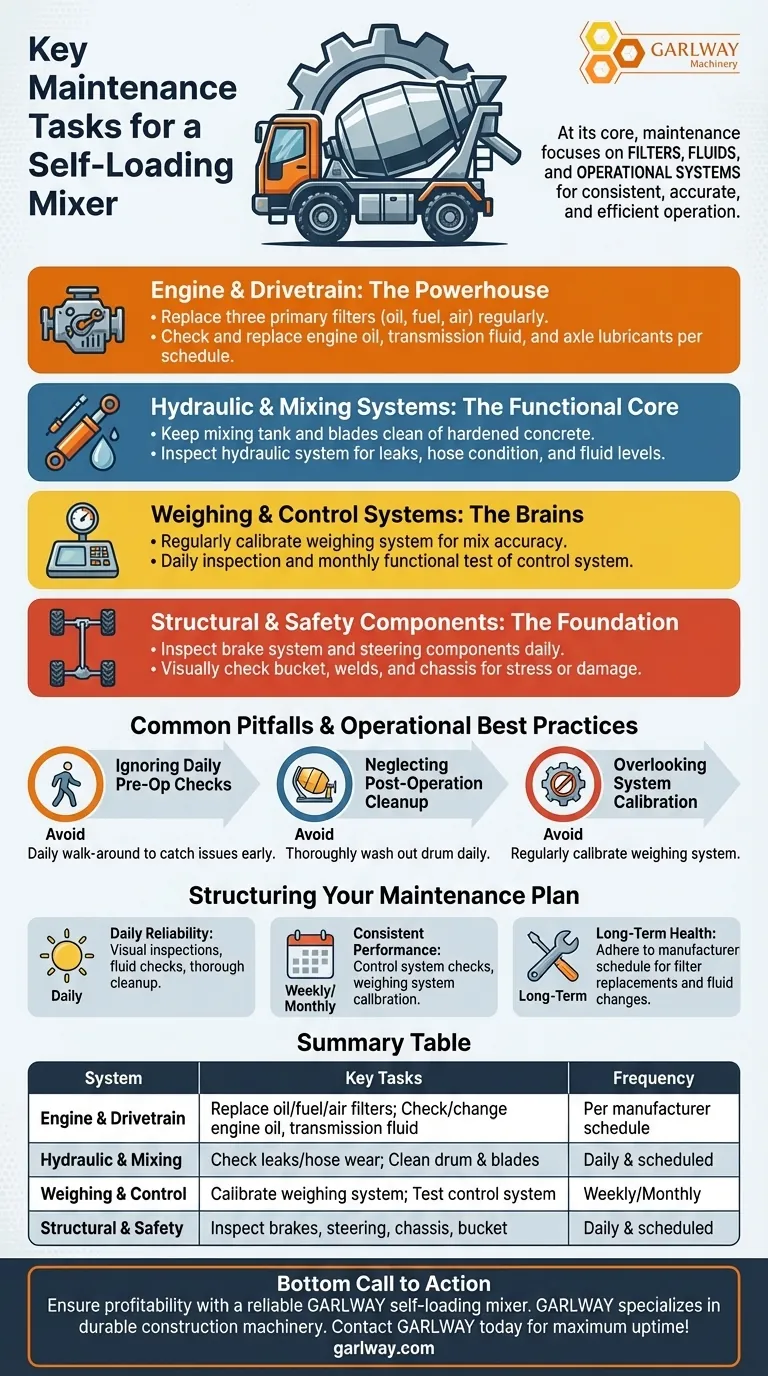
Visual Guide
Related Products
- Skid Steer Self Loading Concrete Mixers for Construction
- Belle Mixer Drum Self Loading Mortar Mixers JS3000
- Portable Cement Mixer with Lift Concrete Machine
- Portable Concrete Mixer Machine Equipment for Mixing Concrete
- Portable Ready Mix Concrete Mixer Equipment
People Also Ask
- How does the control system improve production efficiency in a self loading concrete mixer? Automate Mixing for Speed & Quality
- What is the purpose of keeping the drum rotating during transportation in a self loading concrete mixer? Ensure Quality & Consistency
- How does the weighing process work in a self loading concrete mixer? Achieve Precise, On-Site Concrete Batching
- What components are involved in the loading process of a self loading concrete mixer? A Guide to the Key Systems
- How should materials be loaded into a self-loading concrete mixer? Master the Step-by-Step Process