
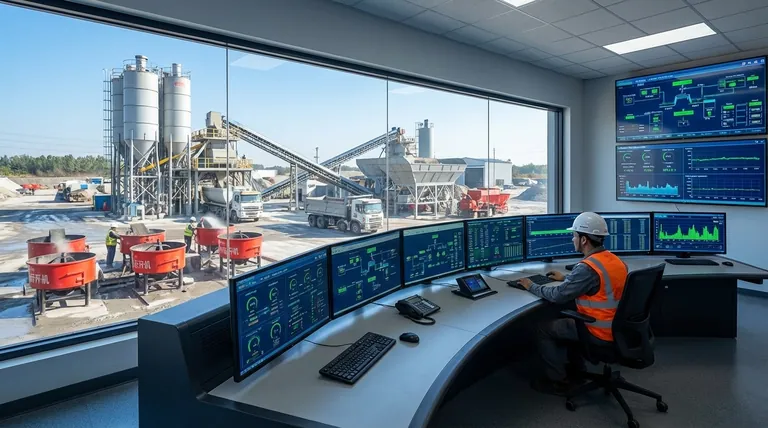
At its core, a modern concrete batch plant control system is the central nervous system responsible for ensuring precision, safety, and efficiency. The key features are robust automation based on preset recipes, the critical ability for manual override, a self-protecting alarm system, resistance to industrial interference, and integrated communication for real-time monitoring.
The purpose of these integrated features is to move beyond simple automation. They work together to create an intelligent platform that guarantees consistent concrete quality, protects expensive equipment, and provides operators with the data needed for efficient management.
The Core Functions: Precision and Control
The primary role of the control system is to execute the production of concrete with unwavering accuracy. This is achieved through a blend of automated precision and the option for expert human intervention.
Automated Batching and Recipe Management
The system operates using a Programmable Logic Controller (PLC) or a dedicated computer. Operators input specific mix design parameters—often called recipes—which dictate the precise weight and volume of aggregates, cement, water, and chemical admixtures.
This automation ensures that every single batch meets the required engineering specifications, eliminating the inconsistencies and potential for error found in manual processes.
Manual Override and Intervention
While automation is key, the ability for an experienced operator to take manual control is non-negotiable. This feature is crucial for handling non-standard situations, performing maintenance, or making fine-tuned adjustments during a batching cycle.
Manual override provides essential flexibility and a failsafe, ensuring production can continue even if an automated component requires troubleshooting.
Ensuring System Integrity and Safety
A batch plant is a demanding industrial environment. The control system must not only run the plant but also protect itself and the surrounding machinery from faults and external disruptions.
Self-Protection and Fault Alarms
The control system continuously monitors all critical components for abnormalities. This includes everything from motor overloads and material blockages to sensor failures.
If a fault is detected, the system automatically triggers an alarm to alert the operator and can initiate a shutdown procedure to prevent damage to the equipment. This self-protection is vital for minimizing downtime and costly repairs.
Robust Anti-Interference Design
Concrete plants generate significant electrical "noise" from large motors and machinery. The control system’s electronics must be hardened with anti-interference capabilities to prevent this noise from disrupting its sensitive operations.
This feature ensures stable, reliable performance and prevents erroneous commands or system crashes that could compromise a batch or halt production.
Centralized Monitoring and Data Management
Modern control systems provide a comprehensive view of the entire production process, turning raw operational data into actionable intelligence.
Real-Time Operational Visibility
From a central control room, operators can monitor the status of the entire plant in real-time. This includes viewing material levels in silos, tracking the progress of a current batch, and receiving immediate alerts.
This centralized communication and monitoring capability gives operators complete command over the production workflow.
Data Logging and Production Tracking
The system logs critical data for every batch produced. This information is invaluable for quality control verification, inventory management, and generating production reports.
By tracking metrics over time, plant managers can identify opportunities to optimize efficiency, reduce waste, and ensure a fully accountable production chain.
Understanding the Trade-offs
While advanced control systems offer powerful capabilities, it is important to recognize the inherent trade-offs involved in their implementation and use.
Complexity vs. Capability
A system with more advanced features, such as intricate recipe management and detailed reporting, is inherently more complex. This can increase the initial learning curve for operators and may require more specialized maintenance.
Automation vs. Human Oversight
An over-reliance on automation can lead to operator complacency. The most effective operations combine a highly reliable automated system with skilled operators who understand the process and know when and how to use manual controls.
Cost of Advanced Features
Features like remote monitoring, extensive data logging, and integration with enterprise software come at a higher capital cost. The key is to balance the investment against the specific needs of the operation, whether it's a high-volume commercial plant or a temporary on-site project.
Making the Right Choice for Your Goal
The ideal control system depends entirely on your operational priorities. Use these points to guide your focus.
- If your primary focus is high-volume, consistent production: Prioritize sophisticated recipe management, reliable automation, and detailed data logging for quality assurance.
- If your primary focus is project-specific flexibility: Ensure the system offers robust and intuitive manual controls alongside dependable automated batching.
- If your primary focus is maximizing uptime and safety: The self-protection alarm system and proven anti-interference capabilities are your most critical features.
Ultimately, the right control system transforms a collection of machinery into an intelligent and reliable production asset.
Summary Table:
| Key Feature | Core Function | Benefit |
|---|---|---|
| Automated Batching & Recipe Management | Executes precise mix designs using PLCs. | Guarantees consistent concrete quality and eliminates human error. |
| Manual Override & Intervention | Allows operator control during non-standard situations. | Provides flexibility, a failsafe, and enables fine-tuning. |
| Self-Protection & Fault Alarms | Monitors for abnormalities and triggers alerts/shutdowns. | Protects equipment, minimizes downtime, and prevents costly damage. |
| Robust Anti-Interference Design | Shields electronics from industrial electrical noise. | Ensures stable, reliable performance in demanding environments. |
| Real-Time Monitoring & Data Logging | Provides a centralized view and logs all batch data. | Enables efficient management, quality control, and production optimization. |
Ready to transform your concrete production with an intelligent control system?
At GARLWAY, we specialize in engineering robust and reliable control solutions for construction machinery. Our systems are designed to deliver the precision, safety, and efficiency your operation demands.
We provide winches, concrete mixers, and concrete batching plants for construction companies and contractors globally. Let us help you guarantee consistent quality, protect your investment, and maximize your productivity.
Contact our experts today to discuss the ideal control system for your specific needs!
Visual Guide

Related Products
- HZS120 Ready Mix Concrete Batching Plant Commercial Mud Cement Mixer
- HZS35 Small Cement Concrete Mixing Batch Plant
- HZS75 Concrete Batching Plant Cement Mixer Price Concrete Mixer Bunnings Mixing Plant
- Commercial Electric Concrete Mixer Machine HZS 50 Small Batch Plant for Sale
- HZS180 Ready Mix Concrete Plant for Foundations with Sand and Cement
People Also Ask
- What is a ready mix concrete batching plant? The Engine of Modern Construction
- What is the name of the machine used in ready mix? Unpacking the Complete Concrete System
- What is the core component of a concrete batching plant? The Mixer Unit Defines Your Concrete Quality
- What are the types of concrete mixers used in batching plants? Choose the Right Mixer for Your Project
- What are the advantages and disadvantages of concrete batching plants? Maximize Quality & Efficiency





