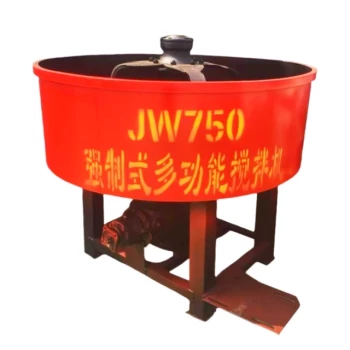
At their core, batch concrete mixers are defined by their ability to produce a specific, fixed quantity of concrete in a single cycle. Their key features include high capacity, often up to 1,000 gallons, and a design centered around one of three main types: drum mixers, pan mixers, or open-top mixers, each with a distinct mixing action.
The defining characteristic of a batch mixer isn't just its components, but its operational principle: producing a precisely controlled, homogenous batch of concrete one at a time. This focus on quality and consistency per batch is what separates it from other mixing methods.
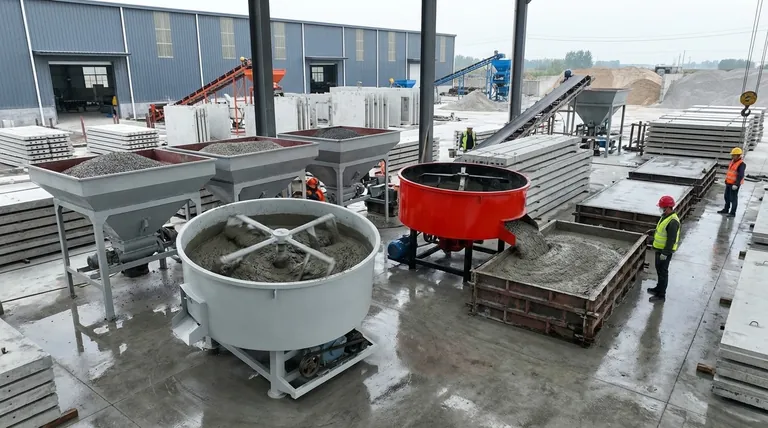
The Anatomy of a Batch Mixer
Understanding a batch mixer begins with its fundamental components. While designs vary, most high-quality mixers share a common architecture engineered for performance and durability.
The Mixing Mechanism
The heart of the mixer is the device that combines the aggregates, cement, and water. This is typically achieved through either a revolving drum with internal fins or a compulsory system with paddles or blades that actively force the materials together.
The Drive and Reduction System
A powerful motor drives the mixing action through a reducer. This gearbox is critical as it translates the motor's high speed into the high-torque, lower-speed rotation needed to mix dense, heavy concrete effectively.
Shaft-End Sealing
To prevent leakage and contamination, robust sealing is required where the mixing shafts enter the drum or pan. Modern systems often use floating oil sealing rings to ensure a durable, long-lasting barrier that protects the bearings.
Automated Systems
Many modern batch mixers feature automated systems for lubrication and discharge. An electric lubricating oil pump ensures critical components remain in good condition, while an automated discharging system allows for the clean and efficient emptying of the mixed concrete.
Key Types and Their Ideal Applications
The specific type of batch mixer chosen has a direct impact on the quality and characteristics of the final concrete product. The right choice depends entirely on the requirements of the job.
Drum Mixers
These are the most common type, often seen in both stationary (tilting/gravity) and truck-mounted (revolving) forms. They use a rotating drum with internal blades to lift and tumble the materials, relying on gravity to achieve a mix. They are a versatile and reliable choice for general construction.
Pan Mixers
Pan mixers operate with a stationary pan and rotating paddles or stars that move through the material. This creates a high-shear, compulsory mixing action that is extremely effective for producing stiff, zero-slump, and high-strength mixes. This makes them the standard for precast concrete production.
Reversing Drum Mixers
A variation of the drum mixer, this type uses one direction of rotation for mixing and the opposite direction to discharge the concrete. This design works particularly well for dryer mixes that may be difficult to discharge from a standard tilting drum.
Understanding the Trade-offs: Batch vs. Continuous
To fully appreciate the features of a batch mixer, it's useful to compare it to its alternative: the continuous mixer.
Precision and Quality Control
Batch mixers excel at quality control. Because each ingredient is measured and added for a specific, finite batch, you have extremely high control over the mix design and consistency from one batch to the next.
Production Volume and Speed
Continuous mixers are built for volume. They take in a constant stream of materials and produce a constant stream of concrete, making them ideal for large-scale projects like dams or road paving where stopping is not an option.
Flexibility
Batch mixers offer superior flexibility. You can easily change the mix design from one batch to the next, making them perfect for operations that need to produce different types of concrete throughout the day.
Making the Right Choice for Your Project
Selecting the appropriate mixer requires matching its features to your specific goal.
- If your primary focus is high-quality precast concrete: A pan mixer's compulsory action is necessary to achieve the required strength and consistency.
- If your primary focus is general construction with standard mixes: A tilting or reversing drum mixer offers the best balance of versatility, reliability, and cost-effectiveness.
- If your primary focus is consistent, large-volume pours for major infrastructure: A continuous mixing plant, rather than a batch mixer, is the more appropriate solution.
Ultimately, the features of a batch mixer are all designed to deliver a controlled, repeatable, and high-quality concrete product for a specific application.
Summary Table:
| Feature | Description | Ideal For |
|---|---|---|
| Drum Mixer | Rotating drum with fins; lifts and tumbles materials. | General construction, versatile applications. |
| Pan Mixer | Stationary pan with rotating paddles; high-shear mixing. | Precast concrete, high-strength, zero-slump mixes. |
| Reversing Drum Mixer | Reverses rotation for mixing and discharge. | Dryer mixes, efficient discharge. |
| Automated Systems | Includes lubrication and automated discharge. | Reduced downtime, consistent performance. |
| Batch vs. Continuous | Fixed-quantity batches for precise control. | Projects requiring mix flexibility and quality consistency. |
Ready to optimize your concrete production with a reliable batch mixer?
At GARLWAY, we specialize in providing high-performance construction machinery, including durable and efficient batch concrete mixers tailored for construction companies and contractors worldwide. Whether you need a versatile drum mixer for general use or a high-shear pan mixer for precast applications, our solutions deliver consistent quality, reduced downtime, and enhanced control over every batch.
Let’s build better concrete together—contact our experts today to discuss your project needs!
Visual Guide

Related Products
- Commercial Electric Concrete Mixer Machine HZS 50 Small Batch Plant for Sale
- HZS25 Best Cement Mixer for Quick Mix Concrete at Bunnings
- HZS35 Small Cement Concrete Mixing Batch Plant
- HZS120 Ready Mix Concrete Batching Plant Commercial Mud Cement Mixer
- Portable Concrete Mixer Machine Equipment for Mixing Concrete
People Also Ask
- What are the types of concrete mixers used in batching plants? Choose the Right Mixer for Your Project
- What is the core component of a concrete batching plant? The Mixer Unit Defines Your Concrete Quality
- Why is proper maintenance important for a concrete batch mix plant? Maximize Uptime & Profitability
- Why buy concrete batch plant parts only from the manufacturer? Protect Your Investment and Maximize Uptime
- What are the two main types of concrete batch mixers? Choose the Right Mixer for Your Project